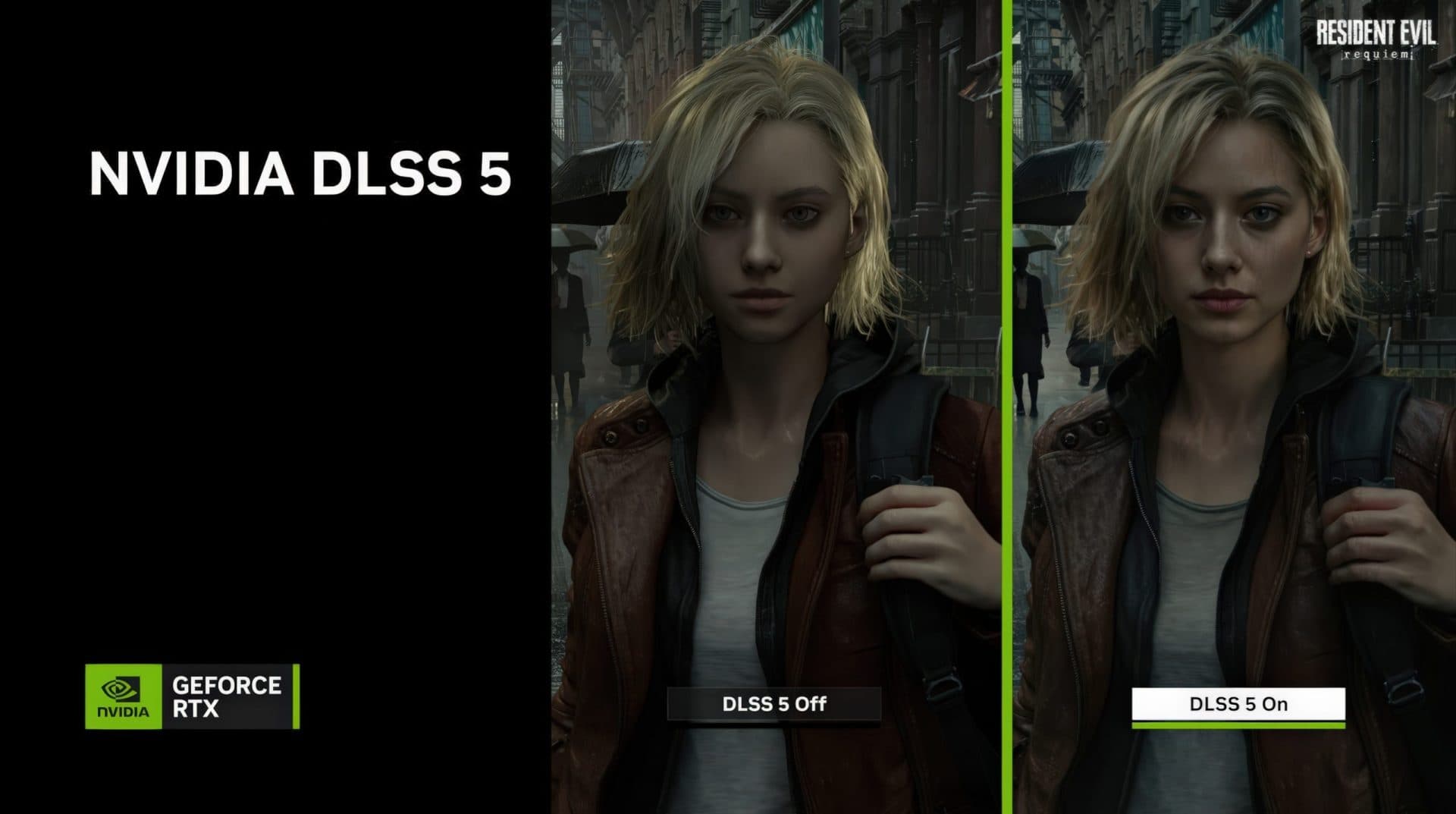
Nvidia’s latest breakthrough in gaming graphics, DLSS 5, is already stirring intense debate even before its official fall 2024 rollout. Unveiled by CEO Jensen Huang at the company’s annual GTC conference on Monday, the new technology leverages a "3D guided neural rendering model" to dynamically adjust lighting, shadows, and materials in real time—promising a leap toward photorealism. Yet, the initial reception has been far from enthusiastic. Gamers and critics alike have flooded forums, social media, and content platforms with memes and criticisms, arguing that DLSS 5 doesn’t enhance games so much as it retroactively ‘fixes’ them—often in ways that feel invasive, unnatural, or downright jarring. The controversy centers not on the technology’s capabilities, but on how Nvidia chose to showcase them: by transforming the faces and aesthetics of iconic characters from beloved games like Resident Evil Requiem, Starfield, Hogwarts Legacy, and EA Sports FC. Instead of hyping the future, Nvidia highlighted how older, already polished titles now look ‘worse’ than the AI-enhanced versions, sparking accusations that the company is prioritizing algorithmic enhancement over artistic intent.
What Is DLSS 5? Nvidia’s AI-Powered Leap in Real-Time Graphics Technology
DLSS (Deep Learning Super Sampling) has been a cornerstone of Nvidia’s graphics strategy since 2018, allowing games to run at higher resolutions and frame rates by rendering at a lower resolution and then using AI to upscale the image. DLSS 5 represents a radical evolution: it doesn’t just increase resolution—it actively reconstructs lighting, materials, and even geometry in real time using generative AI. This is not simple upscaling; it’s a neural renderer that infuses pixels with new visual data, effectively allowing developers to ‘paint over’ existing assets with photorealistic detail.
According to Nvidia’s technical blog, DLSS 5 uses a combination of temporal data (from previous frames) and spatial data (from the current frame) to generate lighting and material properties that weren’t originally present in the game’s assets. This is powered by a new architecture called the 3D Guided Neural Rendering Model, which Nvidia claims can deliver "photoreal lighting and materials" while maintaining real-time performance. The result, in demos, is games that appear more dynamic, with richer shadows, smoother reflections, and more lifelike character rendering—even in scenes with complex geometry.
How DLSS 5 Differs from Previous Versions
Prior DLSS versions (up to DLSS 3) focused primarily on upscaling—taking a lower-resolution image and intelligently guessing missing pixels to create a sharper output. DLSS 4 introduced Frame Generation, which used AI to insert entirely new frames between rendered ones to boost frame rates. DLSS 5 goes further by not just interpolating pixels, but by reimagining the entire visual pipeline. It doesn’t just make a game look clearer; it changes how light interacts with surfaces, how materials reflect, and even how details like fabric folds or skin textures appear. This level of intervention represents a philosophical shift: from enhancement to reinterpretation.
Nvidia positions DLSS 5 as the "GPT moment for graphics"—a reference to the transformative power of generative AI across industries. Jensen Huang emphasized in a post-GTC interview that the technology preserves creative control: "DLSS 5 fuses the controllability of geometry and textures with generative AI, allowing developers to fine-tune the results." In theory, this means artists retain authority over the final aesthetic. In practice, the demos suggest otherwise—especially when applied to existing games that were never designed with such AI-driven reinterpretation in mind.
The Backlash: Why Gamers Are Calling DLSS 5 ‘AI Slop’
Within hours of Nvidia’s announcement, social media erupted with memes, critiques, and outright mockery. The term "AI slop"—originally used to describe poorly executed generative AI edits in art, photos, and video—was quickly repurposed to describe DLSS 5’s visual output. Critics argue that the enhanced versions of games like Starfield and Hogwarts Legacy look uncannily smooth, almost plastic-like, with exaggerated skin textures, unnatural facial proportions, and overly polished surfaces that betray the handcrafted origins of the games.
One viral example involved Nvidia’s demo of Resident Evil Requiem, where Chris Redfield’s face appeared subtly altered—his pores minimized, his skin tone smoothed into an almost doll-like finish. The result was not a more realistic character, but one that felt sanitized, artificial. Fans who have spent years engaging with these characters in their original forms reacted with visceral disdain. "You don’t get to decide how my favorite character should look," wrote one Reddit user. "That’s not photorealism. That’s Photoshop on steroids."
“Well, first of all, they’re completely wrong.” — Jensen Huang, responding to criticism of DLSS 5 during a post-GTC press briefing
Huang doubled down on the technology’s value, arguing that the backlash stems from a misunderstanding of its intent. "The reason for that is because, as I have explained very carefully, DLSS 5 fuses controllability of the geometry and textures and everything about the game with generative AI," he said. "Developers can fine-tune the generative AI to match their artistic vision." Yet, the timing of the demos—showcasing changes to beloved games rather than new ones—has led many to believe Nvidia is making a broader statement: that all games, past and present, are now subject to algorithmic revision.
A Philosophical Divide: AI Enhancement vs. Artistic Integrity
The debate over DLSS 5 encapsulates a growing tension in the creative industries: as generative AI tools become more powerful, who gets to define the final look of a piece of art? Is photorealism an absolute good, or does it come at the cost of authenticity and emotional connection? For Nvidia, the answer is clear: photorealism is progress. For many gamers, it’s a violation of trust—especially when applied retroactively to games they’ve already internalized.
This isn’t the first time AI-enhanced graphics have sparked controversy. In 2023, CD Projekt Red faced backlash when it used AI upscaling in its trailers for Cyberpunk 2077, with critics arguing that the smoothed visuals obscured the gritty, handcrafted aesthetic of the game. Similarly, game modders have long resisted automatic texture replacements that alter original art, viewing them as an affront to the developer’s intent. DLSS 5 extends this debate from post-production to real-time gameplay, raising new ethical and aesthetic questions: Can a game still be considered the same work of art if its visuals are dynamically altered by an AI model? And if developers can "improve" their games years after release, where does artistic finality lie?
Who’s Adopting DLSS 5? The Developer Ecosystem Behind the Tech
Nvidia announced DLSS 5 alongside a robust lineup of initial supporters, signaling that the technology is ready for widespread adoption. Leading the charge are major publishers and studios including Bethesda Softworks, Capcom, Hotta Studio, NetEase, NCSoft, S-Game, Tencent, Ubisoft, and Warner Bros. Games. This cross-industry endorsement reflects Nvidia’s deep integration into the gaming ecosystem—its GPUs power over 80% of high-end gaming PCs, and DLSS has become a standard feature in modern titles.
But participation doesn’t equate to endorsement of DLSS 5’s aesthetic. Developers like those at Bethesda and Capcom are likely embracing the technology for its performance benefits—enabling higher frame rates and resolutions on existing hardware—but may not be fully aligned with Nvidia’s vision of visual overhaul. In an industry where artistic direction is sacred, the decision to allow AI to alter core visual elements represents a significant departure from precedent. As one anonymous developer told GamesIndustry.biz, "We’re not artists using AI to enhance our work. We’re using AI to meet performance targets. The idea that Nvidia can retroactively ‘fix’ our games is a bridge too far."
The Performance Promise: Can DLSS 5 Redefine Real-Time Rendering?
Nvidia’s marketing for DLSS 5 emphasizes both visual and performance gains. By offloading complex lighting and material calculations to its AI models, the company claims games can run at higher frame rates with minimal performance overhead. In internal benchmarks, Nvidia showed up to a 50% improvement in frame rates in supported titles when using DLSS 5 compared to native rendering, even at 4K resolution. This could be a game-changer for competitive esports, where every frame counts, and for players on high-refresh-rate monitors seeking smooth gameplay without sacrificing visual fidelity.
However, performance gains come with caveats. Real-time neural rendering is computationally intensive, and while Nvidia’s latest RTX 40-series GPUs are optimized for the task, older hardware may struggle. Additionally, the quality of AI reconstruction depends heavily on the training data and models used—meaning that games with unique art styles (e.g., cel-shaded games or low-poly indies) may not benefit as much, or could even look worse after enhancement. The risk of "AI hallucinations"—where the model invents details that don’t exist—is also a concern, particularly in fast-moving scenes where artifacts could become distracting.
- DLSS 5 uses generative AI to dynamically enhance lighting, shadows, and materials in real time, marking a shift from upscaling to neural reinterpretation.
- Gamers and critics have criticized Nvidia’s demos for altering iconic characters’ appearances, calling the results "AI slop" and questioning artistic integrity.
- Jensen Huang defends DLSS 5 as a tool for creative control, arguing developers can fine-tune the AI to match their vision.
- The technology launches fall 2024 with support from Bethesda, Capcom, Tencent, Ubisoft, and others, signaling industry-wide adoption.
- Performance gains are significant, but concerns remain about visual consistency, hardware compatibility, and the philosophical implications of AI-driven art.
What Comes Next? The Future of AI in Gaming Graphics
DLSS 5 is just the beginning. Nvidia has indicated that future iterations will continue to push the boundaries of real-time ray tracing and neural rendering, potentially integrating diffusion models and larger training datasets to improve fidelity. Competitors are not standing still: AMD’s FSR (FidelityFX Super Resolution) and Intel’s XeSS are evolving to incorporate AI features, though neither currently offers real-time generative enhancements. The race is on to define the next standard in graphical realism—and Nvidia is betting heavily on AI as the differentiator.
But the backlash against DLSS 5 may force a reckoning. If gamers reject AI-altered visuals en masse, Nvidia could face pressure to pivot its messaging—focusing on future games rather than retroactive enhancements. Alternatively, the industry may need to establish new norms around AI’s role in game development, including clear labeling of AI-enhanced content and opt-in mechanisms for players who prefer the original art style.
Key Takeaways: What Gamers and Developers Need to Know About DLSS 5
- DLSS 5 represents a paradigm shift from upscaling to real-time neural rendering, enabling dynamic changes to lighting, shadows, and materials using generative AI.
- Early demos have sparked significant backlash due to perceived alterations to beloved characters and art styles, with critics likening the results to 'AI slop.'
- Nvidia CEO Jensen Huang argues that developers retain control over the AI’s output, but the rollout strategy—showcasing changes to existing games—has fueled controversy.
- The technology launches fall 2024 with major industry support, promising performance gains but raising questions about visual consistency and artistic integrity.
- The debate over DLSS 5 reflects broader tensions in the creative industries about AI’s role in art, and could shape the future of game development and player expectations.
Frequently Asked Questions About Nvidia’s DLSS 5
Frequently Asked Questions
- What games will support DLSS 5 at launch?
- Nvidia has announced initial support from Bethesda, Capcom, Hotta Studio, NetEase, NCSoft, S-Game, Tencent, Ubisoft, and Warner Bros. Games, with the technology expected to roll out in fall 2024 across select titles.
- Is DLSS 5 available now, or do I have to wait?
- DLSS 5 is not yet publicly available. The technology was announced at GTC 2024 and is expected to launch alongside supported games in fall 2024, pending developer integration and GPU driver updates.
- Can I disable DLSS 5 if I don’t like the visual changes?
- Nvidia has stated that DLSS 5 is designed to be controllable by developers, which suggests users may have settings to adjust or disable AI enhancements in supported games. However, specific toggle options will depend on individual game implementations.