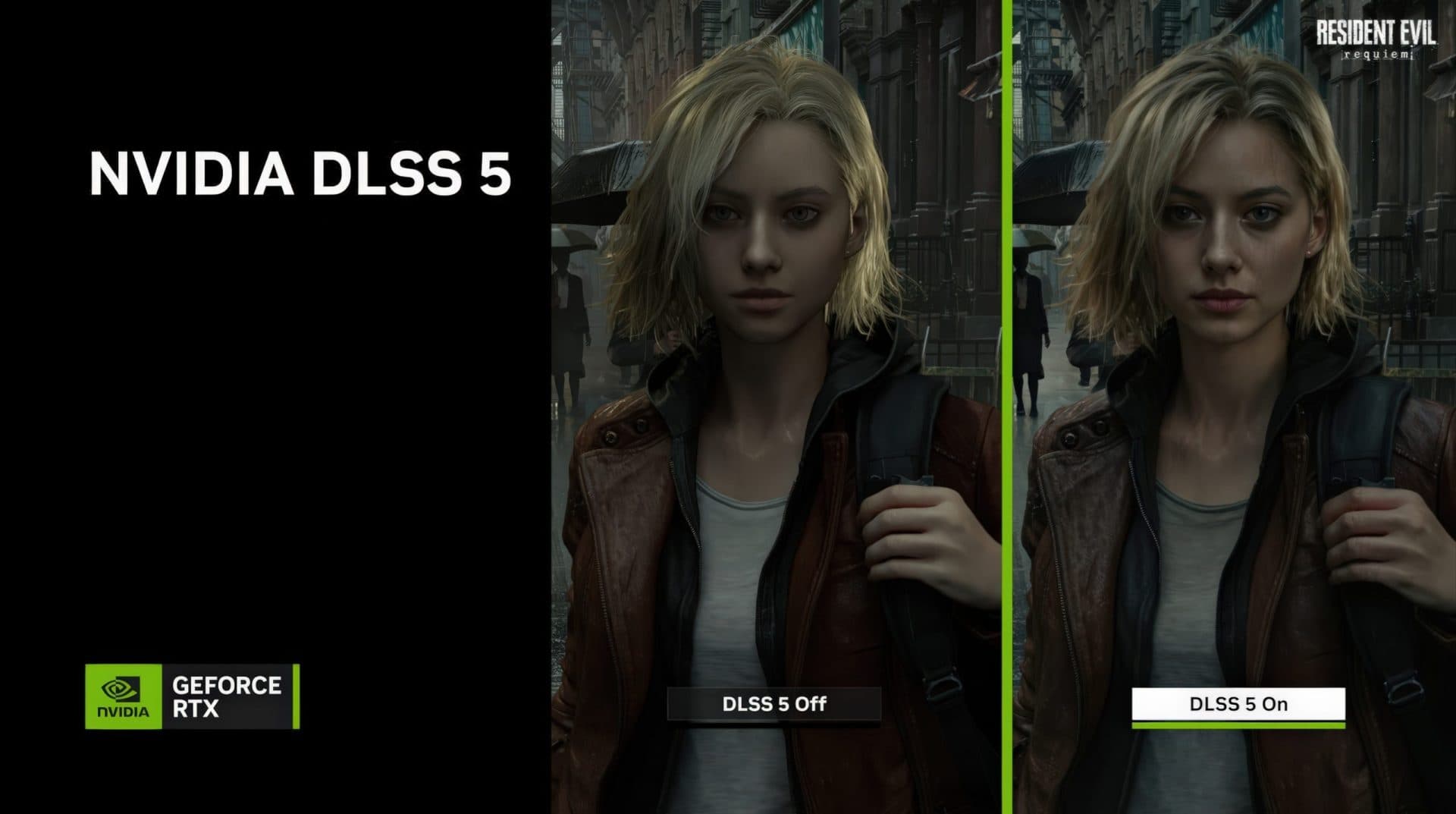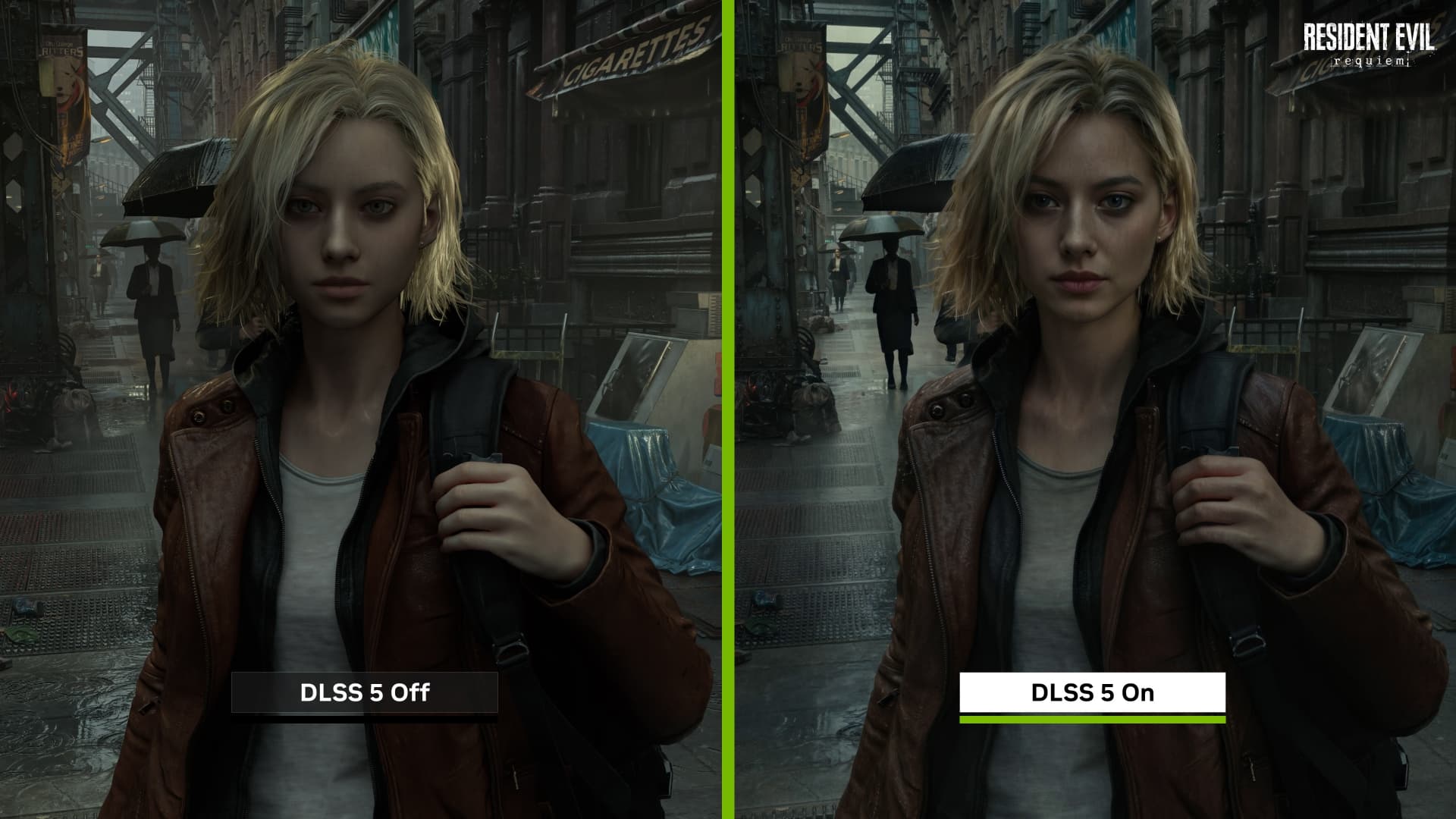
NVIDIA has once again redefined the boundaries of video game visual fidelity with the unveiling of DLSS 5 at the GPU Technology Conference (GTC) 2024 in San Jose, California. The company’s most ambitious graphics innovation since real-time ray tracing debuted in 2018, DLSS 5 introduces a real-time neural rendering model that infuses individual pixels with photoreal lighting and materials—bridging the historic gap between rendered game worlds and cinematic reality. Scheduled for release this fall, DLSS 5 will be supported by industry titans including Bethesda, CAPCOM, Ubisoft, Tencent, and Warner Bros. Games, marking a paradigm shift in how gamers experience digital environments.
What Is DLSS 5? The AI Engine That Redefines Real-Time Gaming Visuals
At its core, DLSS 5 represents the convergence of neural rendering and generative artificial intelligence, enabling video games to render photorealistic lighting, textures, and materials in real time—something previously achievable only in offline Hollywood visual effects. Unlike traditional rendering techniques that rely on brute computational force, DLSS 5 uses a deep learning model trained to understand complex scene semantics such as character skin, fabric sheen, hair dynamics, and environmental lighting conditions like front-lit, back-lit, or overcast scenarios. By analyzing a single frame, the AI infuses the entire scene with realistic light interactions, subsurface scattering on skin, and delicate material properties—all while maintaining deterministic consistency across every subsequent frame.
How DLSS 5 Differs From Prior Versions: A Leap Beyond Upscaling
DLSS has evolved significantly since its 2018 debut as an AI-powered upscaling solution designed to boost frame rates without compromising image quality. DLSS 4.5, unveiled at CES 2024, could generate 23 out of every 24 pixels on screen using AI, a technological feat that reduced GPU load while preserving visual clarity. However, DLSS 5 transcends performance optimization by focusing on visual fidelity itself. It no longer merely reconstructs missing pixels—it intelligently enhances them with photorealistic lighting and material properties that adhere to the game developer’s 3D world and artistic intent. This shift from performance to quality represents a fundamental evolution in how AI serves interactive media.
Real-Time Neural Rendering: The Science Behind the Magic
The breakthrough hinges on a real-time neural rendering model that processes color and motion vectors from each frame, then applies learned physical lighting and material behaviors. Unlike offline AI models used in film or static image generation—where outputs vary unpredictably with each prompt—DLSS 5 ensures deterministic results grounded in the game’s source 3D content. This allows artists to maintain precise control over intensity, color grading, and masking, ensuring that enhancements align with the game’s unique aesthetic. The system runs seamlessly on NVIDIA Streamline, the same integration framework used by DLSS 4 and NVIDIA Reflex, ensuring compatibility with existing and future titles.
Why This Matters: The 375,000x Compute Advantage and the Cinematic Gap
For decades, NVIDIA has pursued the holy grail of photoreal real-time rendering—a goal complicated by the vast computational divide between interactive games and offline visual effects. A Hollywood VFX frame can take minutes to hours to render using massive render farms, while a modern game must complete within 16 milliseconds to maintain 60 FPS gameplay. Historically, brute-force rendering alone could not bridge this gap. NVIDIA’s innovations—from programmable shaders in GeForce 3 (2001) to CUDA GPUs in 2006, real-time ray tracing in 2018, and now neural rendering in 2024—have collectively delivered a staggering 375,000x increase in compute power. Yet raw performance has its limits. DLSS 5 leverages AI to simulate the physical behavior of light and materials with unprecedented efficiency, enabling games to achieve cinematic visuals without sacrificing interactivity.
Industry Support and Developer Enthusiasm: A New Era for Game Visuals
DLSS 5 has already secured commitments from some of the most influential names in gaming. Bethesda Game Studios, known for titles like *Starfield* and *The Elder Scrolls*, sees DLSS 5 as a tool to unlock unparalleled artistic expression. “NVIDIA and Bethesda have a long history of pushing gaming graphics and innovation forward, and DLSS 5 represents the next major step in that journey,” said Todd Howard, studio head and executive producer at Bethesda. “With DLSS 5, the artistic style and detail shine through without being held back by the traditional limits of real-time rendering.”
“At CAPCOM, we strive to create experiences that feel cinematic, compelling and deeply believable — where every shadow, texture and ray of light is crafted with intention to enhance atmosphere and emotional impact. DLSS 5 represents another important step in pushing visual fidelity forward, helping players become even more immersed in the world of Resident Evil.” — Jun Takeuchi, executive producer and executive corporate officer, CAPCOM
Ubisoft’s Charlie Guillemot, co-CEO of Vantage Studios, echoed this sentiment in the context of *Assassin’s Creed Shadows*: “Immersion is about making the world feel real. DLSS 5 is a real step towards that goal. The way it renders lighting, materials and characters changes what we can promise to players. On *Assassin’s Creed Shadows*, it’s letting us build the kinds of worlds we’ve always wanted to.”
Games Set to Feature DLSS 5 This Fall
- AION 2
- Assassin’s Creed Shadows
- Black State
- CINDER CITY
- Delta Force
- Hogwarts Legacy
- Justice
- NARAKA: BLADEPOINT
- NTE: Neverness to Everness
- Phantom Blade Zero
- Resident Evil Requiem
- Sea of Remnants
- Starfield
- The Elder Scrolls IV: Oblivion Remastered
- Where Winds Meet
The Technical Evolution: From Ray Tracing to Neural Rendering
NVIDIA’s graphics journey has been marked by a series of architectural revolutions. The GeForce 3 in 2001 introduced programmable shaders, democratizing custom graphics effects for developers. The GeForce 8800 GTX in 2006 brought CUDA, enabling general-purpose GPU computing and accelerating tasks beyond graphics. The GeForce RTX 2080 Ti debuted real-time ray tracing in 2018, simulating how light bounces off surfaces with physical accuracy. Now, with DLSS 5, NVIDIA is pioneering neural rendering—a fusion of AI and graphics that goes beyond simulating light to generating it in real time. Jensen Huang, founder and CEO of NVIDIA, framed the innovation as a ‘GPT moment for graphics,’ comparing it to the generative AI revolution that transformed language models. ‘Twenty-five years after NVIDIA invented the programmable shader, we are reinventing computer graphics once again,’ Huang said. ‘DLSS 5 is the GPT moment for graphics — blending handcrafted rendering with generative AI to deliver a dramatic leap in visual realism while preserving the control artists need for creative expression.’
Key Takeaways: What Gamers and Developers Need to Know
- DLSS 5 uses real-time neural rendering to infuse game pixels with photoreal lighting and materials, achieving cinematic visuals without sacrificing performance.
- This fall’s release marks a shift from AI upscaling (like DLSS 4.5) to AI-driven visual enhancement, enabling richer textures, accurate subsurface scattering, and dynamic environmental lighting.
- Supported by major publishers including Bethesda, Ubisoft, Tencent, and CAPCOM, DLSS 5 will debut in over a dozen high-profile games this fall.
- The technology maintains artistic control for developers, allowing them to fine-tune intensity, color grading, and masking to preserve each game’s unique aesthetic.
- DLSS 5 runs at up to 4K resolution in real time, ensuring smooth, immersive gameplay on NVIDIA RTX GPUs.
The Broader Impact: AI, Gaming, and the Future of Interactive Media
DLSS 5 is more than a graphics upgrade—it signals a broader transformation in how AI intersects with interactive entertainment. As generative AI becomes increasingly capable of producing photoreal content, the gaming industry stands at the precipice of a new era where the line between pre-rendered cinematics and real-time gameplay blurs. This technology also has implications for virtual production, augmented reality, and cloud gaming, where high-fidelity visuals must be delivered with minimal latency. NVIDIA’s integration of AI into the rendering pipeline underscores a future where developers are no longer constrained by the limitations of real-time physics or computational power—freeing them to focus on storytelling, world-building, and emotional resonance.
What Comes Next: The Road to Path Tracing and Beyond
While DLSS 5 represents a monumental leap, NVIDIA’s roadmap suggests even more ambitious goals. The company has teased path tracing—a rendering technique that simulates the physical behavior of light in all directions—as a future target. Path tracing promises even greater realism but demands exponentially more compute power. With DLSS 5’s neural rendering framework, NVIDIA is laying the foundation for a hybrid rendering pipeline where AI assists in generating missing light paths in real time, potentially enabling full path tracing without prohibitive hardware requirements. As Huang noted during his GTC keynote, this evolution reflects NVIDIA’s long-standing mission: to make the impossible possible in interactive graphics.
How to Experience DLSS 5 This Fall
Gamers and enthusiasts eager to experience DLSS 5 firsthand will need an NVIDIA RTX GPU and a supported game. DLSS 5 will be available as part of an upcoming NVIDIA driver update, with supported titles launching throughout the fall. Developers are encouraged to integrate DLSS 5 via the NVIDIA Streamline SDK, ensuring compatibility with existing and future projects. For those attending GTC 2024, NVIDIA is hosting sessions on DLSS 5, neural rendering, and the future of AI in gaming, offering deeper technical insights into the technology’s inner workings.
Frequently Asked Questions
Frequently Asked Questions
- What is DLSS 5 and how is it different from previous versions?
- DLSS 5 is NVIDIA’s next-generation AI rendering technology that enhances game visuals by infusing pixels with photoreal lighting and materials in real time. Unlike prior versions focused on performance upscaling, DLSS 5 prioritizes visual fidelity, generating realistic light interactions and material properties while maintaining artistic control for developers.
- Which games will support DLSS 5 when it launches?
- DLSS 5 will debut this fall in over a dozen major titles, including *Starfield*, *Resident Evil Requiem*, *Assassin’s Creed Shadows*, *Hogwarts Legacy*, and *The Elder Scrolls IV: Oblivion Remastered*, with more expected to be announced.
- Do I need a new GPU to use DLSS 5?
- DLSS 5 requires an NVIDIA RTX GPU. Existing RTX 20, 30, and 40 series cards are expected to support DLSS 5 through driver updates, though performance and feature availability may vary based on hardware generation.