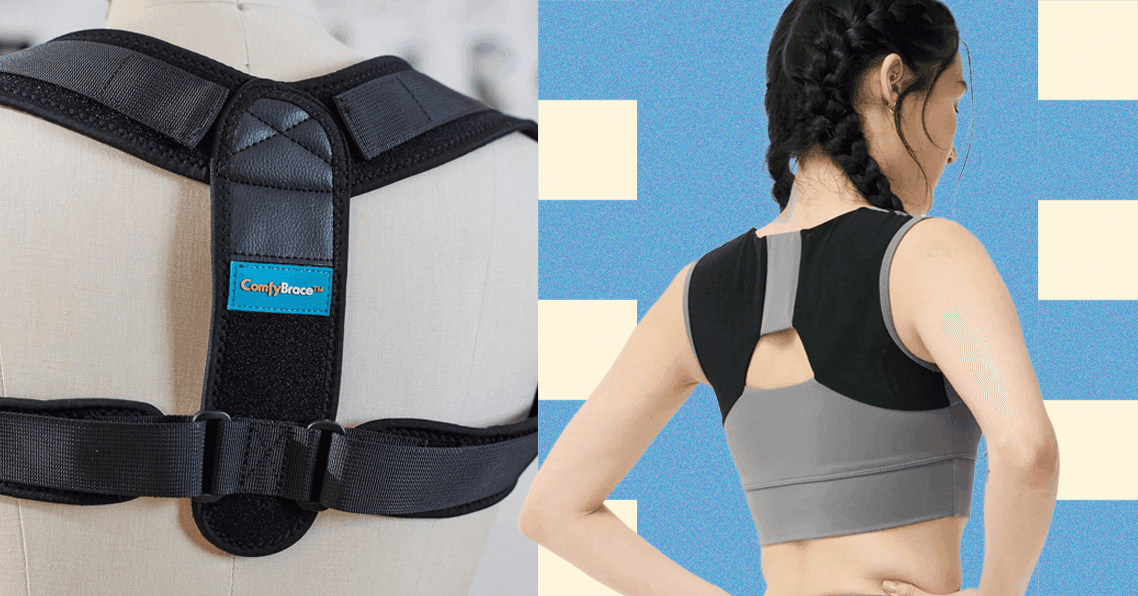
LoaderSave StorySave this storyCommentLoaderSave StorySave this storyFeatured in this articleBest OverallComfyBrace Adjustable Posture CorrectorRead more$30 $23 (23% off) Amazon
Best Posture-Correcting BraForme Power BraRead more$179 Forme
Best Tech WearableUpright Pose Upright Go S Lite Posture Corrector TrainerRead more$68 $64 (6% off) Amazon
After nearly two years of testing, experimenting, and a few accidental naps (don't sleep in them), one thing became clear: The secret to posture correctors is consistency. It isn't a magic fix to poor posture, and your transformation won't happen overnight. Still, the right posture corrector can train you to sit taller, stand straighter, and develop the kind of muscle memory that sticks, even after you've taken the device off.
The best posture correctors don't contort your body into an unnatural position. Rather, they offer reminders to sit or stand more mindfully. Here's a rundown of the posture correctors I tested and noticed made a lasting change in my posture. If you’re serious about posture correction and overall wellness, check out our guides on the Best Laptop Stands, Best Walking Pads, and Everything You Need for Your Yoga Practice.
Compare Top 3 Posture CorrectorsHonorable MentionsMore Accessories to TryFinal Tips and AdviceFrequently Asked QuestionsHow I Test Posture CorrectorsUpdated March 2026: I've added an Honorable Mentions section, added product specs to our favorites, and updated information. Prices and links were also updated; discontinued products were removed.
Photograph: FormeSave to wishlistSave to wishlistForme
For what it's worth, I tried the Power Bra before Taylor Swift was spotted in it—I'm not saying I started the trend, but she clearly has great taste. The Power Bra by Forme was designed by Stephen Liu, an orthopedic surgeon, to help his mother better her posture and battle compressed lungs from cancer.
I would recommend the Power Bra as an alternative to the Etalon Posture Bra if you're not a fan of the straps, but you will be sacrificing the ability to adjust your corrector as you improve your posture. Otherwise, it's just as comfortable and super flattering to wear out as it is to wear at home. Forme suggests stretching the armholes 10 to 20 holes before wearing, and I would second that. I didn't do that at first and found the armholes to be too tight around my pits.
Forme offers sizes ranging from XS to 3XL and cups from A to F.
WIREDDoubles as a sports braSold in a variety of colorsTIREDNon-adjustableIt can be too tight around the armpitsBest Tech WearableCourtesy of UprightSave to wishlistSave to wishlistUpright Pose
Upright Go S Lite Posture Corrector Trainer
The Upright Go is easy to use and safe, working by vibrating when you hunch over for too long. It's like someone tapping you on the shoulder every time you slouch. Just stick this little rectangle on your upper back—either via adhesive strips or attached to the USB-C necklace—calibrate it through the app (available for iOS 11 or Android 8.0 and later), and forget about it. You can change the length and intensity of the vibrations within the app and track your slouching habits if you want to see some humbling data on just how bad your posture is.
The Go S is about $20 cheaper than the Go 2 I originally tested, but it's as great in nearly every way. The S stores your results for seven days before you need to sync them over Bluetooth via the companion app, whereas the Go 2 can store data for 30 days. The Go S has just one sensor to detect movement instead of two, and there's no advanced movement detection, but I didn't notice any differences in its capabilities. The only major downside is that you get 2.5 days of battery life instead of five. (You can recharge it via USB-C.) Still, this has been the only posture-correcting device that managed to make me think about my posture even when I'm not wearing it. The Upright Go 2 is still a great device, and you can often find it discounted. It might be worth it for the extended battery life and additional sensor. —Medea Giordano
WIREDAdjustableComfortableTrack posture issues via appTIREDShort battery lifeLimited storage dataCompare Top 3 Posture CorrectorsProductBrace StyleWIREDTIREDSizesAdjustablePriceComfyBrace Adjustable Posture CorrectorBraceStretchy and breathable neoprene fabricCan be uncomfortable for direct skin contact, especially under the armsNone (for chest sizes of 30 to 43 inches)Yes$30Forme Power BraBraSold in a variety of colors; can be worn as a sports braNon-adjustable; can be too tight around the armpitsXS through 3XLNo$182Upright Go S Lite Posture Corrector TrainerWearable biofeedback deviceComfortable; tracks posture issues via appShort battery life; limited storage dataNoneYes$60Honorable MentionsCourtesy of EtalonEtalon Posture Bra for $199: The Etalon Posture Bra's six adjustable straps are the standout feature, distributing weight evenly across your back muscles and shoulders. While Etalon markets it for desk work and light activities like walking or hiking, I've found it also holds up during strength training as a high-support sports bra. The setup looks complicated, but it is actually user-friendly. Etalon recommends sticking with the default strap configuration for three weeks to let your body adjust before making any tweaks. That said, if you need a stronger nudge to stay upright, you might find this bra a little too forgiving—I've already maxed out the adjustments for the firmest hold.
BackEmbrace Posture Corrector for $70: Similar to ComfyBrace, the BackEmbrace is an adjustable brace that pulls back the shoulders and lifts your chest to help you shift into proper posture. The lumbar support also offers temporary upper-back pain relief. The split-strap design is way trickier to put on the first couple of times, but it gets better with practice. The design also helps bend the body in a way that the ComfyBrace just can't, and it does feel more comfortable to wear under baggy clothes. It's also less likely to irritate with direct skin contact than neoprene fabrics. I would still stick to wearing this over my clothes when I'm working from home, but it's a perk to have if you want to take your back posture corrector outside. Bonus: It's machine washable (but lay flat to dry).
Courtesy of BranchBranch Adjustable Laptop Stand for $65: If you work at a desk, a simple change is to set it up to be as ergonomic as possible. This laptop stand from Branch is our favorite. It's easily adjustable in height and angle, and super sturdy. If you can also add a computer monitor with a separate keyboard and mouse, you can be even more comfortable sitting upright. If you have a bigger budget, consider a standing desk and an office chair—we've tested several in our Best Home Office Gear guide.
Gaiam Yoga Strap for $10: If you already own a long yoga strap, you can easily make your own shoulder strap posture brace for temporary use—a yoga teacher recommended this to me for use during a class. According to yoga teacher Kathryn Budig: Wrap the strap around your back, right around the base of your shoulder blade or bra line, and pull the excess out evenly in front of you. Bring each end over your shoulders and crisscross them behind you, making an X shape on your back. Bring the straps around to the front, pulling your shoulders back, and buckle them in the front. The length of the strap you'll need depends on your body, including shoulder and chest size, but I recommend at least 10 feet. Anything smaller will likely be more painful than helpful.
Try yoga and other exercises. A sedentary lifestyle is a one-way ticket to bad posture. Yoga, in particular, has been touted as a means to better posture. When I’m consistent with my practice, I notice I sit and stand taller outside of the studio, almost instinctively. If you’re not into yoga, core-strengthening exercises like planks and chest presses are also an option. Alternatively, just incorporating morning stretches into your routine will work wonders.
Seek a medical professional. A doctor, physical therapist, or chiropractor can help you find a corrector that supports your body’s problem areas‚ or steer you toward an alternative solution that does. Also, if you have severe lower back or neck pain, kyphosis, or scoliosis, always consult a healthcare professional before trying any at-home remedies.
Your spine naturally has three curves: at your neck (cervical spine), mid-back (thoracic spine), and lower back (lumbar spine). Proper alignment shouldn't add extra curvature to any of these sections. Here are some general guidelines:
- Your head should be above your shoulders, and the top of your shoulders should be above your hips. If you're standing, keep your feet hip-distance apart. Most of your weight should be on the balls of your feet.
- If you're sitting, keep your feet flat on the floor, knees bent at 90 degrees, and your ankles separated. If you can't reach the floor, a footrest can help.
The writers at the Natural Posture explain that poor posture—sitting with your shoulders forward—causes the soft muscles in your chest to get tight, which in turn makes it feel uncomfortable to sit up straight. Bad posture isn't just about slouching. Poor alignment can also come from genetics, injuries, or repetitive movements. “A wrong posture is anything for too long,” according to physician Matthew Smith of the Northwestern University Feinberg School of Medicine.
We slouch over screens, lug totes on one dominant shoulder, and lean on one hip while standing. Your workstation setup often hinders your posture, and how you sit matters, too. Are your feet flat on the ground, with your knees and hips at a 90-degree angle? Or are you, like me, guilty of tucking one leg under the other? Over time, these habits throw your body out of balance. Here are some tips on how to set up your desk ergonomically for working or gaming.
Posture correctors aren’t a one-size-fits-all cure for slouching or hunched backs. Think of them as little gentle wake-up calls for your muscles—the ones that have been slacking off while you hunch over your laptop. These tools come in all shapes and designs, but the best ones address the muscle imbalances created by our everyday habits. They're not supposed to hold you in place (and if they do, that's a red flag). Overly rigid correctors can actually weaken your muscles by doing all the work for you.