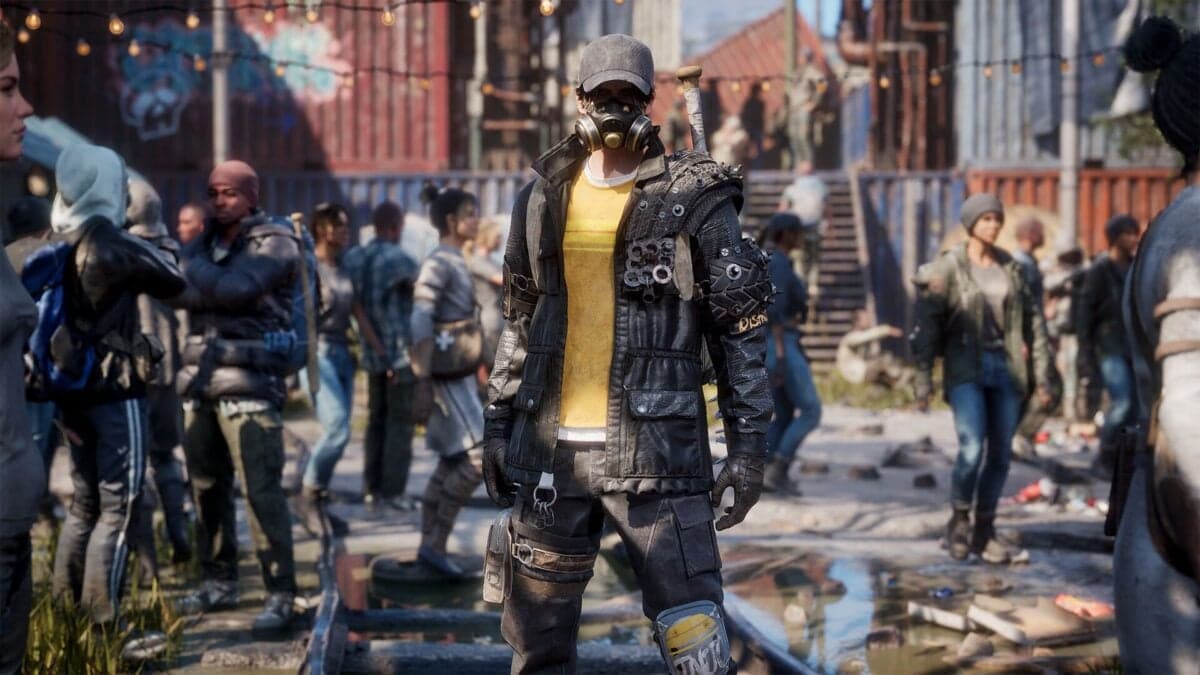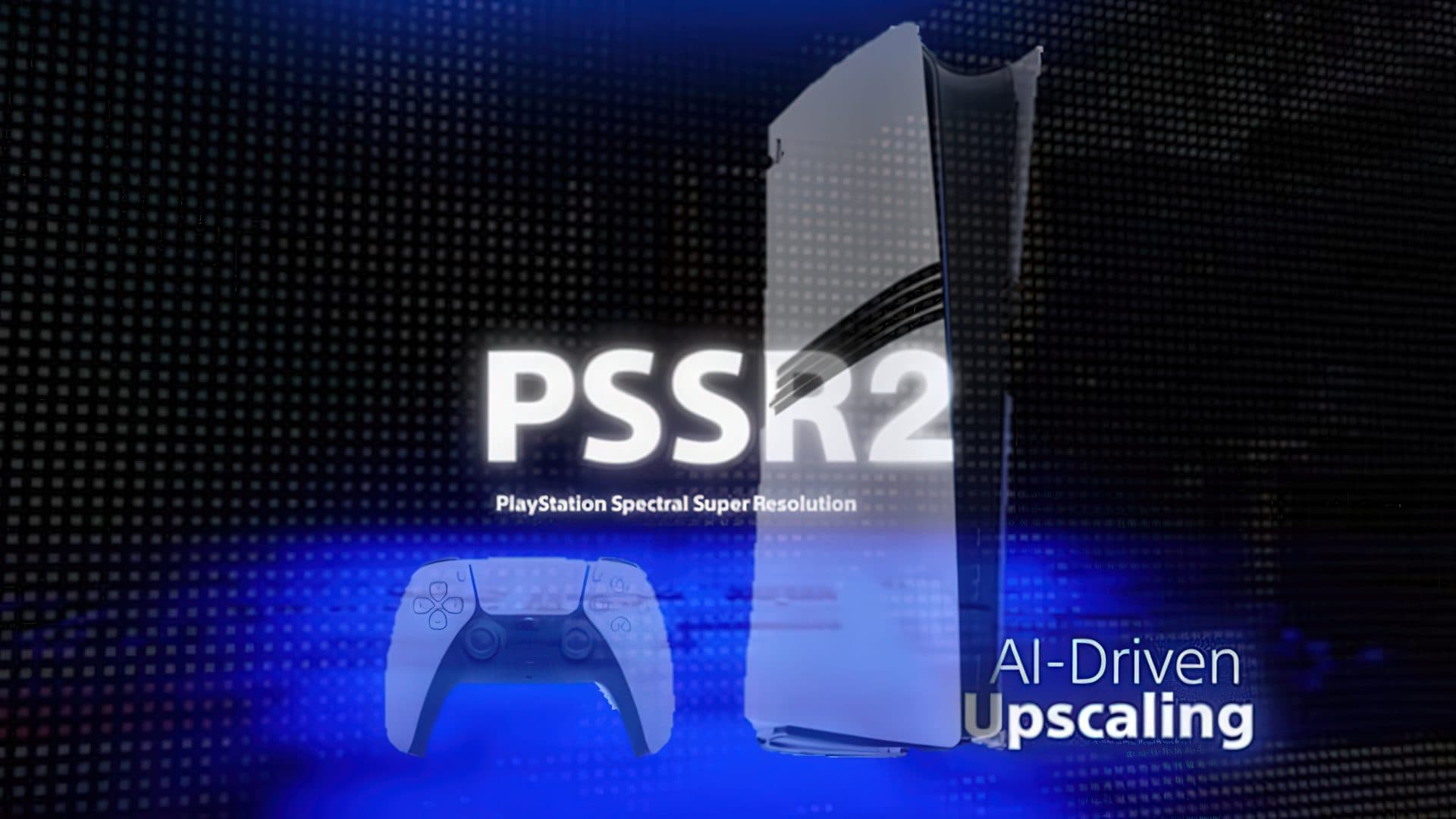
PlayStation 5 Pro owners now have access to PlayStation Spectral Super Resolution (PSSR) 2.0, Sony’s next-generation AI upscaling technology that delivers near-native 4K visuals with enhanced clarity and stability. Unveiled alongside the PS5 Pro in November 2024 and refined in its current iteration with a major update on March 16, 2026, PSSR 2.0 represents a leap forward in image reconstruction, addressing the shimmering and graininess that plagued its predecessor. With a system-wide toggle enabling backward compatibility for PSSR 1.0 titles, players can instantly upgrade older games to the new standard—though some may experience visual quirks in certain titles. As Sony’s Mark Cerny has indicated, future iterations of PSSR may integrate frame generation, further closing the gap between upscaled and native 4K performance.
What Is PlayStation Spectral Super Resolution (PSSR)?
PlayStation Spectral Super Resolution (PSSR) is Sony’s proprietary AI-driven upscaling technology designed to deliver high-fidelity 4K visuals on the PS5 Pro without the performance cost of native rendering. Unlike traditional spatial upscalers that rely on mathematical interpolation to stretch lower-resolution images, PSSR leverages machine learning models trained on tens of thousands of high-resolution frames to intelligently reconstruct missing pixels with remarkable precision. This approach mirrors the functionality of NVIDIA’s Deep Learning Super Sampling (DLSS) and AMD’s FidelityFX Super Resolution (FSR) series, but with optimizations tailored for Sony’s hardware and game ecosystem.
How PSSR Works: AI Upscaling vs. Traditional Methods
At its core, PSSR operates by rendering games at a lower resolution—typically 1080p or 1440p—before applying its neural network to enhance the output to a crisp 4K display. This strategy frees up valuable GPU resources, allowing developers to allocate power toward higher frame rates, more detailed textures, advanced ray tracing, or richer environmental effects. Traditional spatial upscalers, such as the early versions of FSR, use basic interpolation algorithms that can introduce blurring, artifacting, or loss of fine detail—especially in fast-moving scenes involving hair, foliage, or metallic surfaces. PSSR, by contrast, incorporates temporal data from previous frames, enabling it to better predict and reconstruct intricate details while minimizing shimmering and flickering artifacts that degrade visual fidelity during motion.
PSSR 1.0 vs. PSSR 2.0: Key Improvements and Differences
When the PS5 Pro launched in November 2024, it debuted with PSSR 1.0, Sony’s first foray into AI upscaling for consoles. While widely adopted by developers, PSSR 1.0 suffered from several notable limitations, including temporal instability—manifesting as shimmering in fine details like chain-link fences, hair strands, or dense foliage—and a slightly grainier image under certain lighting conditions. These issues stemmed from early iterations of Sony’s neural network, which lacked the refinement of later models. PSSR 2.0, released on March 16, 2026, marks a significant evolution. Developed in collaboration with AMD under the codename Project Amethyst, PSSR 2.0 is built on a fork of AMD FSR 4, optimized specifically for the PS5 Pro’s GPU architecture. The update delivers improved temporal stability, sharper edge reconstruction, and reduced noise, positioning it alongside or even slightly ahead of FSR 4 in visual quality, according to independent analysis by Digital Foundry.
Technical Breakthroughs in PSSR 2.0
- Enhanced temporal stability: Reduces flickering and shimmering in fine details during motion.
- Improved image clarity: Sharper texture edges and reduced graininess under dynamic lighting.
- Optimized AMD FSR 4 integration: Leverages AMD’s advanced super-resolution models adapted for PlayStation hardware.
- Backward compatibility: All PSSR 1.0 titles can be upgraded to 2.0 via system toggle with minimal risk of visual artifacts.
How the PS5 Pro’s PSSR System Toggle Works
One of PSSR 2.0’s most compelling features is its system-wide toggle, accessible through the PS5 Pro’s Settings menu under "Enhance PSSR Image Quality." This menu option allows players to switch between PSSR 1.0 and 2.0 for all compatible games, regardless of whether the developer has issued a patch. According to Mark Cerny, Sony’s lead system architect for the PS5 Pro, the toggle currently defaults to PSSR 2.0 and is expected to remain fixed to this version for the foreseeable future—though the phrasing leaves open the possibility of future updates or iterations that might adjust the default behavior. Players should note that while most games benefit visually from the upgrade, some titles may exhibit unexpected artifacts when PSSR 2.0 is enabled. In such cases, users can revert to PSSR 1.0 without issue.
Full List of PSSR 2.0 Native Games and Upgradeable PSSR 1.0 Titles
As of mid-2026, only a select number of titles have received native PSSR 2.0 patches from their developers, ensuring optimal performance and compatibility with the new algorithm. However, the vast majority of PSSR 1.0 games can be upgraded to PSSR 2.0 using the system toggle, provided they support the PSSR framework at all. Below is the confirmed list of native and upgradeable titles, based on Sony’s latest updates and developer communications.
Native PSSR 2.0 Games (Developer-Patched)
- Call of Duty: Black Ops VI
- Call of Duty: Black Ops VII
- Indiana Jones and the Great Circle
- Metal Gear Solid Delta: Snake Eater
- Outbreak: Shades of Horror – Chromatic Split
- The Last of Us Part II Remastered
PSSR 1.0 Games Upgradeable to PSSR 2.0 via System Toggle
- All titles originally released with PSSR 1.0 support are eligible for upgrade, including major third-party releases such as *God of War Ragnarök*, *Spider-Man 2*, *Horizon Forbidden West*, and *Final Fantasy XVI*.
- Exclusive first-party titles like *Demon’s Souls Remake*, *Ratchet & Clank: Rift Apart*, and *Returnal* also support the system-wide toggle for improved upscaling quality.
- Sony has indicated that future patches and updates may expand native PSSR 2.0 support to additional titles, particularly those receiving major post-launch content or graphical overhauls.
Why PSSR 2.0 Matters for PS5 Pro Owners and the Gaming Industry
The introduction of PSSR 2.0 is more than a technical milestone—it’s a strategic move by Sony to redefine the visual expectations of console gaming. By enabling near-native 4K quality at a fraction of the performance cost, PSSR allows developers to push the boundaries of graphical fidelity without sacrificing frame rates or responsiveness. This is particularly critical for the PS5 Pro, which, despite its enhanced hardware, still operates within the constraints of a fixed console form factor. For players, the benefits are immediate: sharper visuals, reduced latency in fast-paced titles, and a more immersive experience across a growing library of games. Industry analysts see PSSR 2.0 as a competitive response to NVIDIA’s DLSS and AMD’s FSR, signaling Sony’s commitment to owning the high-end console visual experience.
The Future of PSSR: Frame Generation and Beyond
Looking ahead, Mark Cerny has confirmed that Sony is actively developing a version of AMD’s FSR Frame Generation technology for integration into the PSSR suite. Frame generation works by inserting interpolated frames between rendered frames, effectively doubling the perceived frame rate without a proportional increase in GPU load. When implemented, this feature could further elevate the PS5 Pro’s performance ceiling, enabling smoother animations in visually demanding scenes while maintaining high-resolution output. While no official release window has been announced, Cerny’s comments suggest that frame generation could arrive as part of a future PSSR update, potentially transforming the PS5 Pro into a more capable 4K gaming powerhouse.
Key Takeaways: What PS5 Pro Owners Need to Know
- PSSR 2.0 delivers significantly improved image quality and stability over PSSR 1.0, with sharper edges, reduced noise, and better temporal coherence.
- A system-wide toggle allows players to upgrade most PSSR 1.0 games to version 2.0, though some titles may exhibit visual artifacts requiring a rollback.
- Only six titles currently support native PSSR 2.0, but Sony is expected to expand the list through future patches.
- Frame generation is confirmed for a future PSSR update, promising smoother performance and higher frame rates without additional GPU strain.
- PSSR 2.0 positions the PS5 Pro as a leader in console upscaling, rivaling PC-focused technologies like DLSS and FSR 4.
How to Enable PSSR 2.0 on Your PS5 Pro
To activate PSSR 2.0 on your PS5 Pro, follow these steps: Navigate to Settings > Screen and Video > Video Output > Enhance PSSR Image Quality. Toggle the setting to "On" to enable PSSR 2.0 across all compatible games. If you encounter visual issues such as flickering or graininess in specific titles, return to the menu and disable the toggle to revert to PSSR 1.0. Keep in mind that the toggle applies system-wide and will affect all games that support PSSR, regardless of whether they have received a native PSSR 2.0 patch.
Frequently Asked Questions About PSSR 2.0 on PS5 Pro
Frequently Asked Questions
- Does the PSSR system toggle work on all PS5 Pro games?
- The toggle applies to most games that originally supported PSSR 1.0, including first- and third-party titles. However, some games may not support PSSR at all. Check individual game settings or release notes for confirmation.
- Can I force PSSR 2.0 on games that don’t officially support it?
- No. The system toggle only applies to games already compatible with the PSSR framework. Attempting to use the toggle on unsupported titles will have no effect, as the game will default to its native rendering mode.
- Will frame generation be available as part of PSSR 2.0, or is it a future update?
- Frame generation is confirmed as a future feature for PSSR, though it has not been released as of mid-2026. Mark Cerny has stated that it is in development under Project Amethyst and will likely arrive in a subsequent PSSR update.