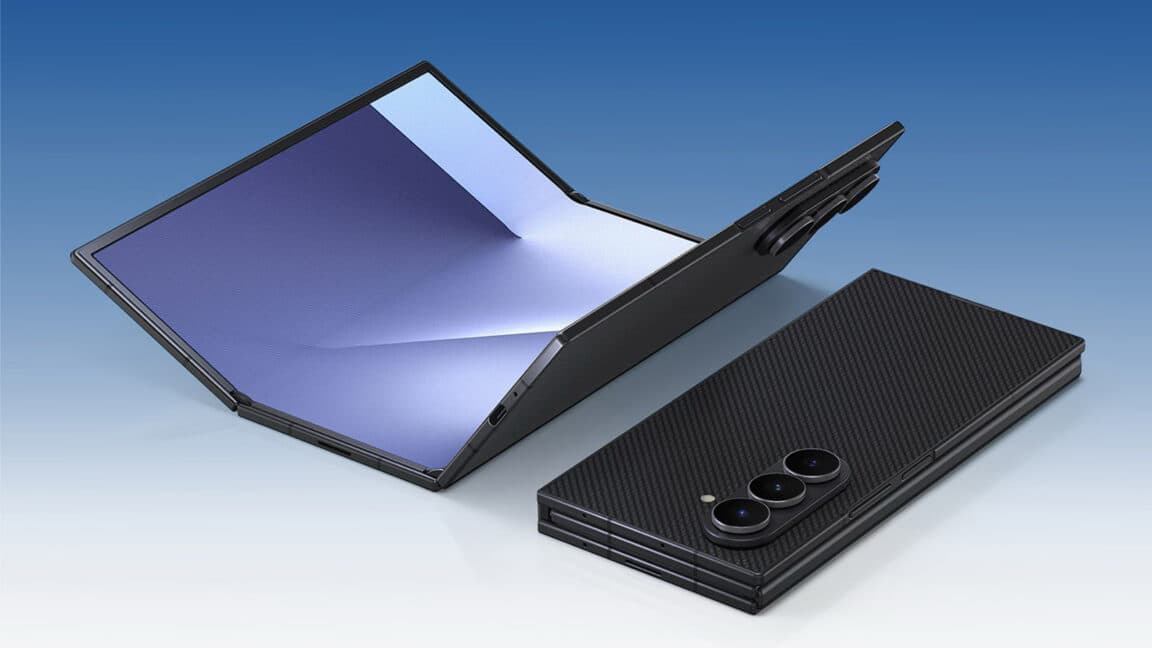
Samsung has abruptly ended sales of its flagship Galaxy Z TriFold, a $2,899 foldable smartphone that transforms from a phone-sized device into a 10-inch tablet, just three months after its global debut. The company confirmed the discontinuation on Tuesday, marking the shortest retail lifespan of any recent Samsung flagship device. While Samsung has not issued an official statement explaining the move, industry analysts point to sharply rising component costs, particularly for RAM and storage, as the primary driver behind the decision. The TriFold’s base model packed 16GB of RAM and 512GB of storage—levels typically reserved for high-end laptops—yet its $2,899 price tag failed to offset the escalating manufacturing expenses.
The Galaxy Z TriFold: A Bold Engineering Experiment with a Short Lifespan
Unveiled in late 2024 and launched in South Korea in December 2025 before expanding to the U.S. and other markets in January 2025, the Galaxy Z TriFold represented Samsung’s most ambitious foray yet into multi-hinge foldable technology. Unlike traditional foldables that bend along a single axis, the TriFold featured two hinges, enabling it to unfold into a near-tablet form factor while remaining compact enough for pocketability. The device’s engineering prowess was undeniable: reviewers praised its seamless transition between modes, durable hinge mechanism, and the largest foldable display Samsung had ever produced. However, its $2,899 starting price placed it in the ultra-luxury tier of consumer electronics, a segment dominated by niche buyers willing to pay premiums for cutting-edge technology.
Why the TriFold Was Always a High-Risk Proposition
Market analysts have long debated whether foldable smartphones could ever achieve mainstream adoption, and the Galaxy Z TriFold’s rapid exit underscores the challenges facing even the most innovative devices in this category. According to Counterpoint Research, global foldable smartphone shipments reached 21.4 million units in 2024—a 54% year-over-year increase—but the vast majority of these sales were concentrated in the $1,000 to $1,500 price range. Devices priced above $2,000 accounted for less than 5% of the market, and the TriFold’s $2,899 tag positioned it well outside the typical consumer’s budget. "The TriFold was never positioned as a mass-market device," said Jusy Hong, a senior analyst at Counterpoint. "It was a prestige product, a showcase for Samsung’s engineering capabilities. But prestige doesn’t always translate to profitability, especially when component costs are volatile."
The TriFold’s demise also reflects broader industry trends in the smartphone market. After years of stagnant growth, global smartphone shipments declined by 3.2% in 2024, according to IDC, as consumers held onto devices for longer periods due to inflationary pressures and rising living costs. Even Apple, which commands a premium in the luxury market, has faced challenges in convincing users to upgrade at the same pace as in previous years. Samsung’s decision to discontinue the TriFold may signal a strategic pivot toward more sustainable price points, particularly as it prepares to launch the Galaxy S26 series—a line expected to include a revamped Ultra model with advanced camera features and a $1,399 price tag.
The Role of Rising Component Costs in Samsung’s Decision
While Samsung has not publicly detailed the financials behind the TriFold’s discontinuation, multiple industry sources cited in Bloomberg reports suggest that the soaring cost of DRAM and NAND flash memory played a decisive role. The TriFold’s base configuration of 16GB of RAM and 512GB of storage was among the most generous in any smartphone, but it also made the device particularly vulnerable to price fluctuations in semiconductor markets. In 2023 and 2024, global memory prices surged due to supply chain disruptions, geopolitical tensions (including U.S.-China trade restrictions), and increased demand from AI data centers. By early 2025, the average cost of 16GB of RAM had increased by nearly 25% compared to 2022, while 512GB of NAND flash storage saw a 15% rise.
The component cost pressure on the TriFold was unsustainable. Even at a $2,899 price point, Samsung was likely operating at thin margins. Raising the price further would have been commercially risky and could have alienated the few early adopters willing to take a chance on the device. It’s a classic case of a product caught between engineering ambition and market reality."
Demand Was Strong, But Not Enough to Offset Costs
Despite the TriFold’s astronomical price, demand appeared to outstrip supply in its initial markets. Samsung’s official online store in South Korea teased potential restocks as recently as February 2025, and third-party platforms like eBay saw listings for the device selling for as much as $3,500—nearly 21% above MSRP. This frenzied secondary market activity suggested that enthusiasts and collectors were eager to own the device, regardless of price. However, Samsung’s decision to halt sales indicates that even such high margins were insufficient to justify continued production. "The TriFold was a victim of its own ambition," said Avi Greengart, president of Teardown, a tech research firm. "Samsung built a product that was technically impressive but financially unsustainable at scale. The company likely concluded that the resources required to produce even a limited number of units could be better allocated elsewhere."
How the Galaxy Z TriFold Fits Into Samsung’s Broader Foldable Strategy
Samsung’s foldable lineup has evolved significantly since the launch of the Galaxy Fold in 2019, which was plagued by durability issues and tepid consumer interest. Today, the company offers a range of foldables, including the Galaxy Z Fold 5 (a book-style foldable starting at $1,799) and the Galaxy Z Flip 5 (a clamshell design at $999). The TriFold was positioned as the apex of this ecosystem—a niche device for tech enthusiasts and early adopters. However, its discontinuation raises questions about Samsung’s long-term commitment to multi-hinge foldables.
The Future of Multi-Hinge Foldables at Samsung
Industry insiders suggest that Samsung may revisit multi-hinge designs in the future, but not in the near term. The company is expected to focus on refining its existing foldable lines, particularly the Z Fold series, which has seen steady improvements in display quality, battery life, and durability. In 2024, Samsung accounted for 65% of the global foldable smartphone market, according to Omdia, and the company is unlikely to cede this dominance by abandoning the category entirely. However, the TriFold’s failure may prompt Samsung to prioritize more incremental innovations—such as improved hinge mechanisms or under-display cameras—over radical form-factor experiments.
For now, Samsung’s decision to discontinue the Galaxy Z TriFold underscores the delicate balance between innovation and commercial viability in the smartphone industry. While the device was a marvel of engineering, its high price and component costs made it an unsustainable proposition for mass production. As Samsung prepares to launch its next-generation Galaxy S26 series, the company will need to carefully weigh the risks of chasing engineering milestones against the realities of consumer demand and market economics.
Key Takeaways: Why Samsung’s Galaxy Z TriFold Didn’t Last
- The Galaxy Z TriFold was discontinued just three months after its December 2025 launch due to rising component costs, particularly for RAM and storage.
- Despite a $2,899 price tag and strong secondary market demand, the device’s ultra-luxury positioning made it financially unsustainable for Samsung.
- The TriFold’s multi-hinge design, while innovative, placed it in a niche market segment where consumers are reluctant to pay premium prices.
- Samsung’s decision reflects broader industry trends, including sluggish smartphone growth and volatile semiconductor prices.
- The discontinuation may signal a shift toward more incremental innovations in Samsung’s foldable lineup, prioritizing profitability over radical form factors.
What’s Next for Samsung’s Foldable Phones?
With the Galaxy Z TriFold off the market, Samsung’s foldable strategy appears to be shifting toward more conventional designs. The Galaxy Z Fold 6, expected to launch in mid-2025, is rumored to feature a refined book-style foldable with a larger internal display and improved multitasking capabilities. Meanwhile, the Galaxy Z Flip 6 may introduce a more compact design with a side-mounted camera module to address durability concerns. Analysts expect Samsung to maintain its dominance in the foldable market by focusing on incremental improvements rather than groundbreaking form factors like the TriFold.
The Broader Impact on the Foldable Smartphone Market
Samsung’s exit from the multi-hinge foldable segment could have ripple effects across the industry. Competitors like Huawei, which has experimented with tri-fold designs in its Mate X series, may also reassess their strategies. Meanwhile, Chinese brands such as Oppo and Vivo, which have shown interest in foldables, may take note of Samsung’s caution. The failure of the Galaxy Z TriFold highlights the challenges of bringing radical new form factors to market, particularly in an economic climate where consumers are increasingly price-sensitive. "The TriFold’s demise is a cautionary tale," said Carolina Milanesi, a tech analyst at Creative Strategies. "It shows that even the most advanced technology must align with market realities. Innovation alone isn’t enough—it has to be financially viable."
Frequently Asked Questions About Samsung’s Galaxy Z TriFold Discontinuation
Frequently Asked Questions
- Why did Samsung stop selling the Galaxy Z TriFold?
- Samsung discontinued the Galaxy Z TriFold due to sharply rising component costs, particularly for RAM and storage. The device’s $2,899 price tag, while high, was insufficient to offset the increased manufacturing expenses, making the device unsustainable for continued production.
- Was the Galaxy Z TriFold a commercial failure?
- The Galaxy Z TriFold was not a commercial failure in terms of demand—it sold out quickly in its initial markets and fetched premium prices on secondary markets. However, its high price point and low production volume made it financially unviable for Samsung to continue selling.
- Will Samsung release another multi-hinge foldable phone?
- Samsung has not confirmed plans to release another multi-hinge foldable like the Galaxy Z TriFold. The company is expected to focus on refining its existing foldable lineup, such as the Galaxy Z Fold and Flip series, with incremental improvements rather than radical new designs.