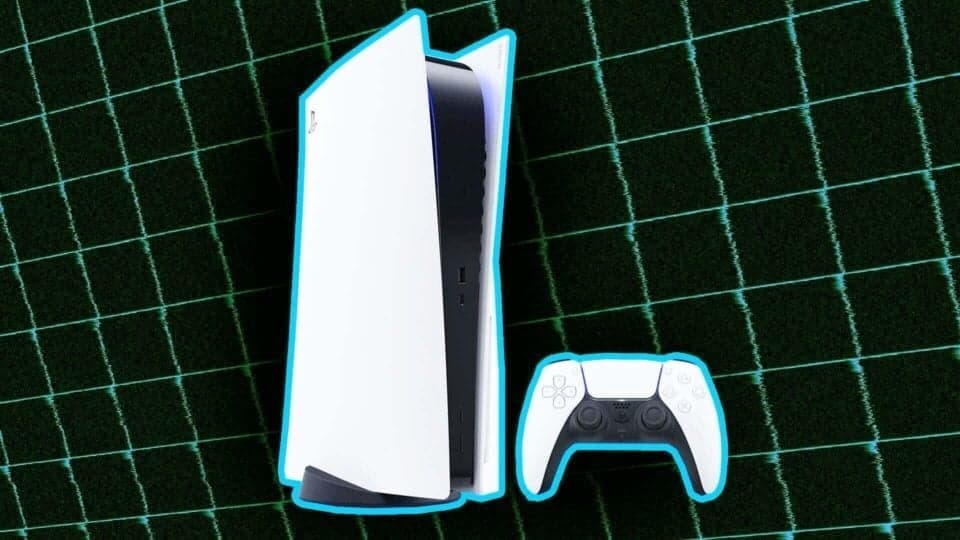
Sony is raising the price of its PlayStation 5 with a disc drive to $650 this holiday season, marking the first time in console history that a PlayStation costs more six years into its lifecycle than it did at launch. The move represents a dramatic reversal of a decades-long tradition in which Sony aggressively slashed console prices within just a few years of release, making gaming hardware far more accessible to consumers. This year’s $100 increase—after a $50 hike in 2023—will push the disc-based PS5 to a price point higher than the original PlayStation’s launch cost in 1994, even after adjusting for inflation.
- The PS5’s disc drive model will sell for $650 this holiday season, the first time a PlayStation costs more later in its lifecycle than at launch.
- Sony’s shift away from aggressive price cuts began with the PS4 and has accelerated with the PS5, reflecting rising manufacturing costs and reduced competitive pressure.
- The price hike occurs amid record inflation, supply chain disruptions, and tariffs on gaming hardware imports from China, compounding production costs.
- With Xbox discontinuing its console business and Valve’s Steam Deck struggling to gain traction in the living room, Sony faces less pressure to offer budget-friendly alternatives.
- Analysts warn the move could further stagnate a console gaming market already grappling with declining sales and aging hardware.
How Sony’s Console Pricing Strategy Evolved Over Three Decades
For decades, Sony’s PlayStation consoles followed a predictable pricing pattern: launch at a premium, then slash prices by 30% to 50% within three to four years as manufacturing efficiencies kicked in and competition intensified. The original PlayStation launched in 1994 for $299 (about $642 today), dropping to $199 by 1997. The PlayStation 2, which debuted in 2000 at $299, saw its price fall to $149 by 2003. Even the PlayStation 3, which launched in 2006 at a staggering $599 (roughly $966 today), eventually dropped to $299 by 2010.
The PS4 Era: The First Cracks in the Price-Cut Armor
The PlayStation 4, released in 2013 at $399, initially followed the formula, with two notable price drops of $50 each in quick succession. However, the reductions were smaller and came sooner than in past generations. By the end of its lifecycle in 2020, the PS4’s price hovered around $299—far below the $500 mark it could have reached had Sony matched its historical price-cut pace. Industry analysts attribute the shift to several factors: declining returns from hardware sales, the rising cost of components like flash memory, and Sony’s growing dominance in the console market as competitors faltered.
The PS4 Pro, released in 2016 at $399, never saw a single price reduction during its four-year lifespan. By contrast, the original PS3 Pro model launched in 2007 at $599 and dropped to $499 within a year. The stagnation in price cuts for the PS4 line signaled a turning point—one that would accelerate dramatically with the PS5.
Why the PS5’s Price Hike Defies Three Generations of Console Economics
The PS5 launched in November 2020 at $499 for the disc drive model and $399 for the Digital Edition. At the time, Sony executives touted the console as a long-term investment, emphasizing its cutting-edge technology, including a custom AMD Zen 2 CPU, RDNA 2 GPU, and ultra-fast SSD. But within three years, the disc drive model’s price jumped to $549 in 2023 and will now reach $650 this holiday season—a 30% increase in just four years. This is the first time in PlayStation history that a console’s price has risen after its initial launch year.
Supply Chain Disruptions and Inflation Drove Up Costs
The COVID-19 pandemic exposed vulnerabilities in global supply chains, particularly for semiconductors and advanced electronics. Sony’s PS5 relies on custom chips from Taiwan Semiconductor Manufacturing Company (TSMC), which faced production slowdowns during lockdowns. Additionally, the U.S.-China trade war led to tariffs on electronics imported from China, where many PlayStation components are manufactured. These factors contributed to higher production costs that Sony has increasingly passed on to consumers.
Tariffs and the RAM Crisis Added to the Financial Strain
In 2018, the Trump administration imposed a 25% tariff on certain Chinese imports, including consumer electronics. While gaming consoles were initially exempt, the tariffs later expanded to include components like circuit boards and power supplies. Meanwhile, the global RAM shortage of 2021-2022 drove up memory prices by over 50% at their peak, forcing Sony and other console makers to absorb some costs or raise prices. Sony executive Jim Ryan acknowledged these challenges in a 2022 earnings call, stating, "We’ve had to navigate significant supply chain disruptions and cost pressures that are unprecedented in recent memory."
The Collapse of Console Competition Leaves Sony With Less Pressure to Cut Prices
Historically, Sony’s aggressive price cuts were driven by competition. In the 1990s, Sega’s Genesis and Nintendo’s SNES battled for dominance. In the 2000s, Microsoft entered the console market with the Xbox, forcing Sony to lower the PS3’s price to stay competitive. But today, the competitive landscape looks entirely different. Microsoft has effectively exited the hardware business, discontinuing the Xbox One in 2020 and pivoting focus to cloud gaming and subscription services. Meanwhile, Nintendo’s Switch, while successful, competes on portability rather than raw power, leaving the high-end console market largely to Sony.
The Xbox Retreat and the Absence of a Strong Competitor
Microsoft’s decision to stop selling the Xbox One in 2020 marked a turning point in console competition. The company shifted its strategy to Game Pass subscriptions and cloud gaming, leaving Sony as the sole major player in the premium console market. Phil Spencer, head of Xbox, confirmed in a 2023 interview that Microsoft’s focus was no longer on hardware. "We’re investing in content and experiences that can reach the broadest possible audience," Spencer said. "That doesn’t necessarily mean building consoles." Without a direct competitor like Microsoft pushing Sony to lower prices, the PlayStation maker faces less incentive to offer budget-friendly alternatives.
Valve’s Steam Deck Struggles to Challenge the PS5 in the Living Room
Valve’s Steam Deck, released in 2022, was positioned as a potential disruptor in the handheld gaming market. However, its limited living room functionality and lack of exclusive titles have prevented it from becoming a serious competitor to the PS5. Valve has sold over 2 million Steam Decks, but the device remains a niche product compared to traditional consoles. "The Steam Deck is a great device for PC gamers who want portability, but it’s not a console killer," said gaming analyst Michael Pachter. "It doesn’t offer the same social or living room experience as a PlayStation." Without a strong alternative, Sony’s pricing power has grown unchecked.
The Role of GTA 6 and Sony’s Calculated Risk
Industry insiders suggest that Sony’s price hikes may be a calculated gamble tied to the impending release of *Grand Theft Auto VI*, expected in late 2025. The franchise is one of gaming’s most lucrative, with *GTA V* generating over $8 billion in revenue since 2013. A premium console price could position the PS5 as the go-to platform for the next installment, especially as players seek high-performance hardware to run the game at 4K resolution with ray tracing. "Sony knows that hardcore gamers will pay a premium for a console that can handle *GTA VI* at its best," said Wedbush analyst Michael Olson. "They’re betting that the halo effect of that game will offset any sticker shock."
Consumer Backlash and the Risk of a Stagnant Market
The price hike comes at a time when the console gaming market is already showing signs of stagnation. Global console sales declined by 5% in 2023, according to NPD Group, marking the first drop in a non-recession year since the early 2000s. Industry experts warn that further price increases could accelerate this trend, pushing casual gamers toward mobile devices or PC gaming. "When you raise the price of hardware, you’re essentially telling consumers that gaming is becoming a luxury," said Pachter. "That’s not a message you want to send in a market where growth is already slowing."
The Impact on Game Prices and the Secondary Market
Higher console prices could also ripple through the gaming ecosystem. Game prices have remained relatively stable, but a premium console market might embolden publishers to raise software prices as well. Additionally, the secondary market for used PS5s could become more active as players seek alternatives to the new $650 price tag. However, Sony’s digital rights management policies limit used game sales, potentially benefiting the company at the expense of consumers.
What’s Next for PlayStation Pricing? A Look Ahead to PS5 Pro and Beyond
Sony has not confirmed whether a PlayStation 5 Pro is in development, but rumors suggest it could arrive as early as 2024. If released, the Pro model would likely carry a price tag of $700 or more, further solidifying Sony’s shift toward a premium console strategy. Analysts like Pachter believe Sony may eventually phase out the base PS5 model entirely, focusing on high-end variants. "Sony is positioning itself as Apple did with the iPhone—charging a premium for the latest and greatest while leaving budget-conscious consumers to look elsewhere," he said.
Could Inflation and Competition Force a Reversal?
While Sony appears committed to its pricing strategy for now, several factors could force a reversal in the coming years. If inflation cools and supply chain pressures ease, Sony may find it easier to absorb costs without passing them to consumers. Additionally, the emergence of a new competitor—such as a revived Sega or a potential entry from Amazon or Google—could pressure Sony to lower prices to maintain market share. For now, however, the company seems content to prioritize profit margins over accessibility.
Key Takeaways: What This Means for Gamers and the Industry
- The PS5’s price hike to $650 reverses a decades-long tradition of aggressive console price cuts, marking a historic shift in Sony’s pricing strategy.
- Supply chain disruptions, inflation, and tariffs have driven up production costs, but reduced competition from Microsoft and Nintendo has also reduced pressure on Sony to offer affordable alternatives.
- The move is likely tied to the upcoming release of *Grand Theft Auto VI*, as Sony seeks to position the PS5 as the premier platform for high-end gaming.
- Industry analysts warn that higher console prices could further stagnate the gaming market, pushing consumers toward mobile or PC gaming.
- Without a strong competitor, Sony may continue raising prices, potentially leading to a luxury-focused console market akin to Apple’s iPhone strategy.
Frequently Asked Questions
- Why is Sony raising the price of the PS5 now?
- Sony is raising the PS5’s price due to a combination of supply chain disruptions, inflation, and tariffs on electronics imports. Additionally, reduced competition from Microsoft and Nintendo has given Sony more pricing power, and the impending release of *Grand Theft Auto VI* may incentivize players to pay a premium for high-end hardware.
- Has Sony raised console prices before?
- No. This is the first time in PlayStation history that a console’s price has increased after its initial launch year. Historically, Sony aggressively cut console prices within three to four years of release to make them more accessible to consumers.
- Will the PS5 price hike affect game prices?
- While game prices have remained stable, a premium console market could embolden publishers to raise software prices. Additionally, the secondary market for used PS5s may become more active as players seek alternatives to the new $650 price tag.