While semantics count for some, gamers win either way.
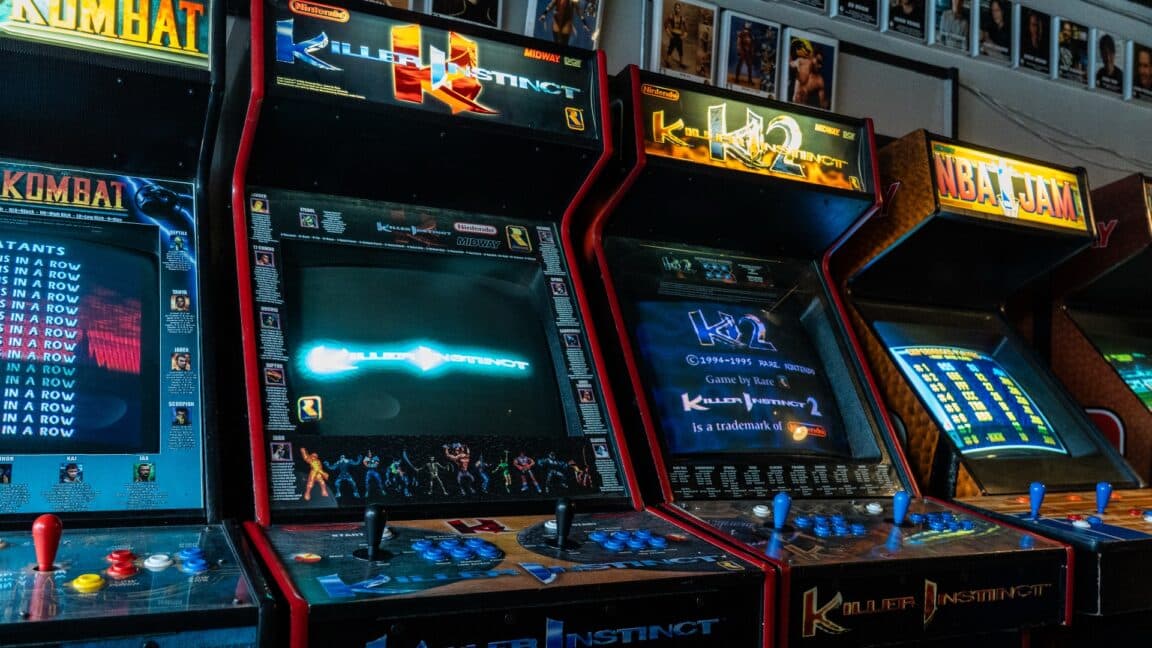
A few cabinets from Galloping Ghost, one of our two big contenders. Credit: Tim Stevens
In New Hampshire, just off the western shore of the vacation destination Lake Winnipesaukee, there’s a town called Laconia. With a population somewhere south of 17,000, it’s barely a blip on a map—except on Bike Week, when around 300,000 motorcyclists swarm the place. On the other, quieter weeks of the year, Laconia is best known as the unlikely home of Funspot, the world’s largest arcade.
Meanwhile, in Brookfield, Illinois, about 45 minutes west of Chicago and the shores of Lake Michigan, you’ll find Galloping Ghost Arcade, a sprawling suburban palace with a nondescript exterior hiding a mind-blowing collection. With over 1,000 arcade cabinets (plus a further 46 pinball machines), Galloping Ghost is the world’s largest arcade.
Yes, there are two arcades in the US labeled as the world’s largest, and while that may seem a bit paradoxical, a visit to both proves that while only one can be the biggest, both are the greatest.
We’ll start with the eldest of the two. Funspot’s origin story dates back to 1952, when Robert M. Lawton founded it as an indoor mini-golf and penny-arcade pavilion. Over the years, its location has changed and expanded, a fact evident in its architecture: a series of loosely connected buildings spread across a gentle slope.
You wouldn’t think it, but you’re approaching one of the world’s largest arcades.
It can be a bit hard to know which of those buildings to enter, but so long as you steer clear of the Funspot Bingo Hall, you’ll eventually arrive in video game paradise.
Funspot is spread across multiple floors of a discordant series of structures, housing everything from a throwback mini-golf course to a small go-kart track for the little ones. There’s even a 20-lane bowling alley. It’s all inside and protected from the harsh northeastern weather, making Funspot a four-season source of entertainment.
I wasn’t interested in any of that, though. The primary attraction for me was the American Classic Arcade Museum, or ACAM. This nonprofit organization houses and preserves vintage arcade machines put into play through the late 1980s. The project was the idea of Gary Vincent, a long-time Funspot employee who proposed organizing the arcade’s disparate collection of vintage machines into a sort of on-site interactive museum.
“I was always, even as a young kid, fascinated by museums. There was just something about them,” Vincent said. He saw the same fascination in the eyes of many Funspot attendees when they stumbled across classic machines like Defender or Ms. Pac-Man. “And in September of ’98, I said, ‘You know, what? Can I take what’s left of the old games here and put them in one area up on the third floor and kind of make a museum out of it?’”
Funspot owner Bob Lawton approved, and the rest is history.
Today, ACAM is a 501(c)(3) nonprofit entity housing roughly 270 vintage arcade machines. The best part? They’re all up for play.
Well, almost all of them. You’ll find a few particularly rare titles hermetically sealed in giant acrylic boxes to protect them from the elements—and from little fingers. One is a game called Mystic Marathon. “We have one of the five original prototypes that was made to test the game,” Vincent said. “This is the one that actually belonged to Kristina Donofrio, the woman who programmed the game.”
That’s just one of the arcade[s many rarities, all beautifully laid out in an expansive, red-carpeted room with just barely enough lighting to keep you from tripping over your friends as you wander around, mouth agape.
The constant trilling tones of all those vintage machines make for a discordant symphony better than any orchestra could produce. You also get a whiff of the pizza and french fries from the cafeteria down the hall. Like Proust with his madeleines, it’s enough to warp any child of the ’80s back to simpler times.
But this place will seem familiar for another reason: Large portions of the hit 2007 documentary The King of Kong: A Fistful of Quarters were filmed here, where Steve Wiebe set a then-record high score of 985,600 on Donkey Kong. Wiebe hit the kill screen that day, but of course, the controversy would linger for much longer.
Plenty of other records have been set here over the years, many in collaboration with Guinness World Records, which officially certified Funspot as the “World’s Largest Videogame Arcade” in 2008.
Guinness reached out to Funspot, offering the title. “So I said, ‘Oh, OK,’” Vincent said. “I didn’t know what any of the parameters were for it. Never submitted anything to them.”
The official Guinness record counts 581 machines. Vincent says the number is closer to 600 total at this point. Yes, that means there are many more here than the ACAM collection, including plenty of my favorites from the ’90s and beyond, like Sega’s Daytona USA, plus dozens of newer games, like Pac-Man Battle Royale.
A glimpse at just a few of the hundreds of cabinets on the premises.
A glimpse at just a few of the hundreds of cabinets on the premises. Credit: Tim Stevens
You’ll find a healthy selection of pinball machines, too—it’s a good mix of classic and modern titles. Impressively, nearly all were operational when I visited, which is a major accomplishment given their fickle nature. Vincent says that sourcing parts and keeping the elder machines operational is becoming increasingly difficult because they’re so far beyond anything the original manufacturers envisioned. “They wanted you to buy a machine, and especially on the video game side, run it for six or nine months, and then get rid of it and buy the next greatest thing that’s coming out,” he said.
Keeping everything running is a huge challenge, and it’s funded by a steady stream of tokens. Twenty dollars at Funspot gets you 110 copper coins, and while most of the classic machines take only one or two, the bigger, more modern ones demand up to four. Regardless, your $20 will keep you busy here for a very long time, and a good one at that.
Galloping Ghost is situated about 20 minutes south of O’Hare International Airport on a busy street dotted with colorful Mexican restaurants, plus other, more menial fare. The arcade can be a bit hard to find, if only because it’s just one business out of a veritable sea of establishments bearing the logo of a cartoon ghost riding a hobby horse.
You don’t want the building housing Galloping Ghost Productions, as that’s a video game development company. You’ll find Galloping Ghost Reproductions next door, a distributor of arcade machine components, but that’s not right, either. You should also steer clear of Galloping Ghost Gym unless you’re looking for a little workout before an afternoon of button-mashing, and if you hit Galloping Ghost Garage, you’ve gone too far.
Your first quest: figure out which of these Chicagoland storefronts is the video game arcade you seek.
Amid that collection of co-branded businesses, you’re looking for a nondescript series of conjoined buildings on Ogden Avenue with a sign modestly proclaiming that you’re at “The Largest Arcade in the World.” From the outside, Galloping Ghost Arcade is a more compact facility than Funspot, which made me skeptical of that claim. But as soon as I walked in, I quickly changed my tune.
Galloping Ghost may lack Funspot’s expansive volume, but it certainly has density on its side. From your first steps inside the door, you’re hit with the sights and sounds of dozens and dozens of machines.
“It’s kind of just like you’re being slingshot right back into the ’80s,” said Tom Nieter, the manager and curator of the Galloping Ghost arcade. “Some legendary attract modes are instantly just hitting your ears. Altered Beast and Shinobi are right up front.”
But before you can rise from your grave or whip out the throwing stars, you need to visit the front desk and pay your dues: $25 for access all day, or another $5 if you want to add on access to the separate pinball facility down the street.
There, beneath a collection of toy ghosts hanging from the ceiling threatening to haunt you for life if you chew any gum, you’ll pay your fee, enter the facility, and immediately feel overwhelmed.
Just one of the angles in Galloping Ghost. Tim Stevens
“I definitely suggest everyone take a lap around the whole place,” Nieter said. “It’s basically the size of a Home Depot. You’re going to be scoping out all the games. Make a list of what you want to play. To be honest, that alone probably takes about 45 minutes.”
Galloping Ghost grew out of a video game development company founded in the early ’90s. The arcade proper opened in 2010 with roughly 130 games, and it has been growing steadily ever since, taking over neighboring businesses and buildings along the way. Every Monday, the arcade adds yet another game to its collection.
“We haven’t missed a Monday in 10 years,” Nieter said.
That’s a wild pace of expansion. Nieter says the arcade currently houses 1,067 games, a ridiculous number but one I don’t doubt. That includes a fair few games that Nieter believes you can only play here, like Midway’s Power Up Baseball, an ill-fated attempt to bring the energy of NBA Jam to the diamond.
You’ll also find games from international markets, including dozens of shoot-’em-ups from Japan that never saw American release, and other oddities, like The Spectre Files: Deathstalker, a semi-interactive full-motion adventure.
I consider myself something of a gaming expert, and I was humbled when I saw dozens of games I had never heard of before. Galloping Ghost even has a Sega R360 machine, a giant arcade contraption capable of swinging players upside-down in a nausea-inducing demonstration of ’90s arcade excess. It’s sadly broken at the moment, needing a new monitor, but I’m confident the Galloping Ghost gurus will have it spinning soon.
The Sega R360 at Galloping Ghost.