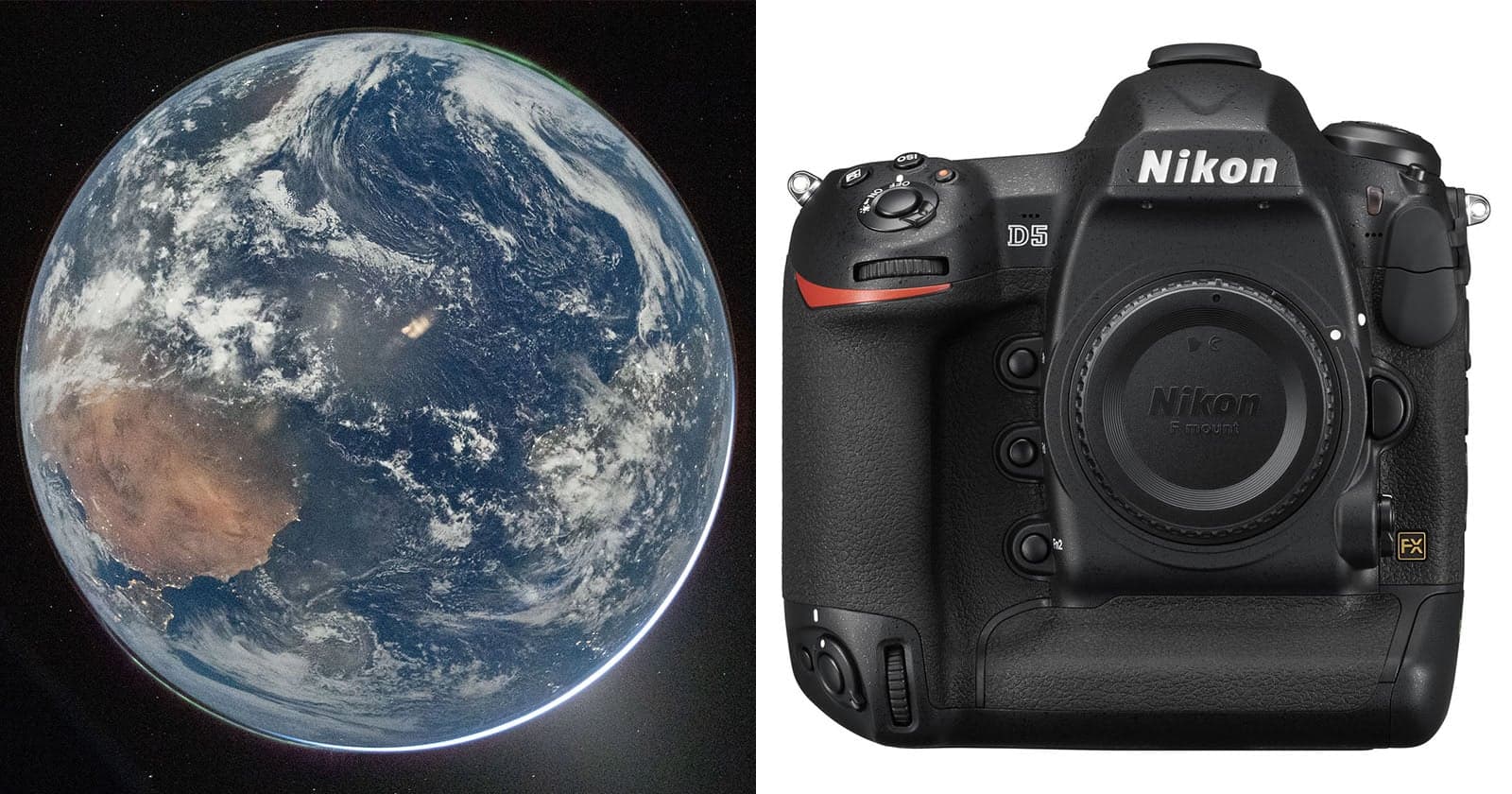
In November 2024, NASA’s Artemis II crew—astronauts Reid Wiseman, Victor Glover, Christina Koch, and Jeremy Hansen—embarked on humanity’s first crewed lunar flyby in over 50 years, venturing 252,760 miles (406,778 kilometers) from Earth. While the mission’s scientific and exploratory goals dominate headlines, the cameras chosen to document this historic journey have sparked their own debate among photography enthusiasts and space aficionados alike. Why, critics wondered, is a 2016-era Nikon D5 DSLR—the primary camera aboard the Orion spacecraft—being used instead of the cutting-edge Nikon Z9, the company’s flagship mirrorless model? The answer lies in a carefully considered balance of reliability, proven performance in extreme environments, and the D5’s unparalleled low-light capabilities, which make it uniquely suited for capturing sharp, usable images against the inky blackness of space and the lunar surface.
The Nikon D5’s Legacy: A Camera Built for the Darkness of Space
When Nikon unveiled the D5 in early 2016, it was marketed as a low-light powerhouse, boasting an ISO range that stretched from 100 to a staggering 3,280,000. While the top-end ISO was largely symbolic—producing images that were more noise than detail—it signaled the camera’s core strength: its ability to produce usable, high-contrast images in conditions where light is scarce. This capability was not lost on NASA, which has long prioritized rugged, battle-tested equipment for its missions. The D5’s lineage includes rigorous testing for environmental extremes, including vibration, temperature fluctuations, and radiation exposure—all critical factors for a camera operating in the void of space. Unlike consumer-grade cameras, the D5 was designed with professional workflows in mind, featuring a robust magnesium alloy body, extensive weather sealing, and compatibility with a wide range of Nikon F-mount lenses, including vintage glass like the 30-year-old Nikkor 35mm f/2 AF-D lens currently aboard Orion.
Why High ISO Performance Matters More Than Megapixels in Space
The debate over the D5’s supremacy often centers on its 20.8-megapixel sensor, which pales in comparison to the 45.7-megapixel Nikon Z9. However, megapixels are only one piece of the imaging puzzle, and in the context of space photography, they take a backseat to high ISO performance. The lunar environment presents a paradox: the sunlit side of the Moon is blindingly bright, while the dark side is a lightless void. Capturing usable images in these conditions requires a camera that can push ISO to extreme levels without sacrificing image integrity. Astronaut Reid Wiseman’s recent photos from Orion, taken at ISO 51,200 with a shutter speed of just 1/4 second, exemplify this challenge. Even with a fast f/2.8 lens, the limited light available in deep space necessitates pushing ISO to its limits. The D5’s sensor, optimized for noise reduction at high ISOs, outperforms newer models like the Z9, which, despite its advanced autofocus and burst shooting capabilities, was not designed with the same emphasis on low-light performance.
NASA’s decision to use the D5 is further validated by the camera’s proven track record in space. The D5 has been deployed on previous missions, including commercial crew flights and resupply missions to the International Space Station (ISS), where its reliability in low-light conditions was critical for capturing docking procedures and Earth observations. In contrast, the Z9, while technologically superior in many ways, has not undergone the same level of space-specific testing, making the D5 a safer bet for a mission where equipment failure is not an option.
The Camera Gear Powering Artemis II: A Blend of Old and New
The Artemis II crew’s photographic arsenal is a fascinating mix of vintage and modern Nikon equipment. While the D5 DSLR serves as the primary camera, the crew also brought aboard the Nikon Z9 as a secondary option, reflecting a pragmatic approach to mission planning. The Z9’s higher resolution and mirrorless technology make it ideal for capturing detailed shots of the Moon’s illuminated surface or Earthrise sequences, but its performance in low light lags behind the D5. Additionally, the crew is using the 30-year-old Nikkor 35mm f/2 AF-D lens, a relic from the film era that has somehow become a star in its own right. Despite its age, the lens delivers sharp, contrasty images, proving that sometimes, simplicity and optical quality trump modern conveniences like autofocus and image stabilization.
The Role of Lens Choice in Lunar Photography
Lens selection is a critical component of space photography, where weight, durability, and optical performance are paramount. The Nikkor 35mm f/2 AF-D, despite lacking modern autofocus, offers a lightweight and optically excellent prime lens that performs reliably in the harsh conditions of space. Its fixed focal length eliminates the complexity of zoom mechanisms, reducing the risk of mechanical failure. Moreover, the lens’s f/2 aperture provides a good balance between light-gathering ability and depth of field, making it versatile for both wide-angle shots of the lunar surface and close-ups of mission equipment. Nikon’s newer AF-S 35mm f/1.4G and f/1.8G lenses, while faster and more advanced, were not chosen for this mission, highlighting NASA’s preference for proven reliability over cutting-edge features.
How NASA’s Camera Choices Reflect the Mission’s Scientific Goals
The Artemis II mission is not just a symbolic journey; it is a critical step in NASA’s broader Artemis program, which aims to establish a sustainable human presence on the Moon by the end of the decade. One of the mission’s primary objectives is to gather high-quality visual data of the lunar surface to support future landing sites and resource mapping. This requires cameras that can capture fine details—such as craters, ridges, and potential landing hazards—under varying lighting conditions. The D5’s ability to produce clean, noise-free images at high ISOs makes it ideal for this purpose, as it allows astronauts to photograph the dark side of the Moon or the lunar terminator (the line between light and dark) without resorting to long exposures that could introduce motion blur.
In contrast, the Z9’s higher resolution is better suited for documenting the brightly lit lunar surface or capturing Earth from deep space, where light is abundant. This division of labor between the two cameras underscores NASA’s strategic approach to mission planning: leveraging each camera’s strengths to maximize scientific output. The D5’s role is akin to that of a workhorse—reliable, consistent, and capable of delivering under pressure—while the Z9 serves as a precision tool for high-detail imagery.
The Future of Space Photography: Why the Z9 Will Take Over for Artemis III
While the Nikon D5 has earned its place as the camera of choice for Artemis II, its days are numbered. For the Artemis III mission, NASA plans to deploy the Handheld Universal Lunar Camera (HULC), a next-generation device based on the Nikon Z9 platform. The HULC is expected to combine the best features of the Z9—such as high resolution, advanced autofocus, and video capabilities—with modifications tailored for lunar use, including enhanced radiation shielding and improved thermal management. The transition to the Z9 reflects the broader industry shift from DSLRs to mirrorless cameras, a change driven by the latter’s superior electronic viewfinders, silent shooting, and video performance. However, the D5’s swan song in Artemis II serves as a reminder that innovation is not always about replacing the old with the new; sometimes, it’s about recognizing when a proven tool is the right tool for the job.
- The Nikon D5 DSLR was chosen for Artemis II due to its unmatched low-light performance and proven reliability in space, not its megapixel count.
- High ISO capabilities are critical for capturing usable images in the dark void of space or on the lunar surface’s dark side.
- The crew also uses a Nikon Z9 for higher-resolution shots and a 30-year-old Nikkor 35mm f/2 AF-D lens, showcasing a blend of old and new technology.
- NASA’s camera selection reflects the mission’s scientific goals, prioritizing clean, detailed images over raw megapixel counts.
- The D5’s role in Artemis II marks its final major mission before the Z9-based HULC takes over for Artemis III.
The Broader Implications: Why Camera Technology in Space Still Relies on Legacy Systems
The Artemis II mission highlights a broader trend in space exploration: the enduring value of legacy technology. While modern cameras offer advancements in resolution, autofocus, and video, their performance in extreme environments is often unproven. NASA’s reliance on the D5 underscores a fundamental principle of spaceflight: redundancy and reliability trump cutting-edge features. This philosophy extends beyond cameras to other critical systems, from life support to navigation, where proven technology is preferred over untested innovations. The success of the D5 in space also serves as a case study for other industries, demonstrating how older equipment can outperform newer alternatives when specific performance metrics—such as low-light sensitivity—are prioritized.
The Human Element: How Astronauts Train to Use Space Cameras
Capturing high-quality images in space is not just about having the right equipment; it’s also about the skill of the photographer. The Artemis II crew underwent extensive training with the D5, Z9, and other mission-specific cameras to ensure they could operate them in the unique conditions of microgravity and confined spacecraft environments. Training included practicing with the cameras in pressure suits, simulating the limited dexterity of gloved hands, and mastering the manual settings required for low-light photography. The crew’s ability to adapt to these challenges is a testament to NASA’s rigorous preparation and the adaptability of professional-grade equipment like the D5, which was designed with manual controls in mind.
Key Takeaways: Why the Nikon D5 Was the Right Choice for Artemis II
The Nikon D5’s selection for Artemis II is a masterclass in mission-specific decision-making. Here’s what you need to know:
- The D5 was chosen for its unparalleled low-light performance, a critical factor in space photography where light is scarce.
- Its rugged, time-tested design has been validated in previous space missions, including ISS operations, making it a reliable choice.
- While the Z9 offers higher resolution, the D5’s high ISO capabilities make it superior for capturing the dark side of the Moon or deep-space scenes.
- The blend of old and new equipment—including the 30-year-old Nikkor lens—demonstrates NASA’s pragmatic approach to balancing innovation with reliability.
- The D5’s role in Artemis II is likely its last major mission before the Z9-based HULC takes over for Artemis III, marking the end of an era for DSLRs in space.
Frequently Asked Questions
- Why didn’t NASA use the Nikon Z9 as the primary camera for Artemis II?
- While the Nikon Z9 offers higher resolution and advanced features, its low-light performance does not match the D5’s proven capabilities. NASA prioritized reliability and high ISO performance for capturing usable images in the dark conditions of space, making the D5 the better choice.
- What is the Handheld Universal Lunar Camera (HULC) and how does it differ from the D5?
- The HULC is a next-generation lunar camera based on the Nikon Z9 platform, designed for Artemis III. It will feature enhanced radiation shielding, improved thermal management, and advanced autofocus, reflecting the broader shift from DSLRs to mirrorless cameras in space exploration.
- How does the Nikkor 35mm f/2 AF-D lens perform in space despite its age?
- The 30-year-old Nikkor 35mm f/2 AF-D lens delivers sharp, contrasty images and its fixed focal length reduces mechanical complexity, making it a reliable choice for space photography. Its lightweight design and optical quality outweigh the lack of modern autofocus features.