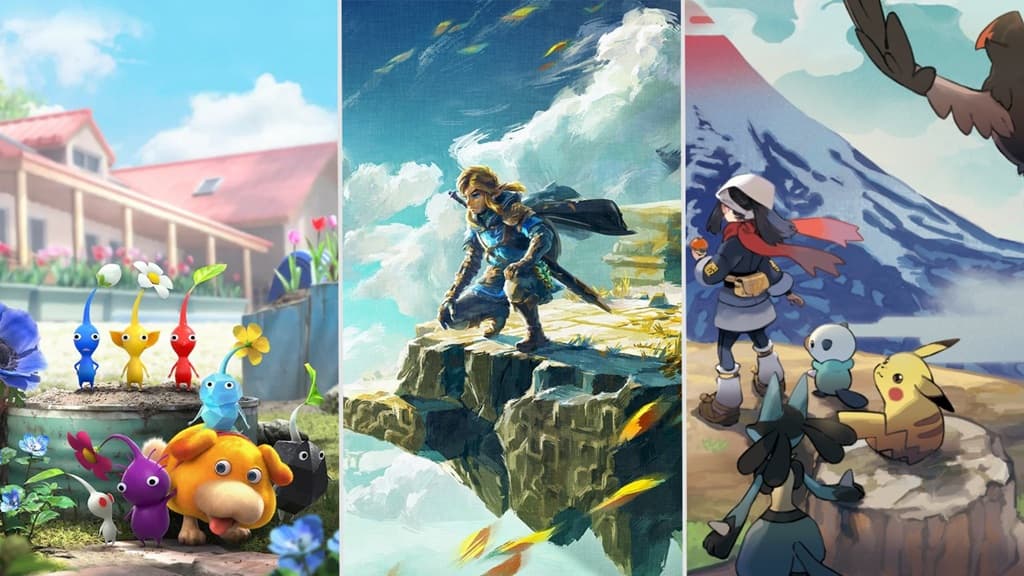
Nintendo’s reluctance to release substantial downloadable content (DLC) for major franchises like *Mario Kart 8 Deluxe* and *The Legend of Zelda: Tears of the Kingdom* has long frustrated fans, many of whom expected expansions similar to what competitors like Ubisoft and Rockstar routinely deliver. While games like *Super Mario Odyssey* and *Pokémon Legends: Arceus* received minor updates or small additions, several blockbuster titles shipped without meaningful post-launch content—until years later, if at all. This trend raises questions about Nintendo’s development priorities, technical constraints, and the evolving expectations of modern gamers who increasingly view DLC as standard practice.
Why Nintendo Lags Behind on DLC: Development, Strategy, and Fan Expectations
Nintendo’s approach to DLC has historically been inconsistent, even as the broader gaming industry has embraced post-launch content as a core revenue stream. Unlike PlayStation or Xbox exclusives, which frequently receive expansions within months of launch, Nintendo often prioritizes self-contained experiences, citing the company’s philosophy of delivering fully realized games. This mindset was evident in *The Legend of Zelda: Tears of the Kingdom*, which launched in May 2023 with a sprawling open world, 100+ hours of content, and no DLC plans—at least initially. Similarly, *Mario Kart 8 Deluxe*, the best-selling racing game in Nintendo’s history, went nearly five years without substantial additions before the *Booster Course Pass* arrived in 2022, teasing courses from future installments.
The Case of Mario Kart 8 Deluxe: A Late but Lucrative Expansion
For years, fans of *Mario Kart 8 Deluxe* wondered why Nintendo’s flagship racer lacked the DLC expansions seen in rivals like *Forza Horizon* or *Gran Turismo*. The answer, revealed in interviews with Nintendo developers, stems from a pivot in the *Mario Kart* team’s focus. According to insiders, the team initially planned a direct sequel, *Mario Kart World*, but technical limitations on the Switch forced them to shelve the project. Instead, they ported *Mario Kart 8* to the Switch and began work on *Mario Kart World* for the Switch successor—until delays pushed it to the next console generation. This explains the five-year gap before the *Booster Course Pass* debuted, adding 48 remastered tracks from past games alongside new content. The expansion, priced at $24.99, became one of Nintendo’s most profitable DLC efforts, proving that even late additions can resonate with players when executed well.
Industry analysts note that Nintendo’s DLC strategy often aligns with its hardware cycles. ‘Nintendo tends to reserve major expansions for hardware transitions,’ explains gaming analyst Jeff Grubb. ‘The *Booster Course Pass* was a way to keep *Mario Kart 8 Deluxe* relevant while teasing the next-gen game.’ This approach contrasts with Sony’s *God of War Ragnarök* or Microsoft’s *Halo Infinite*, which received expansions within a year of launch. For Nintendo, DLC is less about iterative updates and more about extending a game’s lifecycle until the next console arrives.
The Legend of Zelda: Tears of the Kingdom – A Complete Game, or a Missed Opportunity?
When *The Legend of Zelda: Tears of the Kingdom* launched in 2023, it was hailed as a masterpiece for its boundless creativity, featuring sky islands, the Depths, and a 100+ hour playtime. Yet, despite its scale, the game shipped without DLC—a decision Nintendo defended as unnecessary given the title’s completeness. ‘The game was made to be explored, not expanded,’ said Eiji Aonuma, Nintendo’s longtime Zelda producer, in a 2023 interview. However, fans and critics alike pointed to potential gaps that DLC could have filled, particularly around storytelling and gameplay.
What Tears of the Kingdom DLC Could Have Included
- A 10-hour ‘extra campaign’ starring Princess Zelda, exploring her backstory and tying into *Hyrule Warriors: Age of Calamity*.
- A new dungeon, addressing criticisms of the base game’s lack of traditional Zelda dungeons.
- Additional Zonai machinery, including a revamped Master Cycle with more customization options.
- New enemy types and weapons to address weapon durability concerns in the Depths.
Some fans argued that Nintendo missed a chance to bridge *Tears of the Kingdom* with its predecessor, *Breath of the Wild*. While *Breath of the Wild* received the *Master Cycle Zero* DLC, which added a motorcycle, *Tears of the Kingdom*’s Zonai machines filled a similar role—albeit with a heavier emphasis on collectibles (Zonaite). ‘The Zonai vehicles are fun, but they’re gated by Zonaite grinding,’ said one Reddit user. ‘A DLC that added a more accessible travel option would have been a game-changer.’ Others pointed to the game’s story, which some felt was underdeveloped compared to *Ocarina of Time* or *Majora’s Mask*. A prequel-focused expansion could have deepened lore without requiring a full remake.
Super Mario Odyssey: The DLC That Never Was – And Why It Matters
Released in 2017, *Super Mario Odyssey* was another Nintendo title that left fans craving more content. While the game received a free update adding *Luigi’s Balloon World*, a mini-game mode, most players expected substantial expansions like new kingdoms or playable characters. Online forums buzzed with requests for a *Mario Odyssey* DLC, including possibilities like a *Super Mario Sunshine* revival or a *Cloud Kingdom* overhaul. ‘I wanted to play as Peach or Bowser in a new adventure,’ said one fan on ResetEra. ‘Even a single new kingdom would have felt like a gift.’ Nintendo ultimately addressed some fan demands through costumes and updates, but never delivered on the grander vision.
The Evolution of Mario Party: Why DLC Could Have Saved the Franchise
The *Mario Party* series has long struggled with balancing innovation and fan expectations. *Super Mario Party* (2018) and *Mario Party Superstars* (2021) both faced criticism for lacking depth in certain areas—*Super Mario Party* for its RNG-heavy gameplay, and *Super Mario Party Superstars* for its limited board selection. Fans speculated that DLC could have added missing features, such as returning boards from *Mario Party 10* or *Mario Party 9*, or even playable characters like Toadette or Bowser Jr. ‘The mini-games are great, but the boards feel repetitive,’ said a *Mario Party Superstars* reviewer. Nintendo’s 2023 release, *Super Mario Party Jamboree*, attempted to address these issues with a new mode, but the main game remained unchanged. Industry watchers note that *Mario Party*’s reluctance to adopt DLC reflects its focus on local multiplayer, a core tenet of the series.
Pokémon Legends: Arceus – A Missed Chance for a Deeper Experience
While most mainline *Pokémon* games on the Switch received substantial DLC—*Sword and Shield* added the *Isle of Armor* and *Crown Tundra*, and *Scarlet and Violet* introduced the *Teal Mask* and *Indigo Disk*—*Pokémon Legends: Arceus* (2022) shipped with minimal post-launch content. A minor update added *Massive Mass Outbreaks*, but fans expected far more. Given *Arceus*’s open-world design and unique gameplay mechanics, many anticipated expansions that could have introduced new areas, Pokémon, or Hisuian forms. ‘With only 250 Pokémon, the game felt incomplete,’ said a *Pokémon* fan on Reddit. ‘DLC could have added missing Pokémon from other regions or new exploration zones.’ Instead, Nintendo shifted focus to *Pokémon Legends: Z-A*, which, despite its DLC, received lukewarm reviews for its repetitive design.
Key Takeaways: Why Nintendo’s DLC Strategy Differs from the Rest
- Nintendo often prioritizes self-contained games over DLC, citing philosophical differences from competitors like Ubisoft or Rockstar.
- Technical and hardware constraints have delayed some expansions, such as *Mario Kart 8 Deluxe*’s *Booster Course Pass*, which arrived five years after launch.
- Fan demand for DLC in franchises like *Zelda*, *Mario Odyssey*, and *Pokémon* highlights a growing expectation for post-launch content.
- Nintendo’s DLC tends to align with hardware transitions, as seen with the *Booster Course Pass* teasing *Mario Kart World*.
- Minor updates (e.g., *Luigi’s Balloon World* in *Super Mario Odyssey*) are often the extent of Nintendo’s post-launch support for older titles.
The Future of Nintendo DLC: What’s Next for Switch 2 and Beyond
As Nintendo prepares for the *Switch 2*, rumors suggest a shift toward more aggressive DLC strategies. Titles like *Pikmin 4*, which received a minor update but lacks major expansions, may see dedicated editions for the new console. Additionally, the *Handheld Mode Boost* feature in the *Switch 2*, which enhances performance in handheld mode, hints at potential *Switch 2 Edition* releases for popular titles. ‘Nintendo is learning that DLC can drive engagement and revenue, especially with live-service games,’ said a Nintendo investor relations representative. The company’s upcoming *Metroid Prime 4* and *Paper Mario* titles may test this approach, though fans remain skeptical given Nintendo’s history of caution.
Conclusion: DLC in Nintendo’s World – A Matter of Philosophy vs. Fan Demand
Nintendo’s stance on DLC reflects its broader philosophy: games should be complete at launch, with no need for post-launch additions. Yet, as the gaming landscape evolves, this approach risks alienating players accustomed to the content cadence of Sony, Microsoft, and even indie developers. While titles like *Mario Kart 8 Deluxe* and *The Legend of Zelda: Tears of the Kingdom* prove that Nintendo’s games can thrive without DLC, the company may need to adapt to modern expectations—or risk seeing its franchises fall behind in engagement and revenue. For now, fans will continue to speculate about what could have been, while Nintendo charts its own path in the ever-changing world of video game expansions.
Frequently Asked Questions
Frequently Asked Questions
- Why didn’t Nintendo release DLC for The Legend of Zelda: Tears of the Kingdom?
- Nintendo stated that the game was designed to be complete at launch, with over 100 hours of content. However, fans speculated that DLC could have addressed story gaps or added dungeons, which the base game lacked.
- Will Mario Kart 8 Deluxe get more DLC?
- Nintendo has not confirmed additional *Booster Course Pass* content beyond the 48 tracks already released. Given the team’s shift to *Mario Kart World* for the next console, major new DLC is unlikely in the near term.
- Are there any Nintendo games that received unexpected DLC?
- Yes, *Super Mario Odyssey* received *Luigi’s Balloon World*, a free update that added a new mini-game mode. Similarly, *Pikmin 4* got a post-launch update with difficulty modes, though it lacked major expansions.