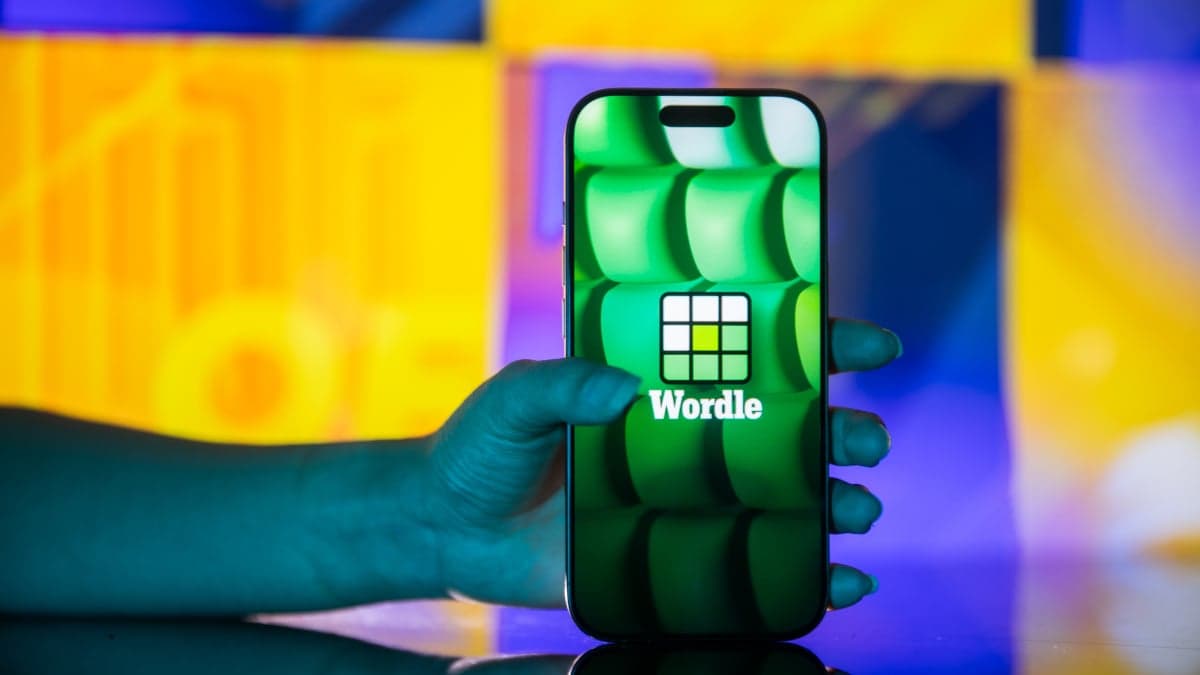
For players tackling Wordle #1747 on April 1, 2026, Tuesday’s puzzle delivers a fizzy challenge: the answer is a five-letter word starting with F and ending with Y, where the letter Z appears twice. The New York Times-owned word game continues to captivate millions daily, blending simplicity with strategic depth. Whether you’re a casual solver or a competitive puzzle enthusiast, today’s Wordle offers a mix of familiarity and fresh complexity—all wrapped in a clue that points squarely to carbonated beverages.
Key Takeaways for Wordle #1747 (April 1, 2026)
- Today’s Wordle answer is **FIZZY**, a 5-letter word starting with F and containing a double Z.
- The first letter is **F**, and the word hints at carbonation, making it easier for soda drinkers.
- This marks the 1,747th daily puzzle since Wordle’s launch, now owned and operated by The New York Times.
- Players seeking a tougher challenge can enable Wordle’s Hard Mode, which restricts guesses based on revealed letters.
- The Wordle archive was originally public but is now exclusive to NYT Games subscribers.
How to Approach Today’s Wordle: Strategy and Starting Words
While the answer to Wordle #1747 is FIZZY, players who want to solve it themselves should consider strategic starting words. The ideal opening word balances vowel and consonant diversity, often including common letters like S, T, R, N, and E. For instance, words such as "CRANE," "SLATE," or "ADIEU" cover multiple vowels and frequent consonants, maximizing information from the first guess. Given today’s hints—starting with F and containing a double Z—strategic players might prioritize words that include Z, F, or Y early on, especially if their starting word didn’t include those letters.
Why Starting Words Matter in Wordle
The choice of starting word can drastically reduce the number of possible solutions. A word with two vowels and three common consonants like "AUDIO" or "STERN" helps eliminate unlikely letters in just one move. For players aiming to solve puzzles consistently, building a personal library of strong starting words is a proven method. However, personal preference also plays a role—some players thrive with more whimsical words like "MOIST" or "CRISP," which may not be statistically optimal but feel intuitive.
The Evolution of Wordle: From Personal Project to Global Phenomenon
Wordle’s journey from a private pastime to a global sensation is a testament to the power of simplicity and community. The game was created in 2021 by software engineer Josh Wardle as a gift for his partner, Palak Shah, who shared his love for word games. Originally a niche project shared among friends, Wordle’s word-of-mouth spread exploded in late 2021 when Wardle made it publicly accessible online. Within weeks, the game amassed millions of daily players, its minimalist design and social sharing features—like color-coded result grids—fueling a viral moment unlike any other in digital puzzles.
Wordle’s Acquisition by The New York Times
By January 2022, Wordle’s skyrocketing popularity caught the attention of media giants. The New York Times Company acquired Wordle from Wardle for a reported figure in the low seven figures, a move that signaled the enduring value of analog-style digital puzzles in an era dominated by hyper-competitive mobile games. The Times integrated Wordle into its growing suite of digital games, which now includes Strands, Connections, and the classic Mini Crossword. While the Times has preserved Wordle’s core mechanics, it has introduced subscription-based access to archives and additional features, a shift that has drawn both praise for monetization and criticism from purists who valued the game’s open-access roots.
The Rise of Wordle Variants and Fan Creations
Wordle’s success spurred a wave of creative derivatives designed to challenge players in new ways. Games like Squabble—a battle royale version where multiple players compete in real time—Heardle, which tests music identification skills, and Quordle, which requires solving four Wordles simultaneously, have carved out their own niches. Dordle, another fan favorite, increases difficulty by asking players to guess two words at once. These variations cater to players seeking more complexity or social interaction, proving that Wordle’s DNA has inspired an entire ecosystem of word-based innovation.
The Disappearance and Return of the Wordle Archive
One of the most contentious aspects of Wordle’s evolution under the New York Times has been the handling of its archive. Initially, all past puzzles were freely accessible on the game’s website, allowing players to revisit old challenges or catch up on missed days. However, in mid-2022, the archive was quietly removed at Wardle’s request, a decision he described as respecting the Times’ editorial direction. In response, the Times launched its own Wordle Archive in 2023, accessible exclusively to subscribers of NYT Games. This move reinforced the subscription model while limiting access for casual or non-paying users, a decision that sparked debates about digital ownership and the monetization of once-free content.
Is Wordle Getting Harder? What Players Should Know
Despite occasional perceptions of increased difficulty, Wordle’s core puzzle mechanics have remained consistent since its inception. The game selects a daily five-letter word from a curated dictionary and allows players up to six guesses to deduce it. The challenge lies not in changing rules, but in the inherent unpredictability of the word selection. However, players can opt into Hard Mode, a feature introduced by the Times that forces guesses to include all revealed letters, significantly increasing difficulty. Although the Times has not disclosed how often Hard Mode is used, anecdotal reports suggest a small but dedicated subset of players regularly engage with it.
Breaking Down Today’s Wordle: Hints, Clues, and the Full Solution
Wordle #1747 for April 1, 2026, presents a deceptively accessible puzzle. The answer, FIZZY, starts with F and ends with Y, with the letter Z appearing twice. The game’s official hints described the solution as "carbonated," a clear nod to the effervescent quality of the word. This clue would have been particularly helpful for players familiar with soda brands or fizzy drinks, as it directly links the word to a common consumer experience. For those solving today, the key was to consider words that start with F and involve bubbly textures or carbonation.
Step-by-Step Breakdown of Today’s Puzzle
- The word is **5 letters long** and starts with the letter **F**.
- It contains a **double Z** (e.g., Z appears twice).
- The word is associated with **carbonation** or **fizziness** (e.g., soda, sparkling water).
- Possible structure: F _ Z Z Y
- Correct solution: **FIZZY**
How to Improve at Wordle: Tips from Top Solvers
Consistency in Wordle often comes down to pattern recognition and adaptability. Many top solvers recommend treating each puzzle like a mini-detective case: eliminate impossible letters early, prioritize vowels in the first few guesses, and avoid repeating consonants that have been ruled out. Another pro tip is to avoid emotionally attached guesses—don’t fixate on a word just because it ‘feels’ right. Using logic over instinct often leads to faster solutions. Additionally, keeping a mental or written log of common Wordle words—such as those ending in Y (e.g., JUDGY, HAPPY)—can sharpen your intuition over time.
Where to Play Wordle and Related Games
Wordle can be played for free on the official New York Times Games website and app. While the core game is accessible without a subscription, advanced features like the Wordle Archive and bonus games require a Games subscription, which costs $17.99 per month or $49.99 per year. For players interested in alternatives or supplements, platforms like Mashable and The New York Times offer a variety of puzzle games, including Sudoku, Mahjong, and Connections. These games share Wordle’s appeal of quick, brain-teasing engagement without the pressure of timed challenges.
The Cultural Impact of Wordle: More Than Just a Game
Beyond its entertainment value, Wordle has had a subtle but meaningful cultural impact. During its peak viral phase, the game became a daily ritual for many, fostering a sense of shared experience across generations and geographies. Social media platforms, particularly Twitter and TikTok, saw an explosion of Wordle-related content, from memes to live-solving streams. The game also sparked conversations about language, accessibility, and the democratization of digital experiences. While its daily-player numbers have stabilized since the initial boom, Wordle remains a cultural touchstone—a reminder of how a simple idea, executed well, can resonate globally.
Frequently Asked Questions About Wordle #1747 and Wordle in General
Frequently Asked Questions
- What is today’s Wordle answer for April 1, 2026?
- Today’s Wordle answer is **FIZZY**, a 5-letter word starting with F that contains a double Z. The word hints at carbonation, making it easier for players familiar with fizzy drinks.
- How do I access past Wordle puzzles?
- Past Wordle puzzles are now available only to New York Times Games subscribers through the Wordle Archive feature. The original free archive was removed in 2022 at the creator’s request.
- Is there a way to play Wordle without ads or subscriptions?
- Yes. The official Wordle game on the NYT Games website and app is free to play daily. However, accessing archives and bonus games requires a subscription, which starts at $17.99/month.