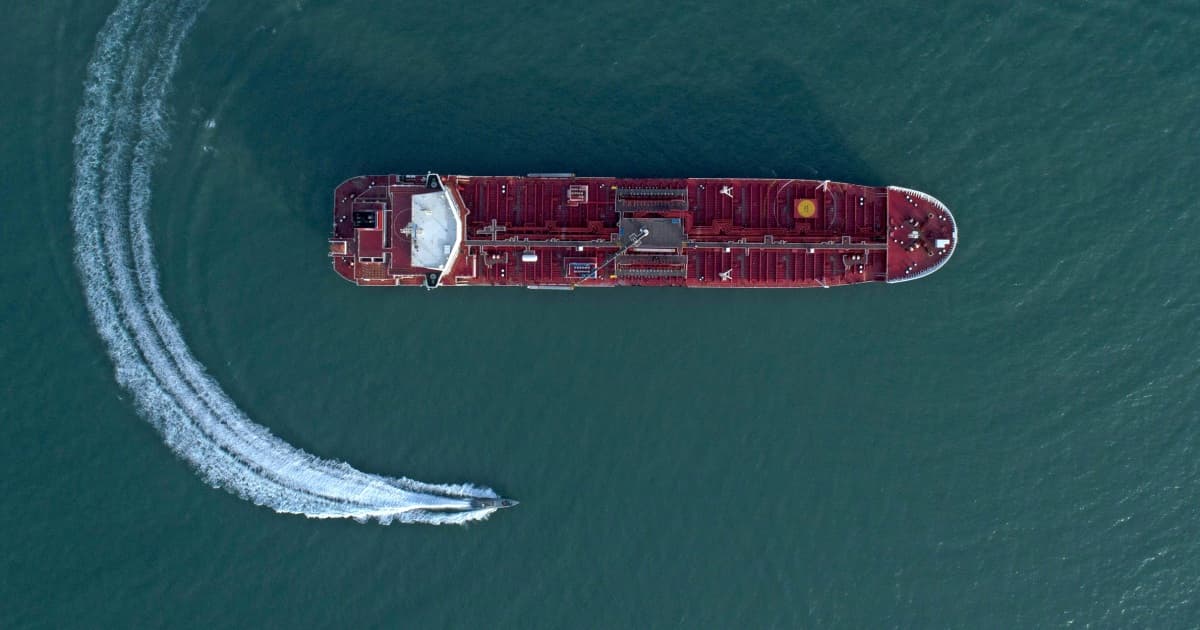
Drivers across the United States are reeling from sticker shock at the pump as national average gasoline prices surged past $4 per gallon this week—the highest level since late 2022—triggered by soaring crude oil costs tied to escalating geopolitical tensions in the Middle East. The spike follows President Donald Trump’s vow to take aggressive action against Iran, which sent global oil markets into a tailspin and exposed the fragile, interconnected supply chains underpinning America’s fuel supply. For motorists from Des Moines to Minneapolis, the relentless volatility means one station may charge $3.40 while another across town charges $4.20, leaving consumers bewildered and increasingly anxious about how much they must budget for transportation.
How Geopolitical Crises Are Fueling the $4 Gasoline Spike
Trump’s Iran Policy Triggers Oil Market Turmoil
On Wednesday, President Trump delivered a speech vowing to impose "extremely hard" consequences on Iran in the coming weeks, a statement that roiled global oil markets almost immediately. By Thursday, U.S. oil futures surged by more than 6%, pushing Brent crude above $90 per barrel for the first time since October 2023. The sudden spike was directly linked to concerns over potential disruptions in the Strait of Hormuz, a critical chokepoint through which roughly one-fifth of the world’s seaborne oil passes. Iran has repeatedly threatened to block the strait in response to sanctions and military pressure, a move that would choke off a major artery of global energy trade. Analysts at GasBuddy and other tracking firms noted that oil prices often react with lightning speed to geopolitical threats, even before physical supply disruptions occur.
This pattern mirrors historical oil shocks, such as the 1973 oil embargo and the 1979 Iranian Revolution, which triggered decades of energy volatility in the U.S. While domestic oil production has surged in recent years—thanks to shale development in Texas and North Dakota—the U.S. remains deeply exposed to global price swings. According to the U.S. Energy Information Administration (EIA), more than 60% of the crude oil processed in U.S. refineries is imported, with a significant portion flowing through the Strait of Hormuz. Thus, even a perceived threat can send shockwaves through American gas stations within days.
“The oil market doesn’t wait for bombs to drop. Traders react to rhetoric because perception becomes reality when supply lines are at risk.” — Patrick De Haan, head of petroleum analysis at GasBuddy
How Crude Oil Prices Dictate Pump Prices
The price motorists pay at the pump is only partially controlled by the gas station owner. Roughly half of every dollar spent on gasoline goes directly toward the cost of crude oil, according to the U.S. Energy Information Administration (EIA). Another 20% covers refining costs—the process of turning crude into usable gasoline—while taxes (federal, state, and local) account for nearly 20%. That leaves retailers with about 10% of the final price to cover operational expenses such as labor, rent, utilities, credit card fees, and maintenance of pumps and underground storage tanks.
Lonnie McQuirter, director of operations at 36 Lyn Refuel Station in south Minneapolis, described the current squeeze as unprecedented in his 15 years in the business. “We’re seeing wholesale fuel costs jump multiple times a day,” he said. “We price based on what we just paid for our next shipment. If oil goes up at 2 p.m., our tanks are already full of product bought at yesterday’s price. So we either eat the loss or raise prices immediately.” On Thursday, McQuirter’s station posted $3.399 per gallon for regular, about 20 cents below the Minneapolis metro average of $3.60, according to AAA.
Why Retailers Can’t Just Eat the Cost
While some large chains or branded stations may operate on thinner margins, independent operators like McQuirter face existential pressures. His credit card processing fees have risen by nearly 30 basis points in the past year due to interchange rate hikes, and pump maintenance costs have jumped 12% as extreme temperature swings and increased usage accelerate wear. “We’re looking our customers in the eye every day,” McQuirter said. “They’re cutting back on groceries, on meals out, on everything else just to afford to get to work. No one’s getting rich here—we’re just trying not to lose money.”
- Gasoline prices hit $4/gallon nationwide, the highest since late 2022, driven by surging crude oil prices tied to Middle East tensions.
- About half of every dollar at the pump goes to crude oil costs, with refiners, taxes, and retailers splitting the remainder, leaving thin margins.
- Independent gas station owners have little control over prices and face rising operational costs that squeeze profits further.
- Geopolitical threats—even without physical supply disruptions—can trigger rapid oil price spikes that cascade to American pumps within days.
Why Gas Prices Vary Wildly by State, City, and Even Block
While the national average has crossed $4 per gallon, the actual price a driver pays can vary by 50 cents or more depending on location. In California, drivers face an average of $4.85 per gallon, driven largely by the state’s highest-in-the-nation gas tax (71 cents per gallon) and strict environmental regulations that raise refining costs. In contrast, drivers in Alaska average just $3.55 per gallon, thanks to low state taxes (9 cents per gallon) and proximity to major Alaskan oil fields.
Distance from refineries also plays a key role. Stations in the Midwest, close to refineries in Illinois and Indiana, typically see lower prices than those on the East Coast, which rely on more expensive imported crude and higher transportation costs. Neal Walters, a partner in the energy practice at global consulting firm Kearney, explained that volume matters too. “A high-traffic interstate station with 10 pumps might price aggressively to attract customers, hoping they’ll buy chips, soda, or lottery tickets inside,” Walters said. “But a rural station with low traffic may have no choice but to match the market price or risk losing customers to the competitor.”
The Psychology of Gas Station Pricing
Gas station owners operate in one of the few retail sectors where pricing is fully transparent before a customer even enters the store. Large digital signs display prices to passing motorists, creating an immediate competitive dynamic. Walters noted that some operators use psychological pricing tricks, such as ending prices in .9 cents (e.g., $3.999) to make them appear lower, even though the difference is negligible. Others engage in zone pricing, adjusting prices based on local income levels or traffic patterns. Stations near wealthy suburbs may charge a premium, while those in lower-income areas might discount slightly to maintain volume.
But there’s a catch: when prices rise, volume often falls. Higher fuel costs reduce disposable income, and consumers cut back on non-essential purchases inside the store—soda, snacks, car washes—which typically generate 30% to 50% of a station’s profits. Jeff Lenard, vice president of the National Association of Convenience Stores (NACS), said, “A gas station isn’t just selling fuel—it’s a retail ecosystem. When pump prices spike, the entire model strains.”
Who Really Profits When Oil and Gasoline Prices Rise?
Despite the pain at the pump, most profits in the oil and gas supply chain flow to companies far upstream—those that explore, drill, and refine crude oil. According to the Federal Reserve Bank of Dallas, integrated oil majors like ExxonMobil, Chevron, and Shell capture the largest share of earnings when prices rise, thanks to their control over production and refining capacity. In the first quarter of 2024, Exxon reported $11 billion in profits, up 23% from the previous year, driven largely by higher oil prices.
Yet even these companies tread carefully during price spikes. Garrett Golding, assistant vice president for energy programs at the Federal Reserve Bank of Dallas, warned that sustained high prices could backfire by dampening demand. “Oil companies aren’t cheering when prices skyrocket,” Golding said. “They know that if gasoline stays above $4 for months, drivers will cut back on road trips, shift to electric vehicles, or demand policy changes. It’s a double-edged sword.”
Refiners also benefit from higher margins during price spikes, as they can sell gasoline at elevated prices while their own crude costs lag behind. However, their gains are often short-lived. When oil prices fall abruptly—as they did in 2020 during the COVID-19 pandemic—refiners face margin compression as gasoline prices plummet faster than crude. The EIA reports that refiner margins averaged 22 cents per gallon in 2023, but surged to 45 cents during periods of supply tightness.
“Price spikes are like a sugar rush for oil companies—they feel good for a stretch, but eventually, the market corrects and the hangover hits.” — Garrett Golding, Federal Reserve Bank of Dallas
What Can Drivers Do When Prices Keep Rising?
With little control over crude oil prices or geopolitical events, motorists are left with tactical choices to mitigate costs. AAA recommends using fuel price tracking apps like GasBuddy or Google Maps to compare prices in real time. Plug-in hybrid or electric vehicle owners may see even greater savings as gasoline prices climb, with the average EV costing about 4 cents per mile to operate compared to 15 cents for a gas-powered sedan, according to the U.S. Department of Energy.
Other strategies include fueling during off-peak hours (when demand is lower, some stations may offer slight discounts), joining loyalty programs, or using cash instead of credit cards (many stations offer 3 to 5 cents off per gallon for cash payments). For long-distance drivers, planning routes to minimize detours or avoiding toll roads can also reduce net fuel expenses. However, experts caution that these measures offer only marginal relief in the face of sustained price surges.
McQuirter, the Minneapolis station operator, offered a more human piece of advice: “Talk to your neighbors. If you see a station with consistently lower prices, ask why. Sometimes it’s a loyalty program, sometimes it’s better supplier deals. And if you can, fill up when you see a dip—even 10 cents off adds up over a tank.”
The Broader Economic Ripple Effect of High Gas Prices
Rising gasoline prices don’t just pinch wallets at the pump—they ripple through the entire economy. Higher fuel costs increase transportation expenses for goods, pushing up prices for food, clothing, and consumer products. The Federal Reserve has warned that persistent inflation in energy could delay interest rate cuts, keeping borrowing costs high for mortgages, auto loans, and business investments. According to Moody’s Analytics, every $10 increase in the price of a barrel of crude oil translates to a 0.1% increase in U.S. inflation over a year.
Regional economies feel the impact unevenly. States heavily reliant on tourism, such as Florida and Nevada, often see slower spending when gas prices rise, as visitors cut back on discretionary travel. Meanwhile, rural areas with limited public transit options face disproportionate burdens, as residents have no alternative but to drive long distances for work or essential services. The EIA estimates that Americans in the bottom income quintile spend nearly 12% of their after-tax income on transportation, compared to just 6% for the top quintile.
Politically, high gas prices have long been a flashpoint. In 2022, the Biden administration released millions of barrels from the Strategic Petroleum Reserve in an attempt to lower prices, a move criticized by Republicans as a short-term fix that undermined energy security. With the 2024 election looming, both parties are likely to frame the issue through their own lenses—Democrats emphasizing clean energy solutions, Republicans advocating for expanded domestic drilling and deregulation.
Key Takeaways: What Drivers Need to Know About $4 Gas
- Gasoline prices are driven primarily by crude oil costs (about 50% of the price), which are reacting to geopolitical tensions in the Middle East, not decisions by local gas station owners.
- Taxes and operational costs account for nearly 30% of the price, leaving retailers with razor-thin margins—often less than 15 cents per gallon after expenses.
- Price disparities between states and even neighborhoods are caused by taxes, distance from refineries, competition, and local economic conditions.
- High gas prices hurt small retailers by reducing inside-store sales and pushing customers to cut back on all spending, not just fuel.
- Oil companies and refiners benefit from price spikes, but face long-term risks if persistently high prices dampen demand or trigger policy backlash.
Frequently Asked Questions
- Why did gas prices jump so suddenly this week?
- Gas prices surged after President Trump’s speech vowing aggressive action against Iran, which spooked oil markets due to potential disruptions in the Strait of Hormuz, a critical oil shipping route. Within 24 hours, Brent crude oil prices jumped over 6%, pushing gasoline prices higher at the pump nationwide.
- Can gas station owners control their prices?
- Gas station owners have very little control over pump prices. Roughly 70% of the price is determined by crude oil costs and taxes, with retailers forced to adjust prices based on their wholesale supply costs. Independent operators often operate on thin margins and can’t absorb large cost increases.
- Why are gas prices so much higher in California than in other states?
- California has the highest gas taxes in the nation (71 cents per gallon), along with strict environmental regulations that increase refining costs. Additionally, California imports a significant portion of its gasoline from overseas, adding transportation expenses that other states avoid.