Against the backdrop of the cosmos, humanity’s return to the moon reached a poignant moment this Easter weekend as NASA’s Artemis 2 crew—commander Reid Wiseman, pilot Victor Glover, mission specialists Christina Koch and Jeremy Hansen—marked the holiday 230,000 miles from home. While orbiting the Earth-moon system, the astronauts paused their mission preparations to send holiday greetings to mission control, hide dehydrated confetti eggs, and reflect on the unifying power of tradition, even in the void of space. Their activities came as the Orion spacecraft neared a critical phase: a close lunar flyby Monday evening that will test the spacecraft’s systems and set new records for human spaceflight, including the farthest distance from Earth ever traveled by a crewed mission.
Key Takeaways: Artemis 2’s Journey Beyond Earth Orbit
- The Artemis 2 crew became the first humans to celebrate Easter in deep space, highlighting the human element of lunar exploration.
- Monday’s lunar flyby will take Orion within 4,070 miles of the moon’s surface, surpassing the Apollo 13 distance record of 248,655 miles from Earth.
- The mission is testing critical systems, including new Artemis pressure suits and Orion’s life support, ahead of future lunar landings.
- Scientific observations during the flyby will provide high-resolution views of the moon’s far side, offering new data for lunar geology.
Astronauts Mark Easter in Deep Space with Traditions and Reflection
On Sunday, mission specialist Christina Koch took a moment to share Easter greetings with flight controllers from aboard the Orion spacecraft, reflecting on the holiday’s significance across cultures and religions. "This time of year is something that many religions and many cultures hold dear," Koch told mission control. "It’s a time of emotions such as joy, as well as solemnness, honoring what’s going on both in our world and in our religious beliefs." She recounted her family’s tradition of hiding confetti eggs in Houston backyards, sharing that the crew had adapted the ritual in microgravity by hiding "dehydrated scrambled egg" confections around the cabin.
Canadian astronaut Jeremy Hansen, the first Canadian to fly to the moon, offered his own perspective on the holiday. "No matter your faith or religion, for me the teachings of Jesus were always a very simple truth, of love, universal love, love yourself and love others," Hansen said. His inclusion in the mission underscores the international partnership behind Artemis, with Canada contributing a robotic arm system for NASA’s lunar Gateway space station.
The crew’s wake-up call on Easter Sunday featured a message from retired Apollo 16 astronaut Charlie Duke, who landed on the moon in 1972 aboard the lunar module Orion. "I’m glad to see a different kind of Orion helping return humans to the moon," Duke said. "Thanks to you and the whole team on the ground for building on our Apollo legacy with Artemis."
Testing Critical Systems: Pressure Suits and Life Support Ahead of Lunar Flyby
With Monday’s lunar flyby looming, the Artemis 2 crew focused Sunday on testing their bright orange Artemis pressure suits—designed to sustain an astronaut for up to six days in the event of a cabin depressurization. Commander Reid Wiseman, pilot Victor Glover, mission specialist Christina Koch, and mission specialist Jeremy Hansen donned the suits in the cramped confines of the Orion capsule to assess how quickly they could be put on in an emergency. The tests included practicing seat ingress and egress, pressurizing the suits, and evaluating the crew’s ability to eat and drink using dispensers built into the helmet’s visor.
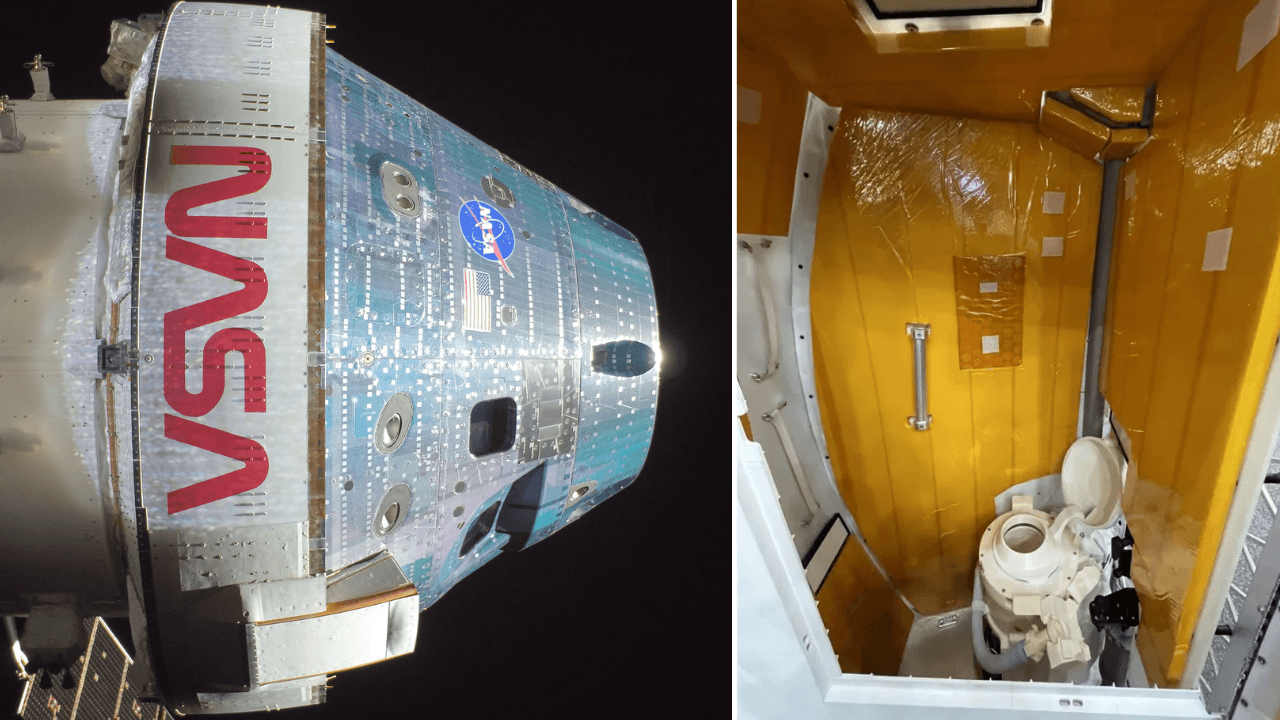
Earlier in the mission, flight controllers had restored Orion’s toilet system after an earlier malfunction caused urine to be vented overboard. Mission control confirmed the system was fully operational Sunday, with Koch exclaiming, "And the crew rejoices! Thank you!" The toilet’s restoration was critical for crew comfort and mission duration, as the Artemis 2 mission is expected to last approximately 10 days.
Lunar Flyby Monday to Set Distance Records and Test Orion’s Capabilities
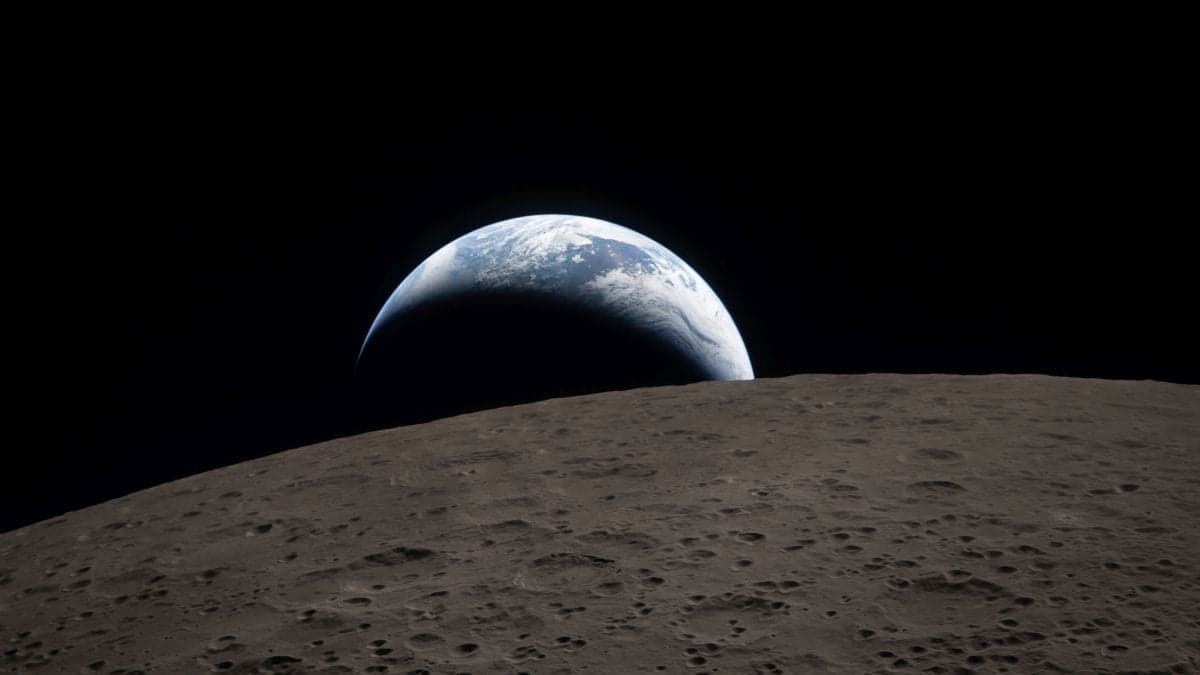
Monday evening marks the most anticipated phase of the Artemis 2 mission: a close lunar flyby that will take Orion behind the moon, temporarily cutting off communications with Earth. At 6:47 p.m. EDT, the spacecraft will enter the moon’s sphere of influence, where lunar gravity will begin pulling it toward the surface. The flyby will bring Orion within approximately 4,070 miles of the moon’s far side at 7:16 p.m., surpassing the previous record for human distance from Earth set by Apollo 13 in 1970—248,655 miles—just hours earlier at 1:56 p.m. EDT.
The mission will reach its maximum distance from Earth at 252,760 miles at 7:19 p.m., before swinging back toward the moon and re-establishing contact with mission control at 7:27 p.m. During the 40-minute blackout period, the crew will not only fly closer to the moon than any human since 1972 but will also conduct scientific observations of the lunar far side, including a solar eclipse visible from their vantage point as the moon passes between the spacecraft and the sun.
Why the Far Side of the Moon Matters for Science
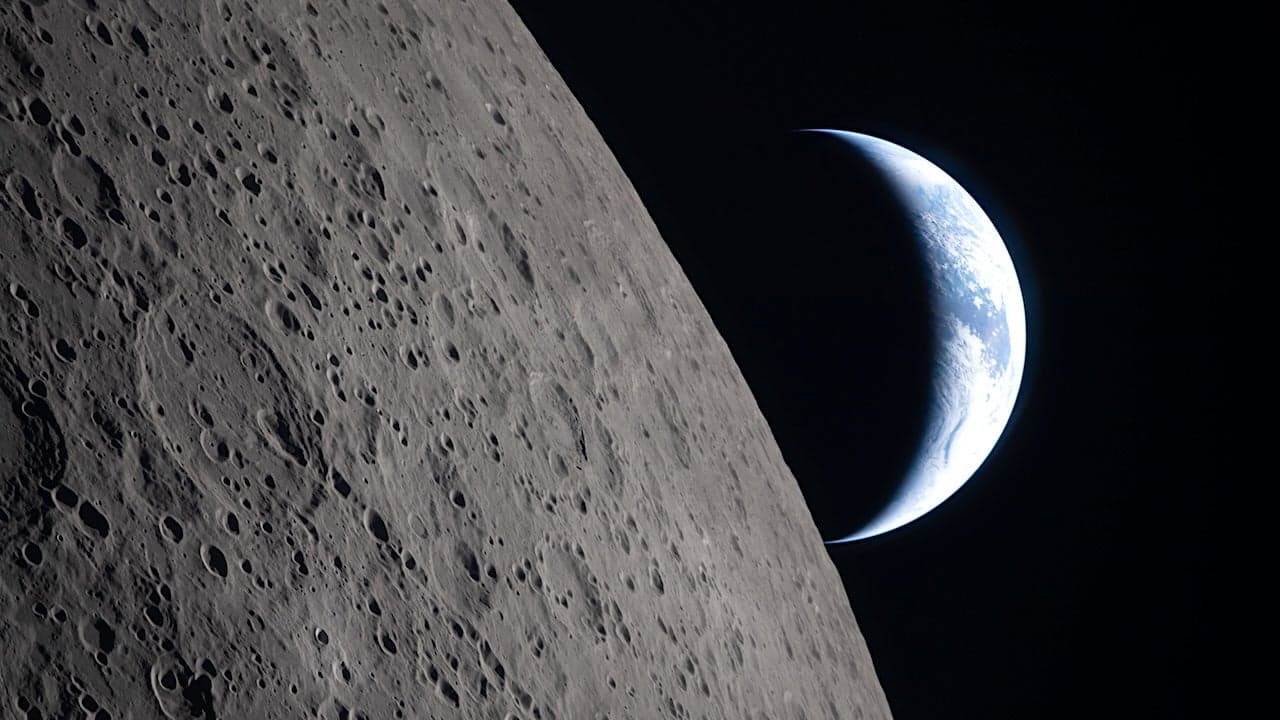
The moon’s far side, often incorrectly called the "dark side" despite receiving equal sunlight, remains one of the least explored regions of the lunar surface. Unlike the near side, which is dominated by vast, dark basaltic plains called maria, the far side is heavily cratered and geologically distinct. During Sunday’s observations, Koch noted that even from 75,000 miles away, the crew could discern fine details of lunar topography. "The moon we are looking at is not the moon you see from Earth," she reported. Mission control identified the region as Mare Imbrium, or the "Sea of Rain," a 710-mile-wide basin formed by a massive impact billions of years ago. Surrounded by towering mountains created by the collision, Imbrium is one of the moon’s largest maria and a high-priority target for future lunar geology studies.
Astronauts Observe Lunar Features in Unprecedented Detail
Victor Glover, who initially mistook a large basin for Mare Orientale—a high-priority target straddling the moon’s near and far sides—was captivated by the clarity of the terrain. "You can actually see the terrain. It’s not an albedo change, it’s not shadows. You can actually just tell that they are terrain features of the multi-rigged crater there," Glover said. Mission control confirmed the feature as Imbrium, highlighting the crew’s ability to make real-time scientific observations that could rival decades of orbital data. Kelsey Young, a member of the Artemis lunar science team, noted that human eyes and trained brains can make nuanced color and texture observations far more quickly than instruments alone. "The human eye, especially when it’s connected to a well-trained brain—which I assure you these four people have—are capable of in the blink of an eye making nuanced color observations that Apollo observations told us can tell us something scientifically," Young explained.
The Artemis Program: A New Era of Lunar Exploration and International Collaboration
Artemis 2 is the second mission in NASA’s Artemis program, which aims to return humans to the moon for the first time since Apollo 17 in 1972, including landing the first woman and person of color on the lunar surface. The program is designed to establish a sustainable human presence on the moon by the end of the decade, preparing for future missions to Mars. Artemis 2, launched on November 14, 2024, from Kennedy Space Center in Florida atop the Space Launch System (SLS) rocket, is a crewed test flight of the Orion spacecraft. Unlike the uncrewed Artemis 1 mission in 2022, Artemis 2 will carry astronauts on a lunar flyby, testing all systems except lunar landing, which will be the focus of Artemis 3.
The mission highlights growing international partnerships, with Canada, the European Space Agency, and Japan contributing key components. Canada’s contribution of the Canadarm3 robotic system for the lunar Gateway space station is a testament to the collaborative spirit of Artemis. The program’s success hinges on the Orion spacecraft, which features advanced life support, radiation shielding, and communication systems capable of supporting crews for up to 21 days in deep space.
What’s Next for Artemis 2 and the Future of Lunar Exploration
After Monday’s lunar flyby, the Artemis 2 crew will continue collecting data on Orion’s performance, including thermal protection during re-entry and splashdown in the Pacific Ocean on November 23. The mission’s success will pave the way for Artemis 3, currently scheduled for 2026, which aims to land astronauts near the moon’s south pole—a region believed to contain water ice in permanently shadowed craters. This ice could be crucial for future lunar habitats and as a resource for producing oxygen and rocket fuel.
The Artemis program represents more than a return to the moon; it is a stepping stone for deeper space exploration. NASA’s goal is to use the moon as a proving ground for technologies and operations that will enable human missions to Mars in the 2030s. As Wiseman put it during Sunday’s observations, "I’m not one for hyperbole, but it’s the only thing I could come up with just seeing Tycho, there’s mountains to the north, you can see Copernicus … it’s just everything from the training, but in three dimensions and absolutely unbelievable. This is incredible."
The Legacy of Apollo and the Promise of Artemis
The Artemis program builds on the legacy of the Apollo missions, which landed 12 men on the moon between 1969 and 1972. Apollo 17, the final mission of the program, set the record for the longest crewed lunar landing mission (75 hours) and the largest sample return (243 pounds of moon rocks). Artemis aims to surpass these achievements by leveraging modern technology, such as advanced computing, materials science, and international collaboration. The program also seeks to address criticisms of Apollo by including diverse crews and focusing on sustainable exploration rather than Cold War-era competition.
Charlie Duke’s message to the Artemis 2 crew underscored this legacy. "I pray it reminds you that we in America and all of the world are cheering you on," Duke said. "Thanks to you and the whole team on the ground for building on our Apollo legacy with Artemis."
Frequently Asked Questions About Artemis 2 and the Lunar Flyby
Frequently Asked Questions
- How far from Earth will the Artemis 2 crew travel during the lunar flyby?
- The Artemis 2 crew will reach a maximum distance of 252,760 miles from Earth during Monday’s flyby, surpassing the Apollo 13 record of 248,655 miles set in 1970.
- What is the purpose of the Artemis 2 mission?
- Artemis 2 is a crewed test flight of the Orion spacecraft, designed to test all systems except lunar landing ahead of future missions, including Artemis 3, which aims to land astronauts on the moon.
- Why is the far side of the moon important for science?
- The far side of the moon is geologically distinct from the near side, with more craters and fewer maria. Its exploration can provide insights into the moon’s early history and the solar system’s formation.