In a landmark achievement for human spaceflight, NASA’s Artemis 2 mission has officially broken a 54-year-old record by sending four astronauts farther from Earth than any humans in history. The crew—NASA’s Reid Wiseman, Victor Glover, Christina Koch, and the Canadian Space Agency’s Jeremy Hansen—embarked on a groundbreaking lunar flyby on April 1, 2024, aboard the Orion spacecraft *Integrity*, surpassing the previous distance record set by Apollo 13 in 1970. The mission not only redefined the boundaries of human exploration but also provided unprecedented scientific observations of the moon’s surface and a rare total solar eclipse visible only from deep space.
- Artemis 2 is the first crewed mission to travel beyond low Earth orbit since Apollo 17 in 1972.
- The crew set a new distance record of 252,756 miles (406,771 km) from Earth, surpassing Apollo 13’s 248,655-mile (400,171 km) record.
- The mission included a detailed lunar geology study and a unique total solar eclipse observation from behind the moon.
- Astronauts named two lunar craters—*Integrity* and *Carroll*—in tribute to the mission and commander Reid Wiseman’s late wife.
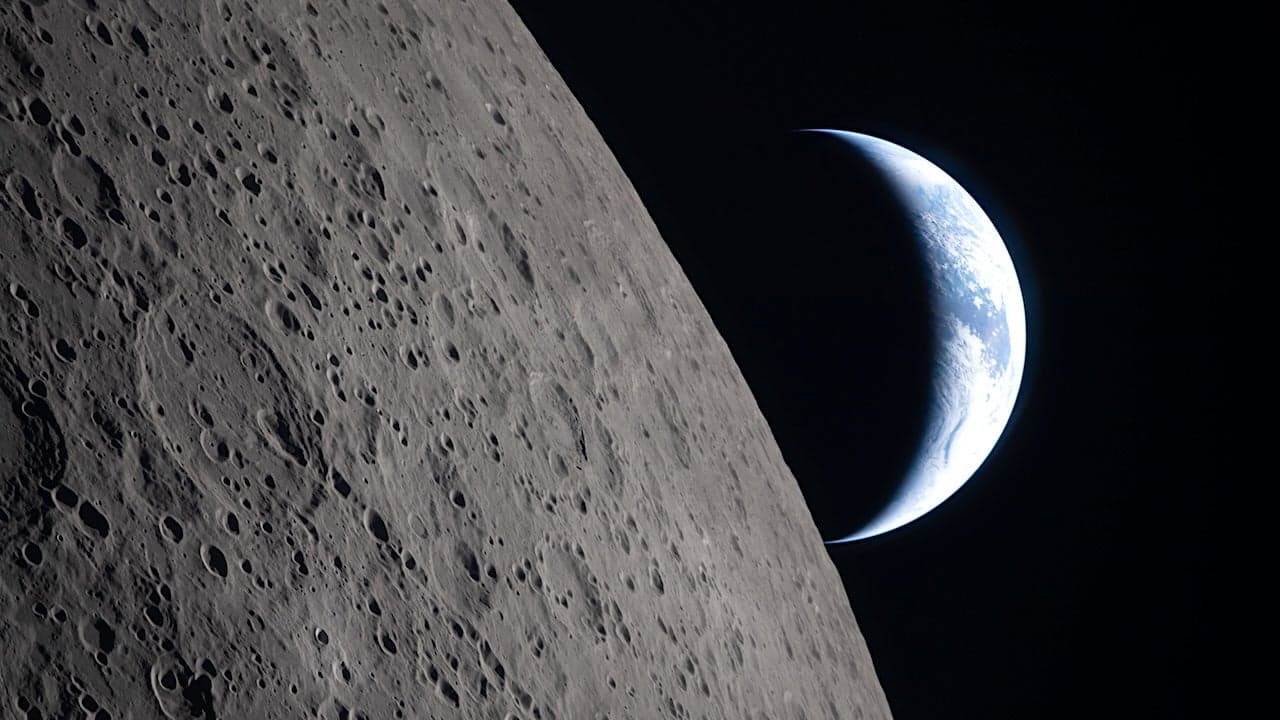
- The flyby provided a rare opportunity for human eyes to observe the moon’s surface in detail, complementing robotic data.
Breaking the 54-Year-Old Human Spaceflight Record: How Artemis 2 Surpassed Apollo 13’s Legacy
NASA’s Artemis 2 mission has etched its name in the annals of space exploration history by shattering a half-century-old record. On April 1, 2024, the four astronauts aboard the Orion spacecraft *Integrity*—NASA commander Reid Wiseman, pilot Victor Glover, mission specialist Christina Koch, and Canadian Space Agency astronaut Jeremy Hansen—embarked on a journey that took them farther from Earth than any humans before them. The milestone occurred just 13.5 hours after launch, when the crew crossed the 248,655-mile (400,171 km) threshold set by the Apollo 13 astronauts in April 1970. But the record-breaking didn’t stop there. Over the next five hours, *Integrity* continued its outward trajectory, reaching a maximum distance of 252,756 miles (406,771 km) from Earth at 7:00 p.m. EDT on April 1.
This achievement is more than a symbolic victory; it represents a critical step toward NASA’s long-term goal of returning humans to the moon and eventually sending astronauts to Mars. Unlike the Apollo missions, which were focused on short-duration landings, Artemis 2 is designed as a precursor to a sustainable lunar presence, including the construction of the Lunar Gateway—a small space station orbiting the moon—and the eventual establishment of a permanent Artemis Base Camp at the lunar south pole. The mission’s success also underscores the growing role of international collaboration in space exploration, with Hansen becoming the first Canadian to venture beyond low Earth orbit.
We, most importantly, choose this moment to challenge this generation and the next to make sure this record is not long-lived.
Hansen’s words, delivered shortly after *Integrity* surpassed Apollo 13’s record, encapsulate the spirit of Artemis 2: a mission that not only honors the past but also sets the stage for future generations. The crew’s journey beyond the moon’s ‘sphere of influence’—where lunar gravity dominates Earth’s—marked a return to the type of deep-space exploration last witnessed during the final Apollo mission in 1972. Yet, unlike Apollo, Artemis 2 is part of a broader, sustained effort to establish a permanent human presence in cislunar space, leveraging advancements in technology, propulsion, and international partnerships that were unimaginable in the 1970s.
A Rare Glimpse of the Moon: How Human Eyes Unlocked New Scientific Insights
While the distance record alone would have cemented Artemis 2’s place in history, the mission’s primary objective was scientific: to study the moon’s surface in unprecedented detail. The crew’s flyby, which occurred on April 1, 2024, provided the first human observations of the lunar surface in over five decades. Unlike robotic spacecraft, which rely on cameras and sensors, human astronauts possess an unparalleled ability to detect subtle variations in color, texture, and geological features—a critical advantage for planning future lunar landings and resource extraction.
The Orientale Basin: A ‘Grand Canyon of the Moon’ Seen by Human Eyes for the First Time
One of the mission’s key targets was the Orientale Basin, a massive 600-mile-wide (965 km) impact crater straddling the moon’s near and far sides. Known as the ‘Grand Canyon of the Moon,’ Orientale had never before been observed in sunlight by human eyes until Artemis 2. The astronauts meticulously documented the basin’s features, including its prominent annular ring—a circular structure resembling a pair of lips or a ‘kiss’ on the lunar surface, as described by Commander Wiseman. ‘The northern part of it is wider, darker; the southern part is much lighter,’ Wiseman noted during a live transmission to Mission Control. ‘It is very neat-looking—far more circular than I remember it looking in our training.’
The Orientale Basin is of particular scientific interest because it offers a window into the moon’s violent early history. Formed approximately 3.8 billion years ago by a massive asteroid impact, the basin’s concentric rings and ejected material provide clues about the moon’s geological evolution and the processes that have shaped its surface. By comparing human observations with data from lunar orbiters and landers, scientists hope to refine models of the moon’s formation and its relationship to Earth.
Naked-Eye Observations and 32 Cameras: The Dual Power of Human and Robotic Data
The Artemis 2 crew complemented their visual observations with a suite of 32 cameras—15 mounted on the *Integrity* spacecraft and 17 handheld devices operated by the astronauts. This dual approach allowed for both real-time human interpretation and high-resolution photographic documentation. Koch, a veteran astronaut with experience on the International Space Station, shared her emotional reaction to the lunar landscape during the flyby. ‘At one point towards the end of my time in Window 3, I just had an overwhelming sense of being moved by looking at the moon,’ she told Mission Control. ‘It lasted just a second or two, and I actually couldn’t even make it happen again, but something just drew me in suddenly to the lunar landscape, and it became real. And the truth is, the moon really is its own body in the universe.’
Koch’s description highlights the unique perspective humans bring to space exploration. While robotic missions like NASA’s Lunar Reconnaissance Orbiter have mapped the moon’s surface in extraordinary detail, the human eye can detect nuances—such as the subtle hues of lunar soil or the texture of crater walls—that are invisible to cameras. This capability is particularly valuable for identifying potential landing sites for future Artemis missions, where astronauts will need to navigate treacherous terrain to collect samples and conduct experiments.
A Total Solar Eclipse from Deep Space: The First of Its Kind
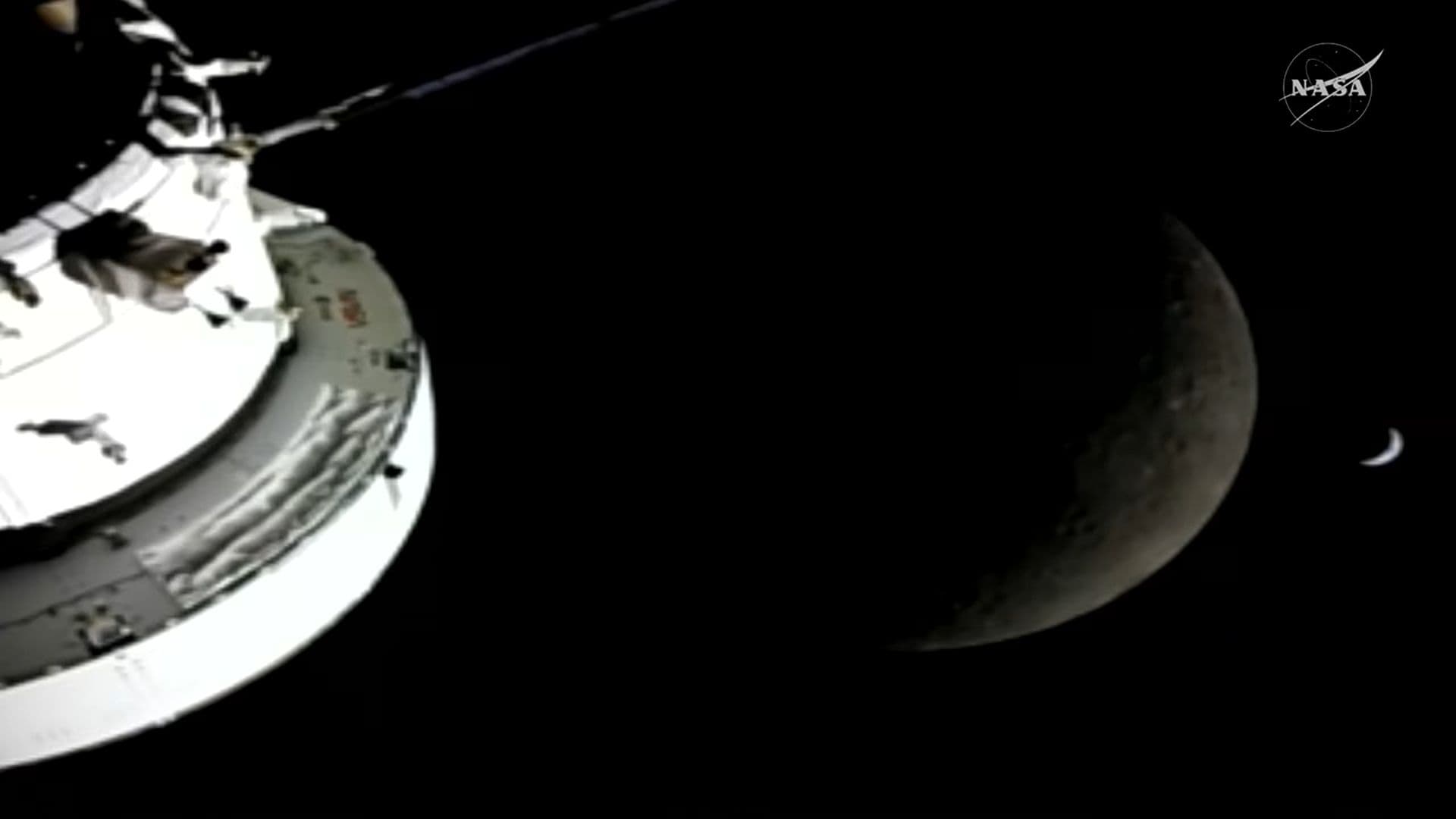
One of the most surreal moments of the Artemis 2 mission occurred not on the moon, but during a total solar eclipse visible only to the crew. At 8:35 p.m. EDT on April 6, 2024, the moon passed directly between the Earth and the sun from the astronauts’ vantage point, casting a shadow over *Integrity* for 53 minutes. This eclipse was a stark contrast to those observed on Earth, where the moon’s shadow typically lasts a maximum of 7.5 minutes. From deep space, the moon appeared so large that it completely obscured the sun, revealing the sun’s wispy outer atmosphere—the corona—in stunning detail.
The sun has gone behind the moon, and the corona is still visible, and it's bright and it creates a halo almost around the entire moon. The Earth is so bright out there, and the moon is just hanging in front of us, this black orb out in front of us. Wow! It's amazing.
The eclipse provided a rare opportunity for solar scientists to study the corona, which is usually obscured by the sun’s intense brightness. The Artemis 2 crew followed a detailed checklist provided by NASA’s science team, describing the corona’s features and helping researchers understand the dynamics of solar wind and space weather—critical knowledge for protecting future astronauts and spacecraft from solar radiation. ‘We’ve included prompts for them to describe the features that they can see in the solar corona, which can ultimately help solar scientists understand these processes in general,’ said Kelsey Young, NASA’s Artemis science flight operations lead. The crew also reported seeing at least five meteorite impact flashes on the moon’s darkened surface, evidence of ongoing bombardment by space debris.
The Flyby and Beyond: What’s Next for Artemis 2 and the Future of Lunar Exploration
The lunar flyby marked the midpoint of the Artemis 2 mission, which will conclude with a splashdown in the Pacific Ocean on April 10, 2024. But the data collected during the flyby will have far-reaching implications for NASA’s Artemis program and the broader field of planetary science. The mission’s success validates the Orion spacecraft’s capabilities and paves the way for Artemis 3, which aims to land the first woman and the next man on the lunar surface in 2026. That mission will rely on the Lunar Starship, a human landing system developed by SpaceX under a $2.9 billion contract with NASA.
A New Phase: The Journey Back to Earth
After completing the flyby, *Integrity* entered a new phase of the mission: the journey back to Earth. The spacecraft’s trajectory, known as a ‘free return’ orbit, ensured that it would loop around the moon without entering lunar orbit, relying on Earth’s gravity to slingshot it home. This approach minimizes fuel consumption and risk, a critical consideration for future deep-space missions. The crew’s return will be closely watched, as it will test Orion’s heat shield and re-entry systems—a vital step before Artemis 3’s crewed lunar landing.
During the flyby, the crew also paid tribute to fallen heroes and personal legacies. In a poignant moment, they named an unnamed lunar crater *Integrity* after the spacecraft, and another *Carroll* in honor of Reid Wiseman’s late wife, Carroll Taylor Wiseman, who passed away from cancer in 2020. ‘Integrity and Carroll Crater, loud and clear,’ Mission Control replied, marking a rare intersection of personal and professional milestones in the mission.
Why Artemis 2 Matters: The Broader Implications of Human Spaceflight Beyond Earth Orbit
The Artemis 2 mission is more than a technical achievement; it represents a paradigm shift in human spaceflight. Unlike the Apollo missions, which were driven by Cold War competition, Artemis is a collaborative effort involving NASA, the European Space Agency, the Canadian Space Agency, and commercial partners like SpaceX and Lockheed Martin. The mission’s success demonstrates the viability of long-duration deep-space travel, a critical step toward NASA’s goal of sending humans to Mars by the late 2030s. Additionally, Artemis 2 serves as a testbed for technologies that will be essential for sustainable lunar exploration, including in-situ resource utilization (ISRU)—the process of extracting water ice and other resources from the lunar surface to produce oxygen, fuel, and drinking water.
The mission also has significant economic and geopolitical implications. By establishing a permanent presence on the moon, NASA and its international partners aim to stimulate a new era of commercial space activity, from mining to tourism. The Lunar Gateway, a small space station orbiting the moon, will serve as a hub for scientific research and a staging point for missions to the lunar surface and beyond. Meanwhile, countries like China and India are also advancing their lunar ambitions, with China planning to land astronauts on the moon by 2030. The race to the moon is not just about exploration; it’s about establishing dominance in the emerging cislunar economy.
The Road to Artemis 3 and Beyond: What’s Next for NASA’s Moon Program
With Artemis 2 safely on its return trajectory, NASA is already looking ahead to Artemis 3, which is slated to land the first woman and the next man on the lunar surface in 2026. That mission will rely on the Lunar Starship, a modified version of SpaceX’s Starship spacecraft, to ferry astronauts from lunar orbit to the surface. The landing site will be near the moon’s south pole, an area rich in water ice—a critical resource for future missions. Artemis 3 will also deploy the Lunar Terrain Vehicle (LTV), a rover that will allow astronauts to explore the lunar surface in greater detail.
Beyond Artemis 3, NASA plans to launch Artemis 4, 5, and 6, each building on the previous mission’s successes. Artemis 4 will deliver the first two modules of the Lunar Gateway, while subsequent missions will focus on expanding infrastructure and conducting long-duration stays on the moon. The ultimate goal is to establish a sustainable human presence on the moon, serving as a stepping stone for missions to Mars and beyond. ‘I can’t say enough how much science we’ve already learned, and how much inspiration you’ve provided to our entire team, the lunar science community and the entire world with what you were able to bring today,’ Kelsey Young told the Artemis 2 crew after the flyby. ‘You really brought the moon closer for us today, and we cannot say thank you enough.’
Frequently Asked Questions
Frequently Asked Questions
- How far did Artemis 2 travel from Earth?
- Artemis 2 reached a maximum distance of 252,756 miles (406,771 km) from Earth on April 1, 2024, surpassing the previous record of 248,655 miles (400,171 km) set by Apollo 13 in 1970.
- What was the main scientific objective of the Artemis 2 lunar flyby?
- The primary scientific goal was to study the moon’s surface in unprecedented detail, leveraging human observations to detect subtle geological features that robotic spacecraft might miss.
- How long did the total solar eclipse last during Artemis 2?
- The total solar eclipse observed by the Artemis 2 crew lasted 53 minutes, far longer than the maximum 7.5 minutes visible from Earth, due to the moon’s proximity from the spacecraft’s vantage point.