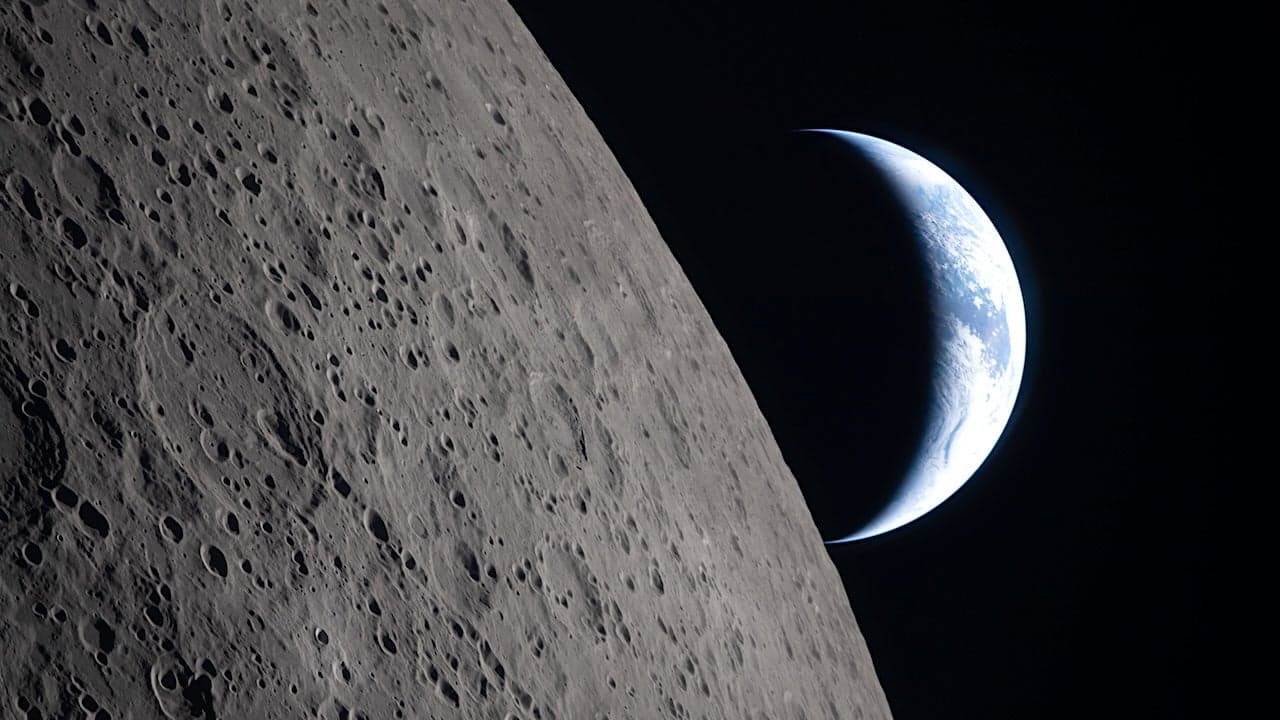
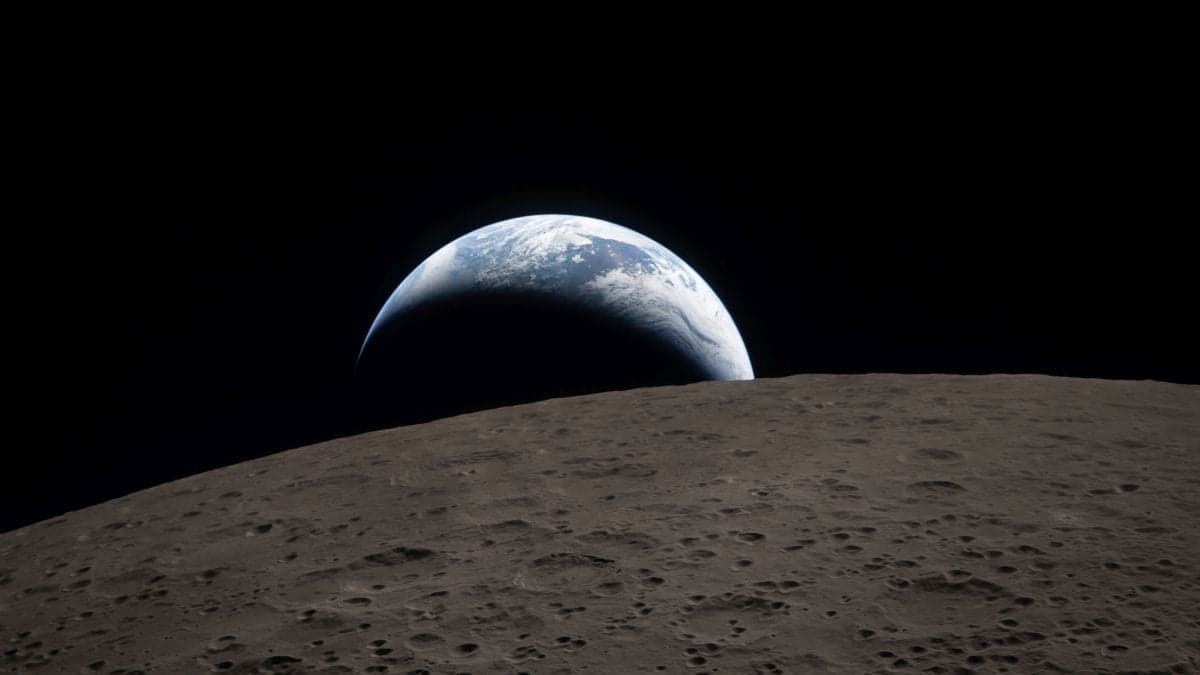
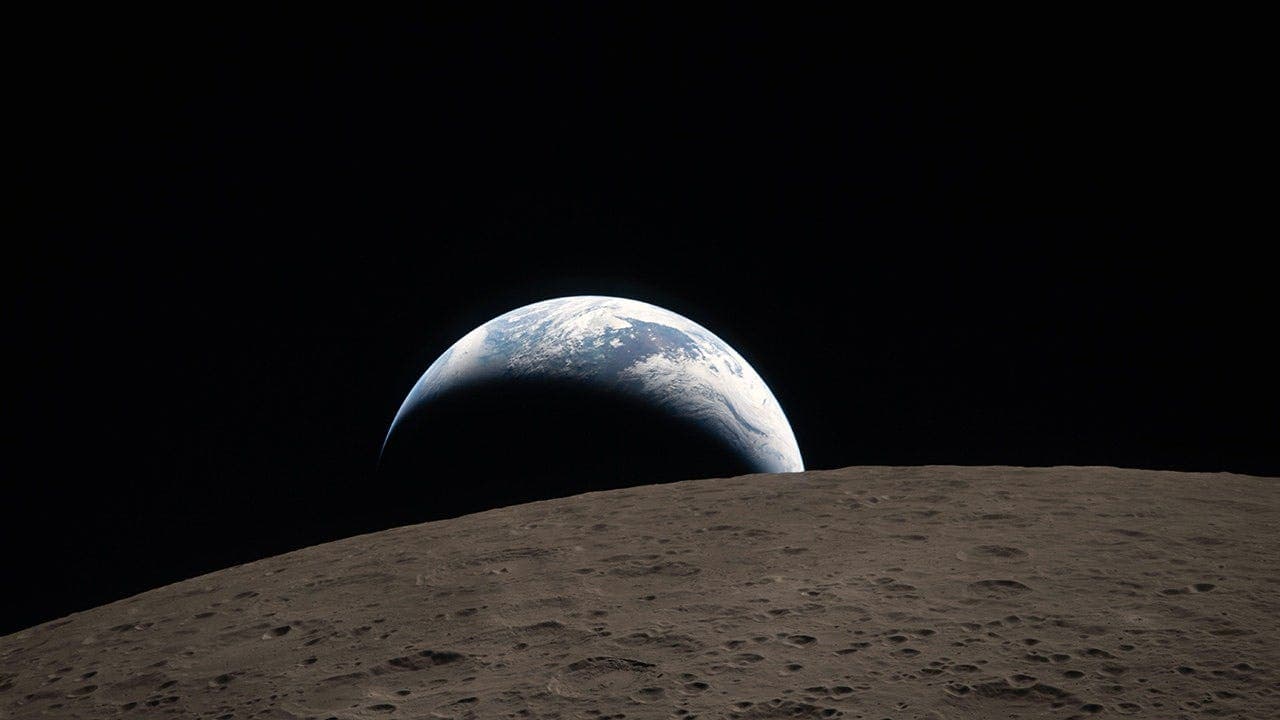
HOUSTON — Four astronauts aboard NASA’s Orion spacecraft are poised to rewrite the record books on Monday, flying farther from Earth than any humans since Apollo 13 in 1970. The Artemis II crew, comprising three Americans and one Canadian, will pass within 4,070 miles of the moon’s surface during a six-hour flyby before beginning their four-day journey home. The mission marks humanity’s first return to lunar vicinity in over five decades and sets the stage for the agency’s ambitious Artemis program, which aims to establish a sustainable human presence on the moon by the end of the decade.
- Artemis II will surpass Apollo 13’s 248,655-mile distance record by more than 4,100 miles during Monday’s lunar flyby.
- The crew will capture unprecedented views of the moon’s far side and witness a total solar eclipse from space.
- This mission is a critical step toward NASA’s goal of landing the first woman and person of color on the moon with Artemis III.
- Orion will lose contact with Mission Control for 40 minutes during the flyby, a routine but tense phase of lunar missions.
- The astronauts will conduct scientific observations and share insights with the International Space Station crew upon return.
The Legacy of Apollo 13: How Artemis II Will Break the Distance Record
In April 1970, NASA’s Apollo 13 mission became a symbol of resilience when an oxygen tank rupture forced astronauts Jim Lovell, Fred Haise, and Jack Swigert to abort their lunar landing. Instead, Mission Control orchestrated a free-return trajectory—a gravity-assisted loop around the moon that propelled the crew to a maximum distance of 248,655 miles (400,171 kilometers) from Earth before their safe return. That record has stood for 54 years, a testament to the ingenuity of the Apollo era. Now, Artemis II is poised to eclipse it by more than 4,100 miles (6,600 kilometers), a milestone that underscores how far lunar exploration has come.
The Science Behind the Free-Return Trajectory
The free-return trajectory used by both Apollo 13 and Artemis II relies on the gravitational interplay between Earth and the moon. By skimming close to the lunar surface without entering orbit, the spacecraft can harness the moon’s gravity to slingshot back toward Earth with minimal fuel expenditure. This method was critical for Apollo 13’s survival and remains a cornerstone of NASA’s Artemis program. ‘Physics takes over and physics will absolutely get us back to the front side of the moon,’ said flight director Judd Frieling, emphasizing the reliability of celestial mechanics in spaceflight.
Unlike Apollo 13, however, Artemis II is not a mission of desperation. The four astronauts—Commander Reid Wiseman, Pilot Victor Glover, Mission Specialist Christina Koch, and Canadian astronaut Jeremy Hansen—are on a meticulously planned journey designed to test Orion’s systems for future lunar landings. Their flyby is a rehearsal for Artemis III, which aims to land the first woman and person of color on the moon’s south pole in 2026.
A New Perspective: What the Artemis II Crew Will See
The Apollo astronauts of the 1960s and 1970s never saw the moon’s far side from such proximity. During Monday’s flyby, Artemis II will pass over regions of the lunar surface that have remained in perpetual darkness, offering views of craters and basins that were invisible to previous missions. NASA geologist Kelsey Young explained that the crew will document ‘definite chunks of the far side that have never been seen’ by humans, including a significant portion of the Orientale Basin, a massive impact crater on the moon’s western edge.
The timing of the launch—April 1—was chosen for strategic reasons. While it means less of the far side will be illuminated, it also sets up a rare celestial spectacle: a total solar eclipse visible only to the astronauts aboard Orion. As the moon passes between Earth and the sun, the crew will witness the sun’s corona, the outermost layer of its atmosphere, shimmering in the darkness. The astronauts have packed eclipse glasses to safely observe the event, a poignant reminder of humanity’s enduring fascination with celestial phenomena.
The Challenges of Lunar Communication Blackouts
One of the most tense moments of any lunar mission occurs when the spacecraft disappears behind the moon, severing its direct line of communication with Earth. For Artemis II, this blackout will last approximately 40 minutes, during which Orion will rely on its autonomous systems to execute the flyby. NASA’s Deep Space Network—three giant antennas located in California, Spain, and Australia—will be powerless to intervene until the spacecraft re-emerges. ‘These communication blackouts were always a tense time during Apollo,’ Frieling noted, ‘though history shows that the laws of physics are unforgivingly reliable.’
Science and Exploration: The Broader Goals of Artemis II
While the distance record is a headline-grabber, Artemis II’s primary objective is to validate the Orion spacecraft’s performance before crewed lunar landings. The mission is testing the capsule’s heat shield, life support systems, and navigation capabilities, all of which will be critical for Artemis III’s moon landing. ‘We’ll get eyes on the moon, kind of map it out and then continue to go back in force,’ Frieling said, outlining NASA’s vision for a sustained human presence on the lunar surface.
The Artemis program is not just about planting flags; it’s a stepping stone for deeper space exploration. The moon will serve as a testing ground for technologies needed for missions to Mars, including habitats, rovers, and in-situ resource utilization systems. NASA’s goal is to establish a base near the lunar south pole, where permanently shadowed craters may contain water ice—essential for drinking water, oxygen, and rocket fuel.
The Crew’s Role in Capturing Lunar Science and History
The four Artemis II astronauts are more than passengers; they are active participants in the mission’s scientific goals. During the flyby, they will split into pairs to take turns photographing the lunar surface through Orion’s windows. The spacecraft is equipped with professional-grade cameras, but the astronauts also have iPhones for more spontaneous shots. ‘They’ve practiced for many, many months on visualizations of the moon,’ Young said. ‘Getting their eyes on the real thing, I’m really looking forward to them bringing the moon a little closer to home.’
Christina Koch, the mission specialist and a veteran of long-duration spaceflights, emphasized that the crew isn’t focused on setting records for their own sake. ‘We don’t live on superlatives,’ she said last week. ‘But it’s an important milestone that people can understand and wrap their heads around—merging the past with the present and even the future when new records are set.’ Koch’s experience includes a record-setting 328-day stay aboard the International Space Station (ISS), where she participated in the first all-female spacewalk in 2019.
A Cosmic Conversation: Orion and the ISS Crew
After departing the lunar neighborhood, Artemis II will embark on a four-day journey back to Earth, culminating in a splashdown in the Pacific Ocean near San Diego on April 10. The return leg of the mission will include a unique rendezvous: a radio link with the crew of the ISS, which will be in orbit around Earth at the same time. This is the first time a moon-bound crew will communicate with astronauts in low Earth orbit. Among the ISS crew is Jessica Meir, who participated in the 2019 all-female spacewalk with Koch. ‘NASA can’t pass up the opportunity for a cosmic chitchat,’ Frieling quipped, highlighting the collaborative spirit of human spaceflight.
The Road Ahead: From Artemis II to a Lunar Base
While Artemis II is a critical milestone, it is only the beginning of NASA’s lunar ambitions. The agency plans to launch Artemis III in 2026, which will land the first woman and person of color on the moon. Subsequent missions will deliver habitats, rovers, and power systems to establish a sustainable presence. The Artemis program is also international, with contributions from the European Space Agency, the Japan Aerospace Exploration Agency, and the Canadian Space Agency.
‘The goal is a moon base replete with landers, rovers, drones and habitats,’ Frieling said. That vision may still be a decade away, but Monday’s flyby is a tangible step toward making it a reality. As the Orion spacecraft races toward the moon, the world will watch, reminded that the next era of human exploration is not just a dream—it’s a carefully planned mission, one milestone at a time.
Frequently Asked Questions About Artemis II’s Lunar Flyby
Frequently Asked Questions
- How far will Artemis II travel from Earth during the flyby?
- Artemis II will surpass Apollo 13’s distance record, reaching more than 252,700 miles from Earth—over 4,100 miles farther than the 1970 mission.
- What will the astronauts see during the lunar flyby?
- The crew will capture unprecedented views of the moon’s far side, including the Orientale Basin, and witness a total solar eclipse from space as the moon blocks the sun.
- Why does Orion lose contact with Mission Control during the flyby?
- When Orion passes behind the moon, Earth’s direct line of sight is blocked, causing a 40-minute communication blackout. NASA relies on autonomous systems during this phase.