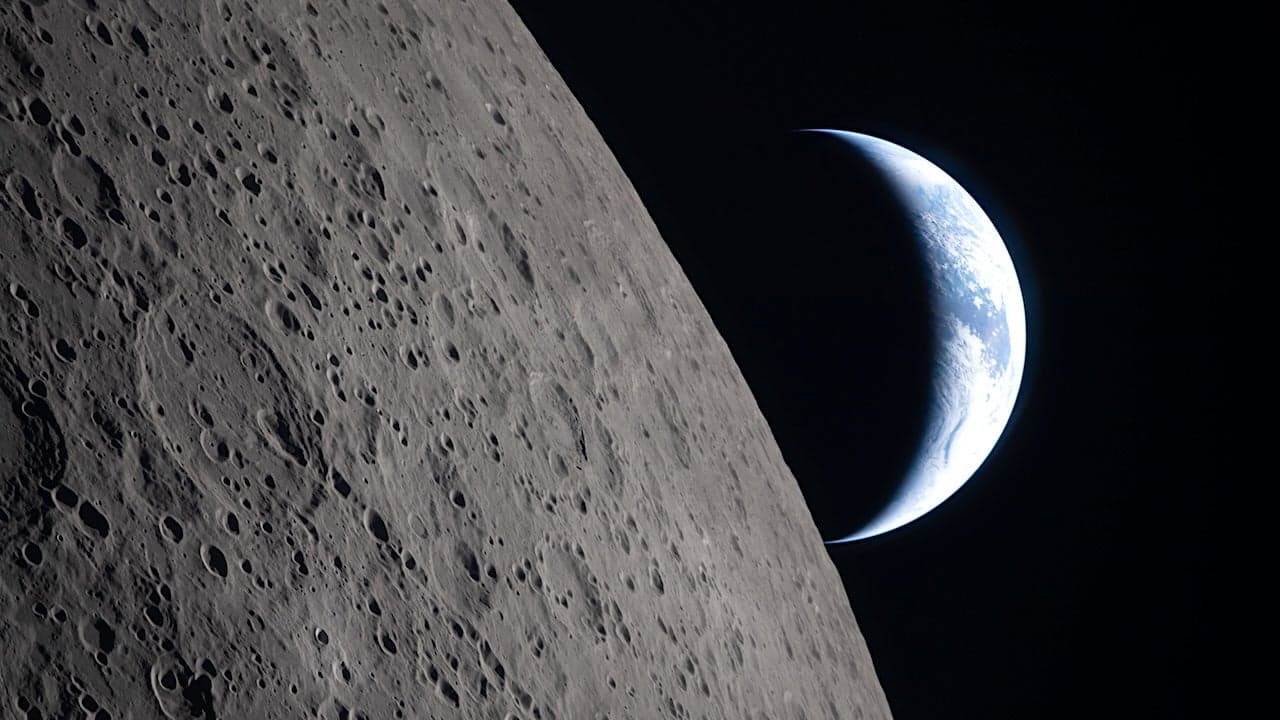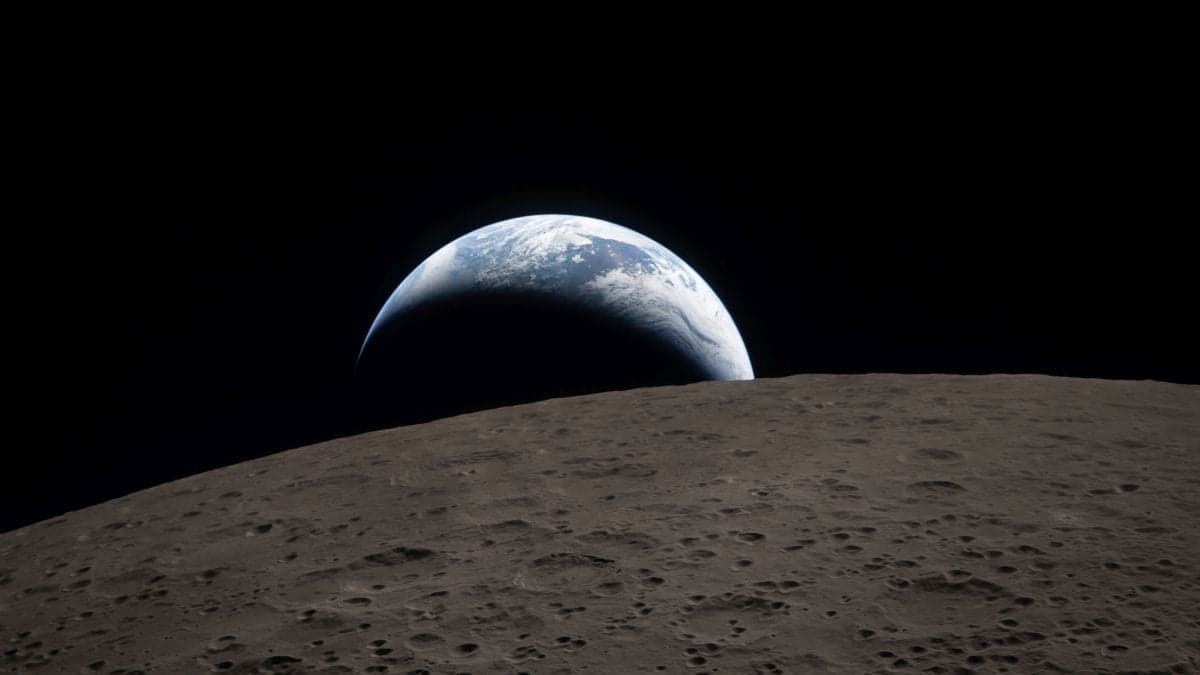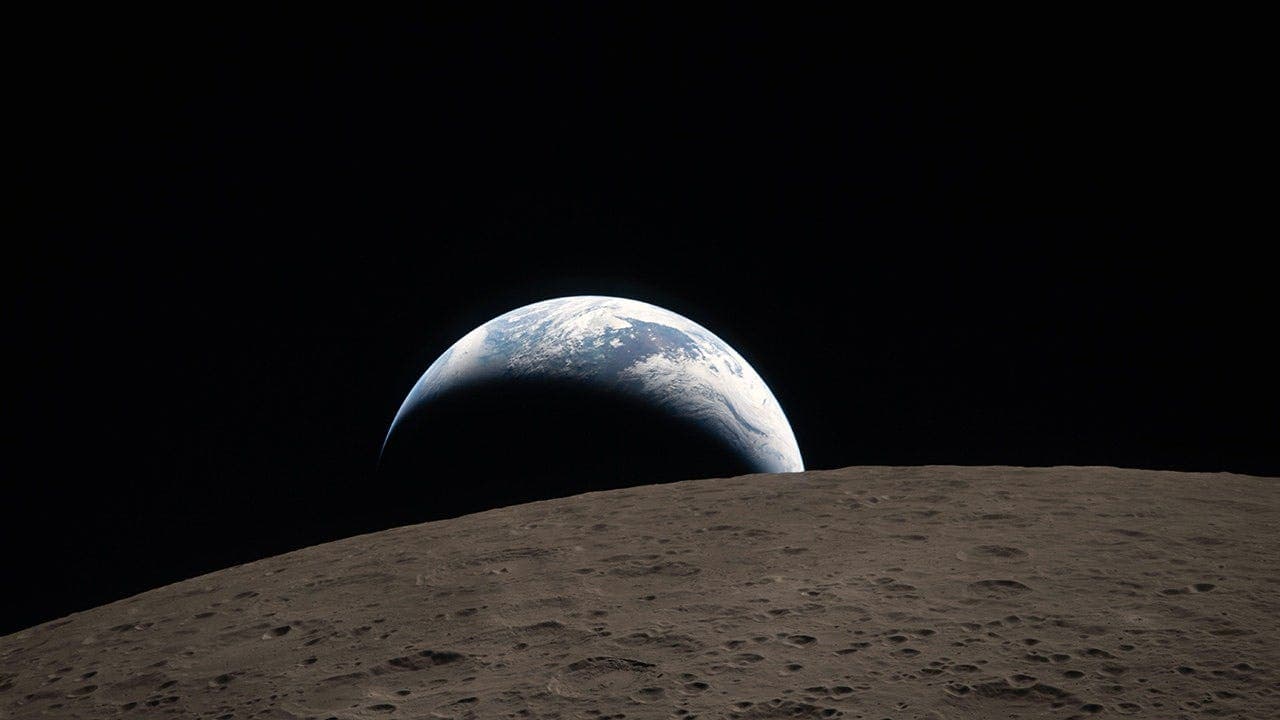
In a landmark moment for space exploration, NASA unveiled the first-ever photograph of Earth taken from the far side of the moon, a stunning image the agency has dubbed 'Earthset.' The historic photo was captured by the crew of the Artemis II mission on Monday as their Orion spacecraft completed a close flyby of the lunar surface. The striking visual, which shows Earth appearing to set behind the cratered horizon of the moon, evokes comparisons to the iconic 'Earthrise' photo taken by Apollo 8 astronaut Bill Anders in 1968. The achievement underscores the progress of NASA’s Artemis program, which aims to return humans to the moon and establish a sustainable presence there, while also serving as a symbolic reminder of humanity’s place in the cosmos.
- NASA released the first-ever 'Earthset' photo from the far side of the moon during the Artemis II mission on Monday.
- The image captures Earth as it appears to set behind the lunar surface, drawing parallels to the 1968 'Earthrise' photo.
- Artemis II astronauts conducted a lunar flyby, traveling farther from Earth than any crewed mission since Apollo 13.
- The Orion spacecraft, equipped with 32 cameras, captured the historic image during its journey around the moon.
How the Artemis II Mission Captured the Historic 'Earthset' Photo
The 'Earthset' image was taken by the four-person crew of Artemis II as their Orion spacecraft passed behind the moon during a carefully orchestrated flyby on Monday evening. According to NASA, the photo was captured through one of Orion’s windows at approximately 7 p.m. ET, though the agency did not specify which astronaut operated the camera. The spacecraft’s trajectory placed it on the far side of the moon, an area permanently out of direct radio contact with Earth, meaning the crew experienced a planned 45-minute communications blackout during the flyby. This blackout period is a standard feature of lunar missions, as the moon’s mass blocks signals between Earth and spacecraft on its far side.
The Orion Spacecraft’s Role in Capturing the Moon’s Far Side
The Orion spacecraft, designed by Lockheed Martin and operated by NASA, is the cornerstone of the Artemis program. Equipped with a total of 32 cameras—15 fixed to the exterior and 17 handheld by the crew—the spacecraft provides unprecedented views of both the lunar surface and Earth. During the Artemis II mission, Orion’s advanced optical systems allowed the crew to document their journey with high-resolution imagery, including the 'Earthset' photo. The spacecraft’s trajectory brought it within approximately 80 miles of the lunar surface, offering a close-up perspective of the moon’s cratered terrain while also providing a distant view of Earth hanging in the void of space.
Orion’s capabilities extend beyond photography. The spacecraft is designed to support a crew of four for up to 21 days in deep space, with life support systems, radiation shielding, and autonomous navigation. Its successful flyby of the moon marks a critical test for the Artemis program’s goal of landing the first woman and the next man on the lunar surface by 2026, as part of the Artemis III mission. The data collected during Artemis II will inform future crewed missions, including the development of the Lunar Gateway, a planned space station orbiting the moon that will serve as a staging point for deeper exploration.
The Symbolism and Scientific Significance of 'Earthset'
The 'Earthset' photo is more than a visual spectacle; it carries profound symbolic and scientific meaning. From the perspective of the Artemis II crew, the image offers a unique vantage point of Earth as a solitary blue marble suspended in the darkness of space, framed by the barren, cratered surface of the moon. NASA described the view as 'a muted blue Earth with bright white clouds sets behind the cratered lunar surface,' with the dark portion of Earth experiencing nighttime while swirling clouds over Australia and Oceania remain illuminated by the sun. This perspective underscores the fragility of Earth’s biosphere and the vastness of space, a theme echoed by astronauts since the Apollo era.
The thing that changed for me, looking back at Earth, was that I found myself noticing not only the beauty of the Earth, but how much blackness there was around it and how it just made it even more special.
Mission Specialist Christina Koch, who has spent more time in space than any other woman, articulated the emotional weight of the moment. Her reflection highlights how the vantage point from deep space can shift human perception, fostering a deeper appreciation for Earth’s environment and the challenges of space exploration. Scientifically, images like 'Earthset' provide valuable data for studying Earth’s atmosphere, cloud patterns, and the moon’s topography, while also serving as a tool for public engagement and inspiration.
Artemis II: A Mission of Firsts and Milestones
Artemis II, the first crewed mission of NASA’s Artemis program, represents a critical step toward returning humans to the moon for the first time since 1972. Launched on November 16, 2024, the mission carries four astronauts—Commander Reid Wiseman, Pilot Victor Glover, Mission Specialist Christina Koch, and Mission Specialist Jeremy Hansen of the Canadian Space Agency—on an 8-day journey that will cover a total of 695,081 miles, making it the farthest crewed mission from Earth in history, surpassing the distance traveled by Apollo 13 by over 4,000 miles. The crew’s flyby of the moon, which brought them within 80 miles of the lunar surface, tested Orion’s systems in the harsh environment of deep space, including its heat shield and communications capabilities.
The Crew: Pioneers of the Artemis Generation
The Artemis II crew embodies the diversity and expertise required for modern space exploration. Commander Reid Wiseman, a veteran NASA astronaut with prior experience on the International Space Station (ISS), leads the mission, bringing a wealth of operational experience. Pilot Victor Glover, the first Black astronaut to serve as a pilot on a space mission, has logged over 3,000 flight hours and previously served as a flight engineer on the ISS. Mission Specialist Christina Koch, who holds the record for the longest single spaceflight by a woman (328 days), brings extensive expertise in electrical engineering and spacewalk operations. Jeremy Hansen, representing the Canadian Space Agency, is the first non-American to participate in a lunar mission, highlighting the international collaboration underpinning the Artemis program. Together, they represent a new generation of explorers tasked with pushing the boundaries of human achievement.
Political and Public Reactions to the Artemis II Mission
The Artemis II mission has drawn significant attention from political leaders and the public, reflecting its importance as a symbol of American technological prowess and international cooperation. Former President Donald Trump, who spoke with the crew on Monday, praised their efforts as 'modern-day pioneers' and a source of national pride. 'Today you’ve made history and made all of America really proud,' Trump told the astronauts during the call. 'Humans have really never seen anything quite like what you're doing in a manned spacecraft. It's really special.' The White House also weighed in, sharing the 'Earthset' photo on social media with the caption, 'Humanity, from the other side. First photo from the far side of the Moon. Captured from Orion as Earth dips beyond the lunar horizon.' Such endorsements underscore the mission’s role in reaffirming U.S. leadership in space exploration, particularly in the context of growing competition from China and other nations.
The Broader Implications for Lunar Exploration and Beyond
The Artemis program, named after the Greek goddess of the moon and twin sister of Apollo, represents NASA’s ambitious plan to establish a sustainable human presence on the moon by the end of the decade. This initiative is not merely a symbolic return to the lunar surface but a stepping stone for deeper space exploration, including crewed missions to Mars. The 'Earthset' photo and the data collected during Artemis II will inform the development of the Lunar Gateway, a small space station orbiting the moon that will serve as a hub for scientific research and a waypoint for future missions. Additionally, the program aims to leverage lunar resources, such as water ice, to support long-term habitation and reduce the cost of deep space travel.
The success of Artemis II is critical for the Artemis III mission, which is slated to land the first woman and the next man on the lunar south pole, a region believed to contain water ice that could be used for drinking water, oxygen, and rocket fuel. The south pole is also of scientific interest due to its permanently shadowed craters, which may preserve clues about the early solar system. By demonstrating Orion’s capabilities and testing new technologies, Artemis II paves the way for these historic landings, while also advancing international partnerships through collaborations with agencies like the European Space Agency (ESA), the Japan Aerospace Exploration Agency (JAXA), and Canada’s CSA.
The Future of Human Spaceflight: What’s Next After Artemis II?
While Artemis II is a monumental achievement, it is only the beginning of a much larger endeavor. NASA’s roadmap includes multiple missions to the lunar surface, culminating in the establishment of Artemis Base Camp, a sustainable habitat that will support crewed missions for up to 30 days at a time. This base camp will enable astronauts to conduct extended scientific research and technology demonstrations, with the ultimate goal of preparing for human missions to Mars in the 2030s or 2040s. The Lunar Gateway, currently under development, will play a central role in these efforts, serving as a staging area for lunar landings and a platform for deep space science.
Private companies are also playing an increasingly important role in lunar exploration. SpaceX’s Starship, selected as the lunar lander for Artemis III, is undergoing testing for its role in transporting astronauts to the moon’s surface. Blue Origin, another key player, is developing the Blue Moon lander as part of NASA’s Commercial Lunar Payload Services (CLPS) program. These partnerships reflect a shift toward a more collaborative and commercially driven approach to space exploration, with NASA serving as a customer rather than the sole provider of transportation and infrastructure.
Public Engagement and the Cultural Impact of Lunar Exploration
The release of the 'Earthset' photo is a reminder of the enduring power of space imagery to captivate the public imagination. Images like 'Earthrise' and the 'Blue Marble' photo taken by Apollo 17 have become cultural touchstones, shaping humanity’s perception of Earth as a fragile and interconnected planet. The 'Earthset' photo, with its stark contrast between the vibrant blue of Earth and the desolate lunar landscape, is poised to join this legacy. It also serves as a tool for education and outreach, inspiring the next generation of scientists, engineers, and explorers. NASA and its partners have leveraged social media and other platforms to share the image widely, ensuring that the mission’s achievements reach a global audience.
Key Takeaways: Why the 'Earthset' Photo Matters
- NASA’s Artemis II mission captured the first-ever 'Earthset' photo from the far side of the moon, a historic milestone in lunar exploration.
- The image, taken during a lunar flyby, provides a unique perspective of Earth as it appears to set behind the moon’s horizon, evoking comparisons to the iconic 'Earthrise' photo.
- Artemis II is the first crewed mission of NASA’s Artemis program, testing Orion’s systems and paving the way for a return to the lunar surface by 2026.
- The mission’s success is critical for future lunar landings, the development of the Lunar Gateway, and NASA’s broader goals of sustainable space exploration.
- The 'Earthset' photo underscores the cultural and scientific significance of space imagery in fostering public engagement and inspiring future generations.
Frequently Asked Questions About NASA’s 'Earthset' Photo and Artemis II Mission
Frequently Asked Questions
- What is the 'Earthset' photo and why is it significant?
- The 'Earthset' photo is the first-ever image of Earth taken from the far side of the moon, captured by the Artemis II crew during their lunar flyby. It is significant because it provides a new perspective on Earth’s place in the cosmos, reminiscent of the iconic 'Earthrise' photo from 1968, and marks a milestone in NASA’s Artemis program.
- How far did the Artemis II mission travel from Earth?
- The Artemis II mission traveled a total of 695,081 miles from launch to splashdown, making it the farthest crewed mission from Earth in history. This distance surpasses the Apollo 13 mission by over 4,000 miles, demonstrating Orion’s advanced capabilities in deep space.
- Who are the astronauts on the Artemis II mission?
- The Artemis II crew includes Commander Reid Wiseman, Pilot Victor Glover, Mission Specialist Christina Koch, and Mission Specialist Jeremy Hansen of the Canadian Space Agency. Glover is the first Black astronaut to serve as a pilot on a space mission, while Hansen is the first non-American to participate in a lunar mission.