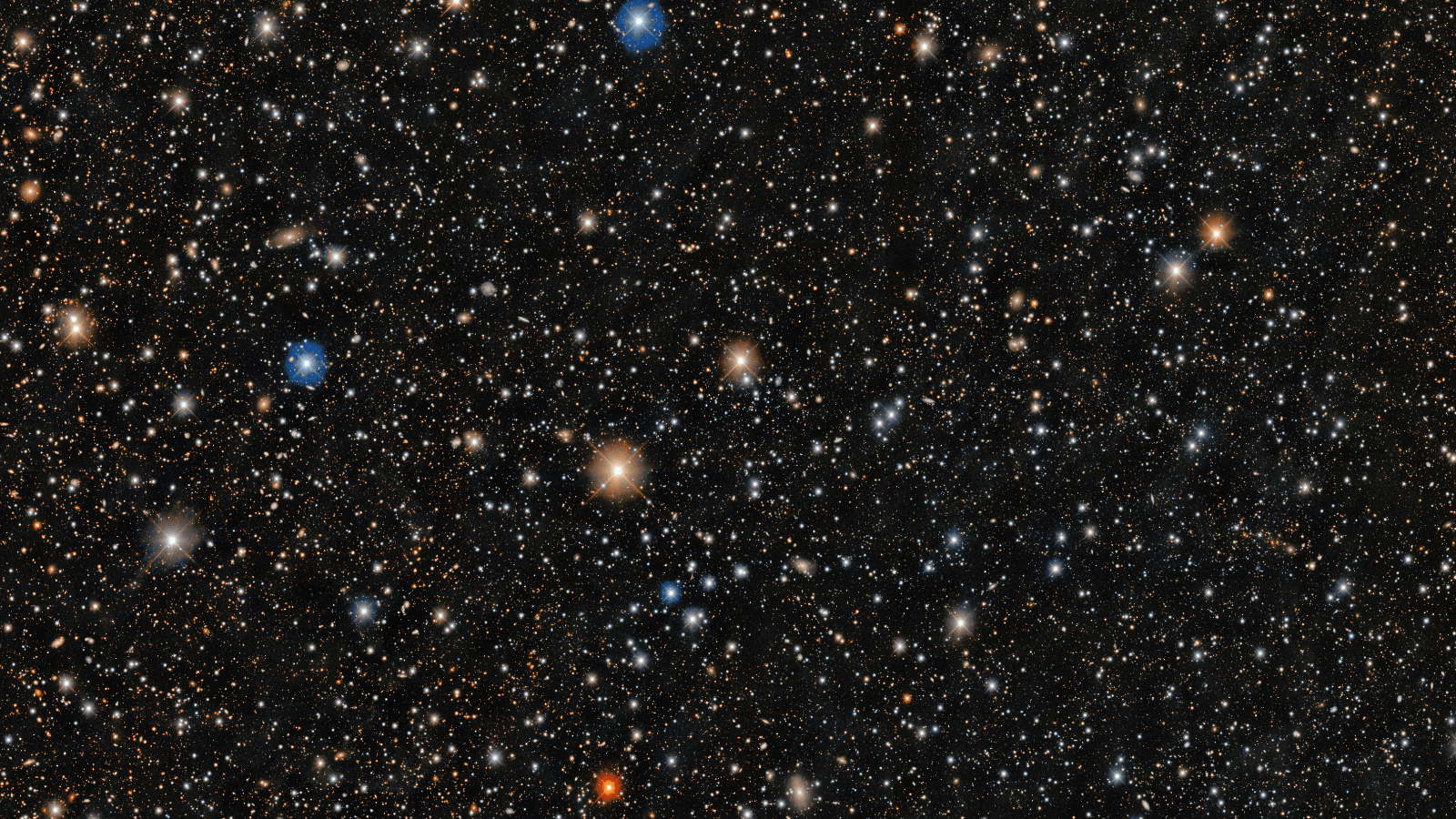
In a groundbreaking discovery that has sent ripples through the global astronomical community, an international team of researchers has identified the most pristine star ever observed in the known universe—SDSS J0715-7334. Located approximately 80,000 light-years from Earth, this ancient celestial object formed just a few billion years after the Big Bang, making it a relic from the dawn of cosmic history. The discovery, led by astronomers from the University of Chicago and Carnegie Science, was made possible through a combination of data from the Sloan Digital Sky Survey-V (SDSS-V) and high-resolution observations from the Magellan telescopes at Carnegie Science’s Las Campanas Observatory in Chile. Published in Nature Astronomy, the findings not only shatter records but also provide an unprecedented window into the universe’s earliest stellar populations and the processes that shaped galaxies as we know them today.
- SDSS J0715-7334 is the most metal-poor star ever discovered, containing less than 0.005% of the Sun’s metal content.
- The star formed during the universe’s second generation of stellar evolution, offering clues about the first stars and galaxies.
- The discovery was made using data from SDSS-V and confirmed through observations at Las Campanas Observatory in Chile.
- Undergraduate students participated in the observing run, highlighting the importance of hands-on training in modern astronomy.
- The findings underscore the critical role of large-scale astronomical surveys and international collaboration in cosmic exploration.
The Hunt for the Universe's First Stars: How SDSS J0715-7334 Rewrites Cosmic History
The universe began as a seething cauldron of energetic particles in the aftermath of the Big Bang. Within minutes, protons, neutrons, and electrons coalesced into the simplest atomic nuclei—primarily hydrogen and helium—along with trace amounts of lithium. For roughly 380,000 years, this primordial plasma expanded and cooled until neutral hydrogen atoms could form, marking the beginning of the so-called Cosmic Dark Ages. This era persisted for hundreds of millions of years until gravity began sculpting the first dense pockets of gas, triggering the collapse of these regions and igniting the first generation of stars, known as Population III stars.
The Birth of Population III and the First Stellar Generations
Population III stars were composed almost entirely of hydrogen and helium, with virtually no heavier elements—what astronomers refer to as "metals." These stars burned intensely and lived relatively short lives, fusing hydrogen into helium and heavier elements in their cores. When they exhausted their fuel, they exploded as supernovae, scattering newly forged elements like carbon, oxygen, nitrogen, and iron into the surrounding interstellar medium. This enriched material became the building blocks for subsequent generations of stars, including the Population II stars, which contained small amounts of metals inherited from these earlier explosions. SDSS J0715-7334 belongs to this rare and precious category of Population II stars, specifically the second generation to emerge after the Big Bang.
These pristine stars are windows into the dawn of stars and galaxies in the universe. Every observation we make of them is like peering through a time machine into an era when the cosmos was still in its infancy.
Alexander Ji, the lead researcher and a former Carnegie Observatories postdoctoral fellow at the University of Chicago, emphasized the significance of such discoveries. "All of the heavier elements in the universe—every atom of oxygen in the air we breathe, every calcium in our bones, every iron in our blood—were produced by stellar processes," Ji explained. "Finding a star with virtually no metal content told us we’d stumbled upon something extraordinary. It’s like finding a fossil from the very first chapter of cosmic history."
Why Metal-Poor Stars Are the Rosetta Stones of Cosmology
Metal-poor stars like SDSS J0715-7334 are invaluable to astronomers because they carry the chemical fingerprints of the early universe. Unlike younger stars, which have been enriched by multiple generations of supernovae and stellar winds, these ancient objects preserve the composition of the primordial gas cloud from which they formed. By studying their spectra, scientists can reconstruct the nucleosynthesis processes that occurred in the first stars and determine the conditions that prevailed during the universe’s formative years.
The Role of Large-Scale Surveys in Stellar Archaeology
Identifying such rare stars is no small feat. Astronomers liken the search to finding needles in a cosmic haystack, given that metal-poor stars are exceedingly uncommon. Enter the Sloan Digital Sky Survey-V (SDSS-V), a fifth-generation astronomical survey that has revolutionized our understanding of the universe by mapping millions of stars, galaxies, and quasars across the entire sky. Under the leadership of Juna Kollmeier, Director of the Carnegie Observatories and a key figure in SDSS-V, the survey deploys cutting-edge instruments at two premier observatories: the du Pont Telescope at Las Campanas in Chile and the Apache Point Observatory in New Mexico.
We have to look in our cosmic backyard to find these objects because we can’t yet observe individual stars at the dawn of star formation. Surveys like SDSS-V are designed to have the statistical power to find these needles in the stellar haystack and test our theories of star formation and explosion.
SDSS-V’s Milky Way Mapping campaign was instrumental in narrowing down potential candidates for metal-poor stars. The survey’s optical and infrared spectroscopy provided a treasure trove of data, which Ji and his team then cross-referenced to isolate stars with exceptionally low metal content. This preliminary sifting process was crucial, as it allowed the researchers to focus their observational resources on the most promising targets.
Las Campanas Observatory: The Epicenter of a Cosmic Breakthrough
The final confirmation of SDSS J0715-7334 as the most pristine star ever observed hinged on high-resolution spectroscopic observations conducted at Las Campanas Observatory, home to four advanced telescopes operated by Carnegie Science. The Magellan telescopes—specifically the Magellan Clay and Magellan Baade telescopes—are renowned for their precision and light-gathering power, making them ideal for capturing the faint signatures of ancient stellar atmospheres. On their first observing run in the early hours of the morning, the team obtained spectra that revealed the star’s extraordinary metal-poor nature, confirming it as the new gold standard for stellar purity.
A Telescope Ecosystem Designed for Discovery
Michael Blanton, Director and Crawford H. Greenewalt Chair of the Carnegie Science Observatories, highlighted the critical role of Las Campanas in this discovery. "The ecosystem of telescopes at Las Campanas was vital to nearly every aspect of this breakthrough," Blanton said. "From the du Pont Telescope’s data collected as part of SDSS-V’s Milky Way mapping efforts to the Magellan observations that revealed SDSS J0715-7334’s true nature, this project showcases how innovations in instrumentation can drive discovery throughout a telescope’s operational lifetime."
The interconnectedness of the observatory’s resources was on full display during Ji’s observing run. Upon arrival, the team visited the du Pont Telescope to observe SDSS-V scientists at work, collecting new data that would be integrated into the survey’s growing repository. The very next evening, Ji and his undergraduate students—including several from the University of Chicago—conducted their own observations using the Magellan Clay Telescope. This seamless transition from data collection to real-time analysis epitomized the collaborative and iterative nature of modern astronomy.
Training the Next Generation: How Undergraduates Unlocked a Cosmic Secret
One of the most inspiring aspects of this discovery is the involvement of undergraduate students, who played an active role in both the data analysis and observing process. Ji, who had previously served as a postdoctoral fellow at Carnegie Observatories, made it a priority to include his students in the research, bringing them to Las Campanas during their spring break to experience firsthand the thrill of astronomical discovery. "My first visit to Las Campanas is where I really fell in love with astronomy," Ji reflected. "It was special to share such a formative experience with my students, and I’m delighted that we were able to turn a course into a curriculum of discovery."
Training the next generation of astronomers is critical to the future of our field. Building excitement about the practice of science by undertaking projects like this is a great way to ensure that curious-minded young learners can see themselves in astrophysics.
Kollmeier echoed this sentiment, underscoring the importance of hands-on learning in STEM fields. "When I was an undergraduate, I greatly preferred doing research to taking classes," she said. "I’m thrilled that Alex’s course was transformed into an opportunity for discovery, and I’d like to ensure surveys like SDSS-V and Gaia have the power to make that the norm and not the exception." The experience left a lasting impression on the students, many of whom are now considering careers in astrophysics, inspired by the tangible impact of their work.
SDSS J0715-7334: A Star Born Elsewhere and Adopted by the Milky Way
Further analysis of SDSS J0715-7334 revealed that this ancient star did not originate in the Milky Way but was instead gravitationally pulled into our galaxy from elsewhere. By incorporating data from the European Space Agency’s Gaia mission—a space observatory that has mapped the positions and motions of over a billion stars—the researchers determined that the star’s trajectory and chemical composition suggest it was born in a dwarf galaxy that was later assimilated into the Milky Way. This phenomenon, known as galactic cannibalism, is a common occurrence in the universe, where larger galaxies grow by merging with smaller ones.
Unraveling the Star’s Chemical Signature
The Magellan spectra provided a detailed chemical breakdown of SDSS J0715-7334, revealing that it contains less than 0.005% of the Sun’s metal content. To put this into perspective, it is twice as metal-poor as the previous record holder for the most pristine star and an astonishing 40 times more metal-poor than the most iron-poor star known to science. The star’s low abundances of iron and carbon further highlight its exceptional antiquity, as these elements are typically produced in later generations of stars and supernovae.
Such extreme metal-poor stars are exceedingly rare, with only a handful identified to date. Their existence challenges existing models of early star formation and nucleosynthesis, prompting astronomers to reconsider the physical conditions and processes that governed the universe’s first stellar generations. Ji and his collaborators are now planning follow-up observations to refine their measurements and search for additional stars with similar properties, potentially uncovering even more cosmic relics from the dawn of time.
The Future of Stellar Archaeology: What’s Next for SDSS-V and Beyond
The discovery of SDSS J0715-7334 is a testament to the power of large-scale astronomical surveys and international collaboration. As SDSS-V continues to map the sky with unparalleled precision, astronomers anticipate identifying more stars with extreme metal-poor compositions, each offering a unique snapshot of the universe’s early history. The survey’s fifth generation, which Kollmeier oversees, is particularly ambitious, aiming to collect millions of optical and infrared spectra that will revolutionize our understanding of stellar evolution, galaxy formation, and the chemical enrichment of the cosmos.
A Cosmic Legacy: Why This Discovery Matters for Science and Society
Beyond its scientific significance, the discovery of SDSS J0715-7334 serves as a powerful reminder of the importance of curiosity, exploration, and education. By involving undergraduate students in cutting-edge research, Ji and Kollmeier are not only advancing our knowledge of the universe but also inspiring the next generation of scientists. In an era where scientific literacy is more critical than ever, such initiatives highlight the transformative potential of astronomy to captivate minds and foster a deeper appreciation for the natural world.
Frequently Asked Questions
Frequently Asked Questions
- What makes SDSS J0715-7334 the most pristine star ever discovered?
- SDSS J0715-7334 contains less than 0.005% of the Sun’s metal content, making it twice as metal-poor as the previous record holder. Its extremely low abundances of iron and carbon indicate it formed from nearly pristine material just a few billion years after the Big Bang.
- How did astronomers confirm the star’s metal-poor nature?
- Researchers used high-resolution spectroscopic data from the Magellan telescopes at Las Campanas Observatory. The spectra revealed the star’s chemical composition, confirming its status as the most pristine star known to science.
- Why is studying metal-poor stars important for understanding the early universe?
- Metal-poor stars like SDSS J0715-7334 preserve the chemical fingerprints of the primordial universe. By analyzing their spectra, astronomers can reconstruct the nucleosynthesis processes of the first stars and the conditions that existed during the universe’s formative years.