In a breakthrough that astronomers are calling ‘cosmic archaeology,’ a team of researchers has uncovered one of the most primordial stars ever observed—a rare second-generation star that offers an unprecedented window into the chemical infancy of the universe. Designated PicII-503, the star was found lurking in the faint outskirts of the Pictor II dwarf galaxy, located roughly 150,000 light-years from Earth. With an iron content just 1/40,000th that of our Sun, PicII-503 is not only the most metal-deficient star ever detected beyond the Milky Way but also a living fossil of the cosmos, preserving the chemical imprint of the very first stars that ignited more than 13 billion years ago.
What Are Primordial Stars and Why Do They Matter?
To understand the significance of PicII-503, it’s essential to step back to the dawn of cosmic time. The very first stars in the universe—known as Population III (Pop III) stars—formed from the pristine gas clouds that existed just hundreds of millions of years after the Big Bang. These stars were composed almost entirely of hydrogen and helium, the two lightest elements, with only trace amounts of heavier elements, which astronomers refer to collectively as ‘metals.’ Pop III stars were massive, short-lived, and exploded in spectacular supernovae, seeding the universe with the first heavier elements like carbon, oxygen, and iron. These enriched materials then mixed into interstellar gas clouds, giving rise to the next generation of stars—Population II (Pop II) stars, which are chemically more complex and include PicII-503.
The Role of Pop II Stars as Cosmic Time Capsules
Pop II stars are often described as time capsules because their chemical compositions reflect the nucleosynthetic yields of earlier generations. Unlike younger Population I stars (like our Sun), which are rich in metals due to billions of years of stellar recycling, Pop II stars retain the chemical fingerprints of the universe’s first supernova explosions. By studying these ancient stars, astronomers can reconstruct the conditions of the early universe, probe the nature of Pop III supernovae, and test models of cosmic chemical evolution.
The Discovery of PicII-503: A Rare Stellar Fossil Found in Pictor II
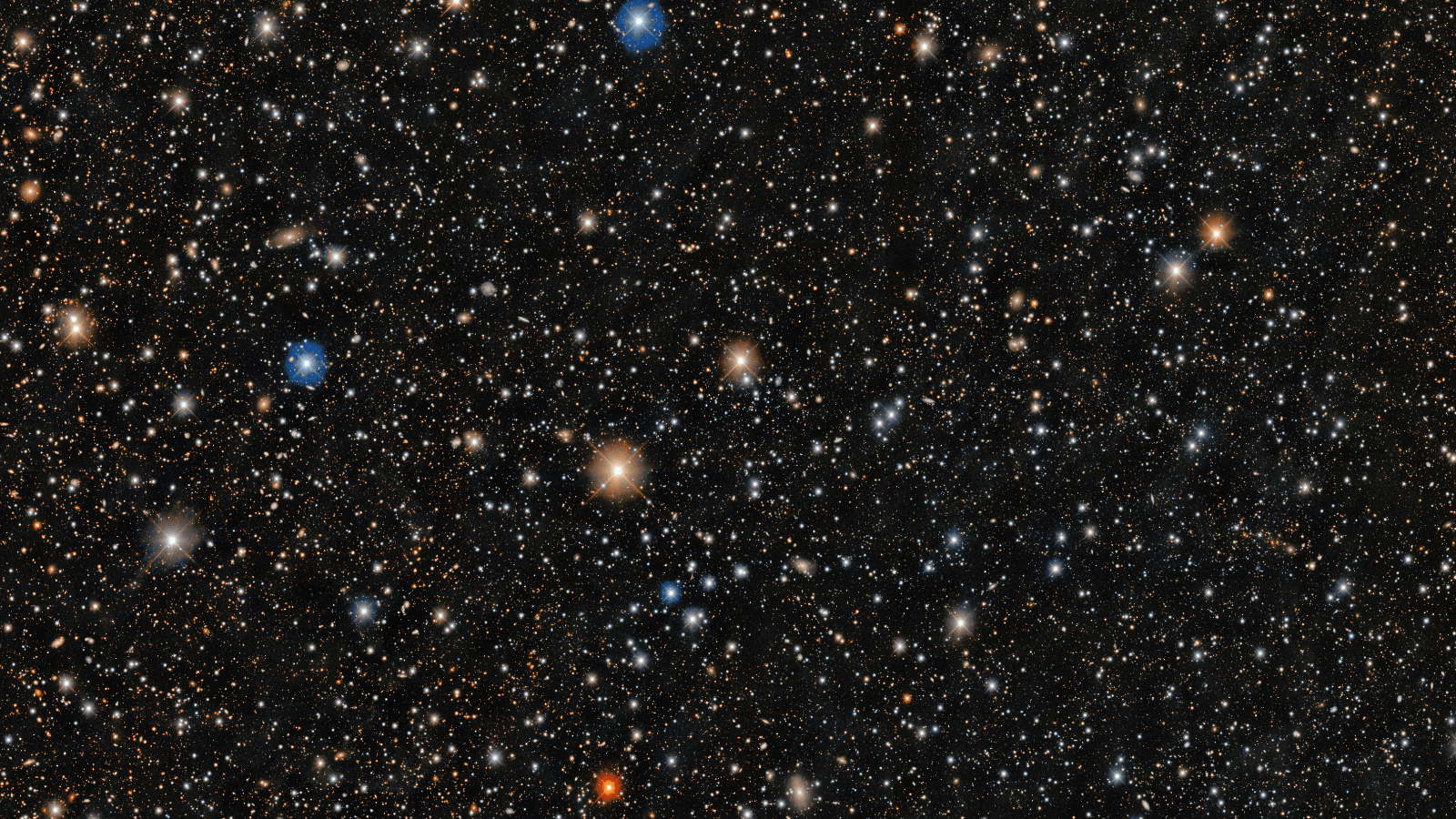
The discovery of PicII-503 was made possible through a multi-year survey called MAGIC (Mapping the Ancient Galaxy in CaHK), conducted using the Dark Energy Camera (DECam) mounted on the Víctor M. Blanco 4-meter Telescope at the Cerro Tololo Inter-American Observatory in Chile. Over 54 nights of observation, the MAGIC survey targeted ultra-faint dwarf galaxies in the Milky Way’s vicinity, searching for stars with the lowest metal content. It was within the diminutive Pictor II dwarf galaxy—a satellite system so faint it was only confirmed in 2016—that the team pinpointed PicII-503 as the most iron-deficient star ever detected outside our galaxy.
How Astronomers Measured the Star’s Extreme Metal Deficiency
To determine PicII-503’s composition, the researchers cross-referenced MAGIC data with high-resolution spectroscopic observations from two of the world’s most powerful telescopes: the Very Large Telescope (VLT) and the Baade Magellan Telescope, both located in Chile’s Atacama Desert. Spectroscopy splits starlight into its component wavelengths, revealing absorption lines that correspond to specific elements. In PicII-503’s spectrum, the team detected vanishingly weak iron and calcium lines, confirming its status as the most metal-poor star ever observed beyond the Milky Way. The star’s iron-to-carbon ratio was so low that it suggested the Pop III stars that preceded it may have exploded in unusually low-energy supernovae, ejecting lighter elements like carbon into space while trapping heavier elements like iron in the stellar remnant.
Why Pictor II Is a Crucial Hunting Ground for Ancient Stars
Pictor II is one of the smallest and faintest dwarf galaxies known, with a total luminosity less than 1,000 times that of the Sun. Its low mass and weak gravitational field make it an ideal laboratory for studying ancient stellar populations. Because dwarf galaxies like Pictor II evolve slowly and experience minimal disruption from galactic mergers or tidal forces, they preserve pristine stellar populations that have remained chemically unchanged for billions of years. This makes them prime targets for surveys like MAGIC, which aim to uncover the most chemically primitive stars in the local universe.
The Broader Implications: Connecting Pop II Stars Across Galaxies
One of the most exciting aspects of PicII-503’s discovery is its potential to bridge our understanding of stellar populations across different galactic environments. While astronomers have previously identified similarly metal-poor stars within the Milky Way’s halo, PicII-503 is the first such star found in a dwarf galaxy beyond our own. This suggests that the processes that enriched the early universe with heavy elements may have been widespread, occurring in both large and small galaxies. The team’s findings, published in the journal Nature Astronomy on March 16, 2025, support the idea that the chemical signatures of Pop III supernovae are consistent across different galactic systems, providing a unified picture of cosmic chemical evolution.
What PicII-503 Reveals About the First Stars’ Supernovae
The extreme iron deficiency of PicII-503 has led researchers to propose a compelling scenario about the nature of Pop III supernovae. In a typical core-collapse supernova, both light and heavy elements are ejected into space. However, PicII-503’s low iron-to-carbon ratio suggests that the supernovae of its Pop III predecessors may have been underpowered, failing to disperse heavy elements like iron into the interstellar medium. Instead, these heavier elements may have collapsed back into the black hole or neutron star remnant left behind by the explosion. This ‘failed supernova’ hypothesis aligns with theoretical models predicting that some of the universe’s first stars ended their lives in relatively gentle explosions, preserving their heaviest elements in stellar remnants.
The Role of Advanced Telescopes in Cosmic Archaeology
The discovery of PicII-503 underscores the critical role of next-generation astronomical instruments in unraveling the mysteries of the early universe. The DECam, VLT, and Magellan Telescope are all part of a new era of observational astronomy that combines wide-field surveys with high-resolution spectroscopy. These tools allow astronomers to sift through the faintest and most distant stellar populations, identifying rare objects that were once thought to be beyond detection. As technology advances, surveys like MAGIC and future missions such as the Vera C. Rubin Observatory’s Legacy Survey of Space and Time (LSST) are expected to uncover hundreds more metal-poor stars, further illuminating the cosmic dawn.
- PicII-503 is the most metal-deficient star ever detected beyond the Milky Way, with just 1/40,000th the iron content of the Sun.
- The star was discovered in the Pictor II dwarf galaxy, 150,000 light-years from Earth, using data from the MAGIC survey and advanced telescopes in Chile.
- Its extreme chemical composition suggests that the first stars in the universe may have exploded in low-energy supernovae, trapping heavy elements like iron.
- The discovery connects Pop II stars across different galaxies, providing a unified view of early cosmic chemical enrichment.
- Findings published in Nature Astronomy highlight the importance of dwarf galaxies as pristine laboratories for studying ancient stellar populations.
Discovering a star that unambiguously preserves the heavy metals from the first stars was at the edge of what we thought possible, given the extreme rarity of these objects. With the lowest iron abundance ever derived in any ultra-faint dwarf galaxy, PicII-503 provides a window into initial element production within a primordial system that is unprecedented.
Without data from MAGIC, it would have been impossible to isolate this star among the hundreds of other stars in the vicinity of the Pictor II ultra-faint dwarf galaxy.
What’s Next for the Search for Ancient Stars?
The discovery of PicII-503 is just the beginning of a new chapter in the study of the universe’s first stars. Astronomers are now turning their attention to other ultra-faint dwarf galaxies, where similar metal-poor stars may lurk. Upcoming projects like the LSST, set to begin operations in 2025, will scan the entire southern sky every few nights, enabling astronomers to identify thousands of ancient stars in a fraction of the time. Additionally, the James Webb Space Telescope (JWST) is expected to provide high-resolution infrared spectra of these stars, offering deeper insights into their chemical compositions and the environments in which they formed. As our observational capabilities grow, so too does our understanding of the cosmos’s earliest chapters.
Why This Discovery Matters for Our Understanding of the Universe
PicII-503 is more than just a record-breaking star—it is a living relic of the universe’s first billion years. By studying its chemical fingerprints, astronomers can test theories about the masses and explosion mechanisms of Pop III stars, refine models of galaxy formation, and even probe the nature of dark matter, which may have influenced the distribution of the first stars. The discovery also highlights the importance of preserving and studying ultra-faint dwarf galaxies, which serve as cosmic archives of the early universe. In a field where every photon of light carries the weight of billions of years, PicII-503 stands as a testament to human ingenuity and the enduring quest to understand our place in the cosmos.
Frequently Asked Questions
- How do astronomers measure the metal content of distant stars?
- Astronomers use a technique called spectroscopy, which splits starlight into a spectrum of colors. Dark absorption lines in the spectrum correspond to specific elements like iron, calcium, or carbon. By measuring the strength of these lines, scientists can determine the star’s chemical composition. In the case of PicII-503, the lines for iron and calcium were extremely weak, indicating a scarcity of these metals.
- What is a Population III star, and why haven’t we found any yet?
- Population III stars are the first generation of stars in the universe, composed almost entirely of hydrogen and helium. They are believed to have been extremely massive and short-lived. Despite decades of searching, no definitive Population III star has been observed directly. This is likely because they exploded as supernovae billions of years ago, and their remnants may have been too faint or dispersed to detect. PicII-503’s discovery, however, provides indirect evidence of their existence.
- How does the discovery of PicII-503 impact our understanding of galaxy formation?
- PicII-503’s extreme metal deficiency suggests that the chemical enrichment of the early universe was not uniform. Its presence in a dwarf galaxy indicates that small galaxies played a significant role in distributing the first heavy elements. This challenges some models of galaxy formation that assume large galaxies dominated early chemical evolution. The discovery supports the idea that even tiny galaxies contributed to the cosmic chemical landscape.