- University of Utah researchers used an airborne electromagnetic survey to detect a massive freshwater reservoir under the Great Salt Lake.
- The freshwater extends unexpectedly far inland beneath the lake’s eastern margin, possibly spanning the entire 2,500 square kilometer basin.
- This discovery could provide a new resource for mitigating dust pollution caused by the shrinking lake’s exposed lakebed.
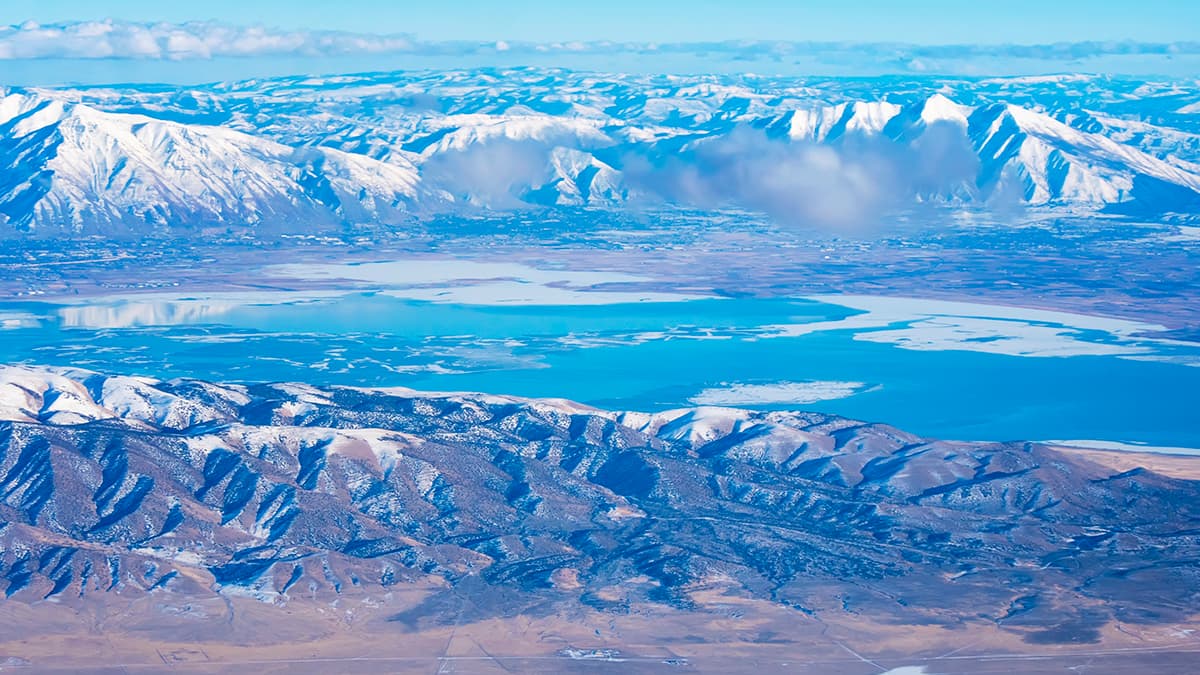
In a surprising development for water resource management in the arid American West, scientists from the University of Utah have identified a previously undetected reservoir of freshwater beneath the Great Salt Lake. Using advanced aerial surveying technology, researchers confirmed the existence of a significant subsurface water source that could span thousands of square miles under one of North America’s largest saltwater bodies. The discovery comes at a critical time, as Utah grapples with worsening air quality and environmental degradation linked to the declining lake.
How Airborne Electromagnetic Survey Uncovered the Freshwater Source
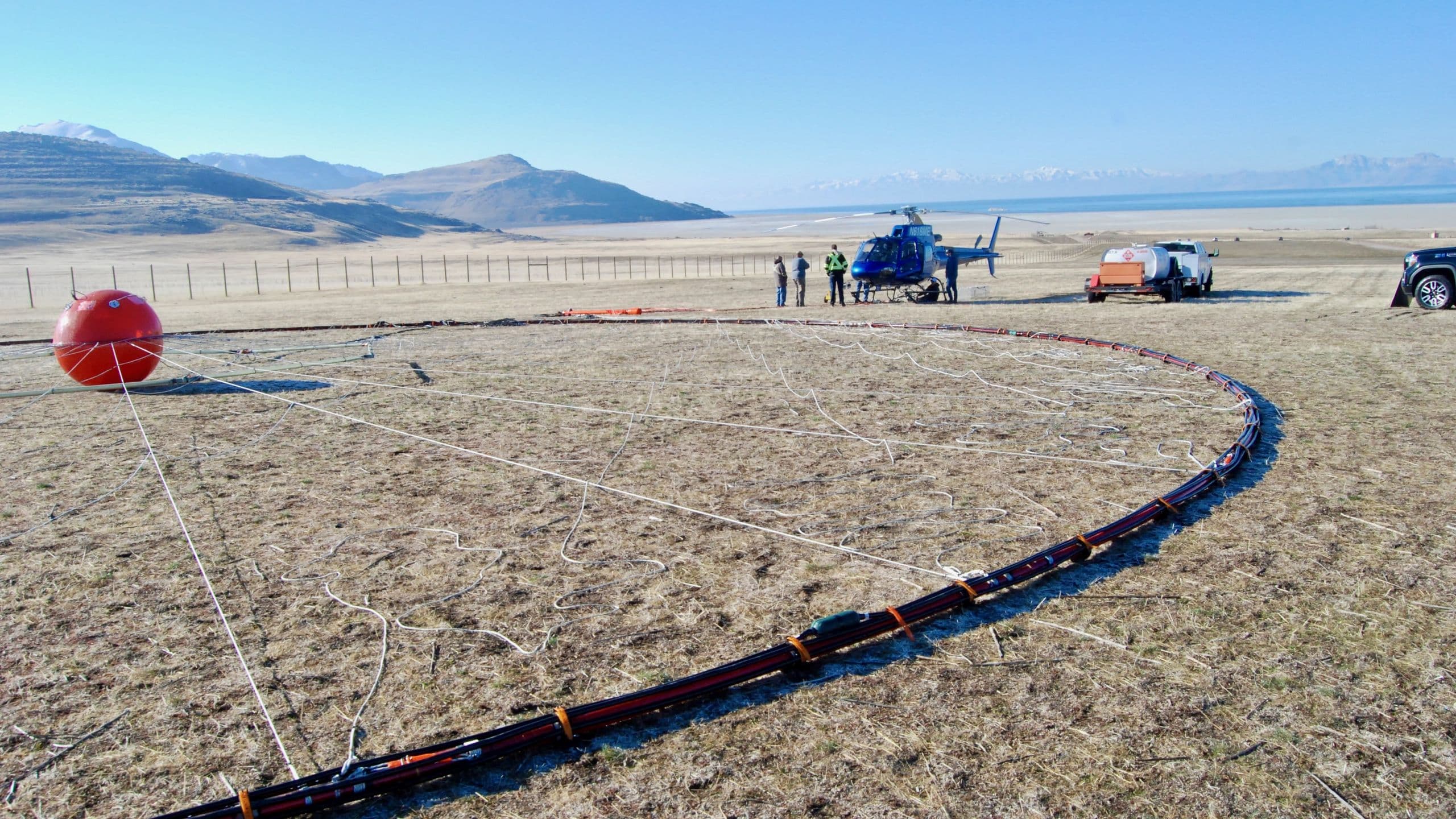
To investigate subsurface conditions around the Great Salt Lake, the University of Utah research team conducted an airborne electromagnetic (AEM) survey using a helicopter-mounted sensor system. This type of geophysical survey measures electrical conductivity in subsurface materials—allowing researchers to distinguish between saltwater and freshwater zones—and provides insight into rock layers and sediment composition. The team focused their initial scanning on the Farmington Bay area along the southeastern edge of the lake.
Results revealed a dramatic drop in bedrock depth beneath the lake floor, creating a large cavity filled with sand and silt. Crucially, this sediment appeared to be saturated with freshwater—an unexpected finding in such quantities. According to lead researcher Michael Zhdanov, a geophysicist at the university, knowing both the depth and horizontal extent of such deposits allows scientists to estimate the total volume of stored groundwater.
"We were able to answer the question of how deep this potential reservoir is, and what its spatial extent is beneath the eastern lake margin," said Zhdanov.
Understanding the Extent and Implications of the Discovery
Unexpected Size and Distribution
Prior to this study, scientists believed some freshwater existed beneath the margins of the Great Salt Lake, based on observations of reed growth and historical water flow patterns. However, the sheer scale of the newly identified reservoir came as a shock. The freshwater appears to extend much farther into the interior of the lakebed than previously thought, potentially reaching under the entire 2,500 square kilometer (approximately 950 square mile) expanse.
"The unexpected part of this wasn’t the salt lens that we see near the surface across the playa," explained hydrologist Bill Johnson during a recent interview on KPCW’s Cool Science Radio. "It’s that the freshwater underneath it extends so far in towards the interior of the lake and possibly under the entire lake. We don’t know."
Why This Freshwater Could Be Crucial for Public Health
As climate change, drought, and upstream diversions cause the Great Salt Lake to shrink rapidly, more of its dry lakebed becomes exposed. Wind erosion from these areas sends clouds of fine particulate matter—including heavy metals like arsenic and mercury—into nearby cities such as Salt Lake City and Ogden. These toxic dust storms pose serious risks to respiratory health, particularly among children, the elderly, and those with pre-existing conditions.
Johnson emphasized that any extraction or utilization of this newfound freshwater must be approached carefully to avoid disrupting existing groundwater systems. One promising application, however, involves strategically applying water to dust-prone hotspots to suppress airborne contaminants without overconsumption.
"There are beneficial effects of this groundwater that we need to understand before we go extracting more of it," Johnson noted. "A first-order objective is to understand whether we could use this freshwater to wet dust hotspots and douse them in a meaningful way without perturbing the freshwater system too much."
Next Steps and Broader Applications of the Research
While the initial AEM survey covered only a fraction of the Great Salt Lake’s basin, researchers are now seeking additional funding to expand their analysis. Their goal is to map the full extent of the bedrock depression and determine how much freshwater may be available in total. Doing so will require more detailed surveys using complementary methods, including magnetic readings to estimate rock depths and conductivity measurements to locate freshwater-bearing sediments.
"This is why we need to survey the entire Great Salt Lake," Zhdanov stated. "Then we’ll know the top and the bottom."
Beyond local applications, the methodology pioneered in this study could serve as a model for identifying similar freshwater resources elsewhere. Arid regions worldwide with saline surface features may conceal untapped groundwater reserves. By combining remote sensing technologies with traditional geological modeling, scientists hope to unlock sustainable water solutions even in seemingly inhospitable environments.
Scientific Context and Historical Significance
The Great Salt Lake, a remnant of prehistoric Lake Bonneville, has historically fluctuated in size depending on precipitation and human water usage. However, increased agricultural and municipal demand over the past century has dramatically reduced inflow from tributaries such as the Jordan and Weber Rivers. Since the 1980s, satellite monitoring shows steady declines in lake elevation, exposing tens of thousands of acres of hypersaline mudflats.
The lake's unique ecosystem supports millions of migratory birds and hosts valuable mineral extraction operations, making its disappearance an issue not just for Utah, but for global biodiversity and regional economies. Discoveries like this freshwater reservoir may offer pathways to slow ecological collapse while improving public safety.
Frequently Asked Questions
- How did researchers detect the freshwater reservoir?
- They used an airborne electromagnetic (AEM) survey, which measures subsurface electrical conductivity to differentiate saltwater from freshwater and identify rock layers.
- Is the freshwater safe to drink?
- That remains uncertain until further testing confirms purity levels and contamination risks; currently, its value lies in dust suppression rather than direct consumption.
- Could this discovery solve Utah’s water crisis?
- Not immediately. While significant, the reservoir’s long-term viability depends on recharge rates and interaction with current aquifers. Further study is essential.