A groundbreaking study published in the *Journal of Geophysical Research: Solid Earth* reveals that human-driven climate change is causing Earth's rotation to slow at an unprecedented rate, with sea level rise contributing to a 1.33-millisecond-per-century increase in day length. This effect, first observed in 2026, is the fastest recorded in 3.6 million years, according to researchers from ETH Zurich. The findings highlight the profound impact of modern climate change on Earth's geophysical systems, offering a new perspective on the interplay between human activity and natural processes.
The Science Behind Earth's Rotation and Sea Level Rise
How Earth's Rotation is Affected by Mass Distribution
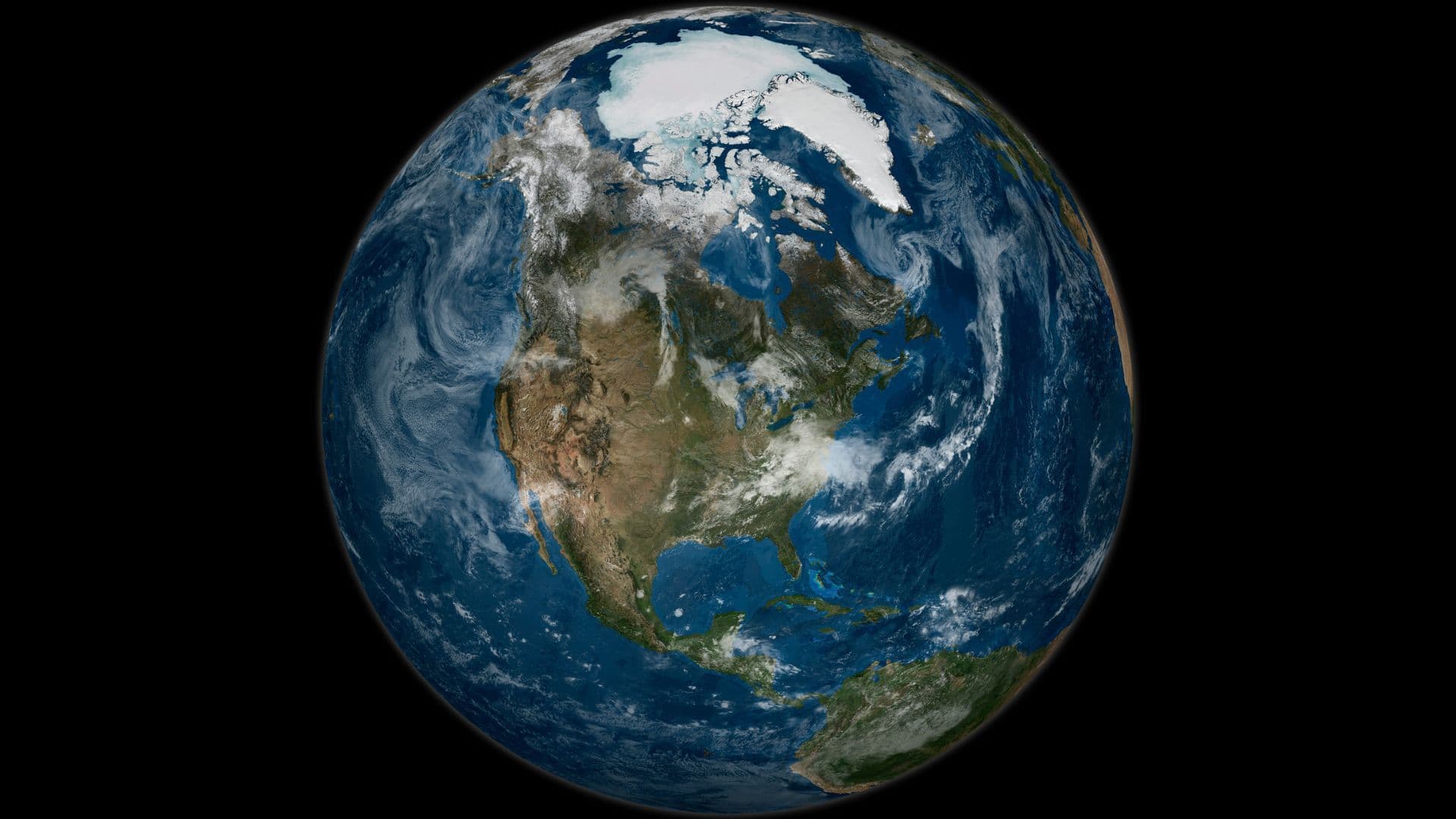
Earth's rotation speed is governed by the distribution of its mass, a principle similar to a figure skater pulling in their arms to spin faster. When mass is concentrated closer to the axis of rotation, the planet spins faster; when it's spread out, the rotation slows. Sea level rise, driven by melting ice sheets and thermal expansion, redistributes this mass, altering the planet's spin. The study's lead author, Mostafa Kiani Shahvandi, explained, 'Rising sea levels are effectively shifting Earth's mass, which has a measurable impact on the length of a day.'
The Role of Glacial Isostatic Adjustment in Day Length Variations
While sea level rise contributes to a 1.33-millisecond-per-century increase in day length, this effect is partially offset by glacial isostatic adjustment (GIA). GIA is the slow rise of Earth's crust following the retreat of ice sheets, which shortens the day by about 0.8 milliseconds per century. The net result is a 1.71-millisecond-per-century increase, with a 0.1-millisecond margin of uncertainty. 'This balance is critical for understanding the true impact of climate change on Earth's rotation,' said co-author Benedikt Soja. 'The human-driven component is the key differentiator.'
Reconstructing Earth's Rotation from Fossil Records
Using Foraminifera to Track Ancient Day Lengths
To measure Earth's rotation over millions of years, the study turned to the fossilized remains of foraminifera, single-celled organisms with calcium carbonate shells. By analyzing the oxygen content in these fossils, researchers inferred past sea levels, which in turn allowed them to estimate day lengths. 'The foraminifera act as a natural clock, recording the Earth's rotation over time,' said Shahvandi. 'This method is a window into the planet's geological past.'
Comparing Past and Present: A 3.6-Million-Year Record
The study's analysis of 3.6 million years of data revealed that the current rate of day lengthening is the fastest in the geological record. A 2.1-millisecond-per-century increase was recorded 2 million years ago, during a period of rising carbon dioxide and temperatures. 'This suggests a similar effect in the past, but the current rate is significantly higher,' said Shahvandi. 'The human element is the key driver.'
Future Projections: A 2.62-Millisecond Increase by 2080
Climate Scenarios and the Role of Greenhouse Gases
Under a high-emission climate scenario, the study projects that day length could increase by 2.62 milliseconds per century by 2080. This would be driven by continued warming, which accelerates ice melt and sea level rise. 'The effect is a direct consequence of the Earth's response to human-induced climate change,' said Soja. 'It's a clear signal of the planet's rapid transformation.'
The Unperceptible but Significant Impact on Timekeeping
While the 1.33-millisecond-per-century change is imperceptible to humans, it has real-world implications. Precision instruments, such as those on spacecraft and in global navigation systems, may require recalibration. 'This is a small but critical adjustment for systems that rely on exact time measurements,' said Mann. 'The effect is a silent but growing part of our planet's dynamic systems.'
Implications for Technology and Climate Change
A New Metric for Climate Impact
The study provides a new metric for assessing the speed of modern climate change. 'The fact that we're seeing a 1.33-millisecond-per-century change is a red flag,' said Shahvandi. 'It's a direct result of the rapid melting of ice and the rise in sea levels, which are all linked to human activity.'
The Interconnectedness of Geophysics and Climate Science
The research underscores the interconnectedness of geophysics and climate science. 'This is a case where the two fields are not separate but deeply linked,' said Soja. 'Understanding one informs the other, and the data from the past 3.6 million years is a powerful tool for predicting the future.'
- Human activity is causing Earth's rotation to slow at an unprecedented rate, with sea level rise as a key driver.
- The 1.33-millisecond-per-century increase in day length is the fastest recorded in 3.6 million years.
- Future warming scenarios could lead to a 2.62-millisecond-per-century increase by 2080.
- The effect has implications for global timekeeping and climate impact assessments.
Frequently Asked Questions
- What is the study's main finding?
- The study found that human-driven climate change is causing Earth's rotation to slow at a rate not seen in 3.6 million years, with sea level rise being a key factor.
- How does sea level rise affect Earth's rotation?
- Rising sea levels redistribute Earth's mass, causing the planet to spin more slowly. This effect is measured as a 1.33-millisecond-per-century increase in day length.
- What are the future implications of this research?
- The study suggests that under a high-emission scenario, day length could increase by 2.62 milliseconds per century by 2080, with potential impacts on global timekeeping and climate models.