In a groundbreaking discovery that sheds new light on the formative years of our solar system, an international team of astronomers has unlocked secrets buried within a 4.5-billion-year-old asteroid sample returned to Earth by NASA’s OSIRIS-REx mission. The analysis, published in the prestigious journal Proceedings of the National Academy of Sciences (PNAS), reveals how water once flowed through the asteroid Bennu—not as a uniform process, but through restricted, channel-like pathways that left some regions virtually untouched by alteration. This unprecedented nanoscale investigation provides fresh insights into the chemical and physical conditions that governed the birth of planetary bodies, offering clues about the origins of life’s building blocks and the early evolution of Earth.
- NASA’s OSIRIS-REx mission successfully returned the third-ever asteroid sample to Earth in September 2023.
- Nanoscale analysis of Bennu’s material shows water flowed through restricted channels, preserving fragile organic compounds in some regions.
- The asteroid’s composition is divided into three distinct chemical domains: aliphatic-rich, carbonate-rich, and nitrogen-bearing organic-rich regions.
- These findings suggest water did not alter Bennu uniformly, challenging previous assumptions about asteroid hydration.
- Comparisons with Japan’s Hayabusa2 Ryugu samples may further illuminate the early solar system’s chemical diversity.
NASA’s OSIRIS-REx Mission: A Historic Return of Pristine Space Material
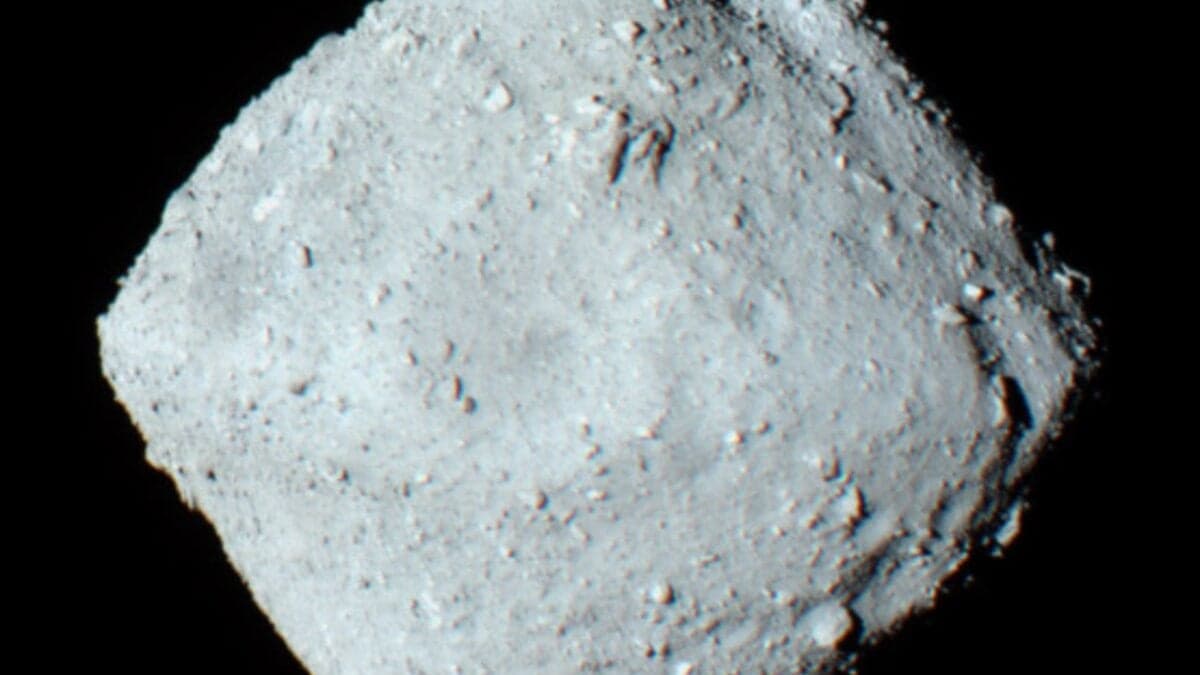
On September 24, 2023, after a seven-year journey spanning over 4 billion miles, NASA’s OSIRIS-REx spacecraft released a small capsule into Earth’s atmosphere, plummeting into the Utah desert at 8:52 a.m. local time. Inside was a treasure trove of material collected from Bennu, a carbon-rich near-Earth asteroid roughly 500 meters (1,640 feet) in diameter. This marked only the third time in history that scientists had successfully retrieved and returned a sample from an asteroid, following Japan’s Hayabusa mission in 2010 and Hayabusa2 in 2020.
Led by principal investigator Dante Lauretta of the University of Arizona, the $1 billion OSIRIS-REx mission launched in 2016 with a singular goal: to collect at least 60 grams (2.1 ounces) of pristine asteroid regolith—surface material believed to contain pristine traces of the early solar system. The spacecraft reached Bennu in December 2018 and spent nearly two years mapping the asteroid’s surface before executing a daring touch-and-go (TAG) sampling maneuver on October 20, 2020. Using a nitrogen gas burst, the probe dislodged material from Bennu’s surface and captured it within a specialized sampling head.
Initial assessments revealed that OSIRIS-REx had exceeded expectations, collecting an estimated 250 grams (8.8 ounces) of material—far surpassing the mission’s target. After sealing the sample container, the spacecraft began its return journey to Earth in May 2021. The successful landing in Utah’s West Desert on September 24, 2023, was met with jubilation by mission scientists, who immediately transported the sealed canister to NASA’s Johnson Space Center in Houston, Texas, where it remains under strict curation protocols to prevent contamination.
Bennu: A Carbon-Rich Time Capsule from the Early Solar System
Discovered in 1999 and named after the ancient Egyptian mythological bird associated with the sun, Bennu is classified as a B-type asteroid, a rare subclass of carbonaceous chondrites known for their high organic and volatile content. These asteroids are believed to be remnants from the protoplanetary disk—the swirling cloud of gas and dust that surrounded the young Sun 4.56 billion years ago. As such, Bennu is often described as a ‘time capsule’ preserving chemical signatures from the solar system’s infancy.
Bennu orbits the Sun every 1.2 years and occasionally crosses Earth’s orbit, making it a near-Earth object (NEO) with a 1-in-1,750 chance of impacting Earth between 2175 and 2199, according to NASA’s Planetary Defense Coordination Office. Its low density—just 60% that of water—suggests it is a loosely bound ‘rubble pile’ asteroid, composed of fragments from a much larger parent body that shattered in a catastrophic collision billions of years ago. This porous structure may have played a role in how water interacted with its interior.
Nanoscale Revelations: How Water Shaped Bennu’s Chemical Landscape
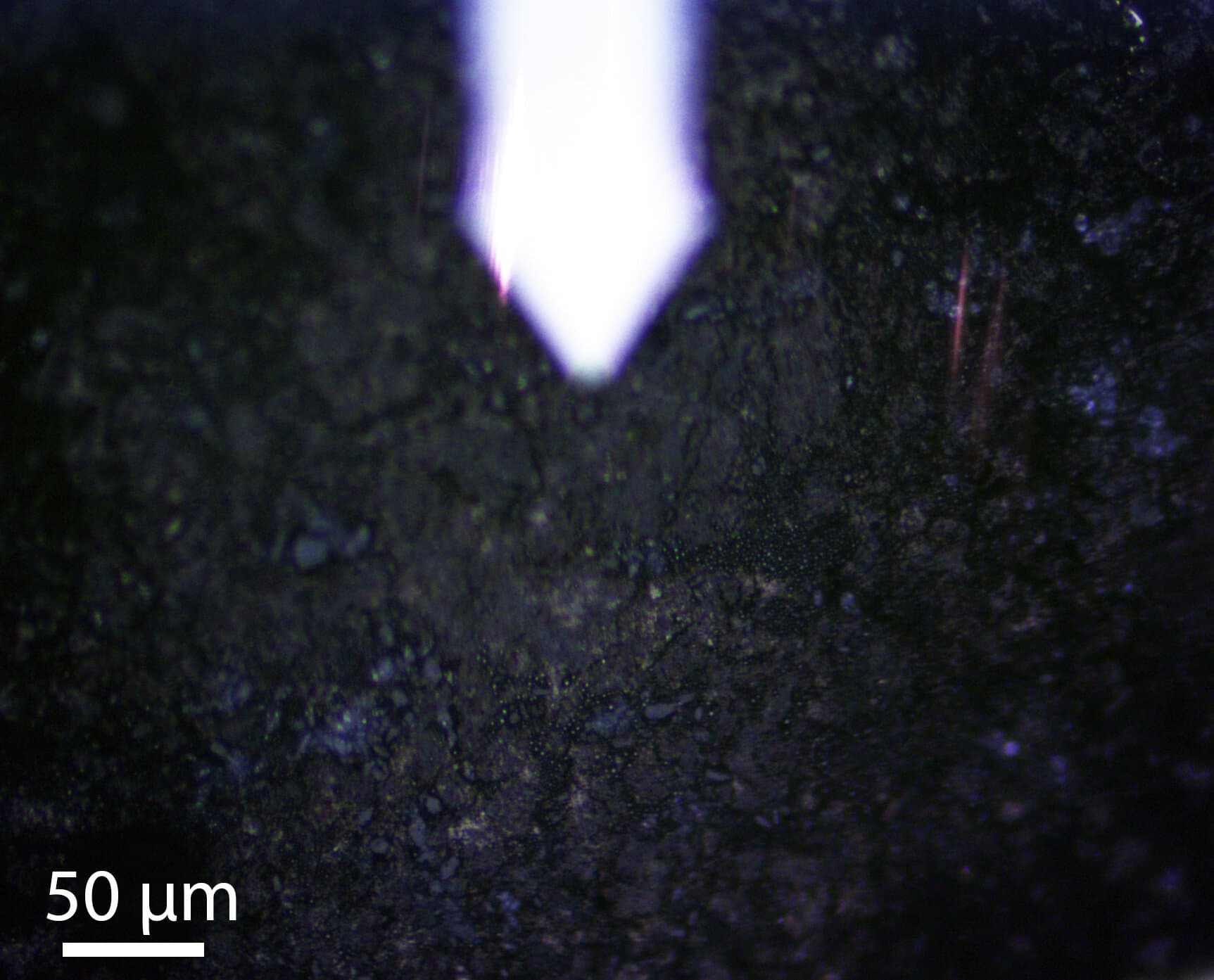
The latest analysis, led by Dr. Mehmet Yesiltas, a planetary scientist at Stony Brook University in New York, represents one of the most detailed chemical studies of Bennu’s material to date. Using advanced spectroscopic techniques, including infrared and Raman spectroscopy, the team probed the sample at an unprecedented scale—down to just 20 nanometers, or roughly the size of a large molecule. Their findings, published in PNAS in April 2026, reveal that Bennu’s composition is not homogeneous but instead divided into three chemically distinct domains.
Three Distinct Chemical Domains: A Map of Alteration and Preservation
The researchers identified three primary chemical domains within the Bennu sample:
- **Aliphatic-rich regions**: These areas are dominated by hydrocarbons arranged in open chains, similar to those found in oils and waxes. Aliphatic compounds are highly susceptible to alteration when exposed to water, suggesting these domains remained relatively dry during key evolutionary stages of Bennu.
- **Carbonate-rich domains**: Composed of minerals like calcite and dolomite, these regions are rich in calcium and magnesium. The presence of carbonate minerals strongly indicates they precipitated from water-rich fluids. Organosulfur compounds—organic molecules containing sulfur—were almost entirely confined to these domains, reinforcing the role of water in their formation.
- **Nitrogen-bearing organic-rich domains**: These contain complex organic molecules, including those containing nitrogen, which are considered precursors to amino acids and nucleotides—the building blocks of life. These compounds may have been inherited from older interstellar material or chemically modified through interactions between fluid and rock.
The sharp boundaries between these domains suggest that water did not permeate Bennu uniformly. Instead, it likely flowed through restricted pathways, leaving some regions largely unaltered while altering others. This patchwork of chemistry provides a rare glimpse into the dynamic processes that governed the asteroid’s early history.
‘The stark separation of these domains tells us that water was not a pervasive fluid but rather moved through Bennu in localized channels,’ said Dr. Yesiltas. ‘This challenges the idea that asteroids like Bennu were globally hydrated. Instead, their interiors hosted complex, heterogeneous environments where water played a selective role.’
Why These Findings Matter: Connecting Asteroids to Earth’s Origins
The study of Bennu’s sample is not merely an academic exercise—it has profound implications for understanding the origins of life and the chemical evolution of the solar system. Carbonaceous chondrites like Bennu are believed to have delivered water and organic molecules to the early Earth through impacts, a process that may have played a crucial role in the emergence of life. The nitrogen-bearing organic compounds found in Bennu, for example, are structurally similar to those detected in meteorites like the Murchison meteorite, which fell in Australia in 1969 and contained over 70 different amino acids.
‘These organic molecules are the raw materials for life as we know it,’ said Dr. Lauretta, who was not directly involved in the PNAS study but has overseen the OSIRIS-REx science team. ‘By studying Bennu, we’re essentially reading a chapter of the solar system’s biography that has been preserved in its minerals and chemistry.’
Comparing Bennu to Ryugu: A Solar System Chemical Puzzle
The Bennu findings take on added significance when compared to samples returned from another carbon-rich asteroid, Ryugu, by Japan’s Hayabusa2 mission in December 2020. While both asteroids belong to the same B-type classification, preliminary analyses of Ryugu’s material suggest it experienced more extensive aqueous alteration—meaning water played a more dominant role in its chemical evolution. This contrast highlights the diversity of processes that shaped small solar system bodies.
‘Bennu and Ryugu represent two different pathways in asteroid evolution,’ explained Dr. Harold Connolly, a cosmochemist at Rowan University and a co-investigator on both OSIRIS-REx and Hayabusa2 missions. ‘Ryugu’s sample shows signs of widespread hydration, while Bennu’s preserves more pristine, unaltered organic material. Together, they give us a more complete picture of how water and organic chemistry evolved in the early solar system.’
Future Research: What’s Next for Bennu’s Sample?
The Bennu sample is still in the early stages of analysis. NASA’s Astromaterials Research and Exploration Science (ARES) division at Johnson Space Center is distributing portions of the material to scientists worldwide under a rigorous peer-review process. Researchers are using techniques such as secondary ion mass spectrometry (SIMS), X-ray computed tomography (CT), and synchrotron-based X-ray fluorescence to probe the sample’s isotopic composition, mineralogy, and organic chemistry.
One of the most anticipated lines of research involves comparing Bennu’s water signatures with those of Earth’s oceans. The ratio of hydrogen isotopes (deuterium to hydrogen, or D/H) in Bennu’s water-bearing minerals can reveal whether the water in asteroids matches that found on Earth—a key piece of the puzzle in determining whether asteroids were a primary source of our planet’s oceans.
Additionally, scientists are searching for evidence of prebiotic molecules—compounds that could have served as precursors to life. The presence of phosphates, for example, would be a significant find, as phosphorus is a critical component of DNA and cell membranes. ‘We’re not just looking for amino acids,’ said Dr. Jamie Elsila, an astrobiologist at NASA Goddard Space Flight Center. ‘We’re searching for the building blocks of life in their most primitive forms.’
Broader Implications: Asteroids, Planetary Defense, and the Future of Space Exploration
Beyond its scientific value, the Bennu sample holds practical significance for planetary defense and future space exploration. Bennu is classified as a potentially hazardous asteroid (PHA), and understanding its composition and structure is crucial for developing deflection strategies should it ever pose a threat to Earth. The OSIRIS-REx mission itself demonstrated the feasibility of collecting samples from small, fast-moving asteroids—a capability that could be replicated in future missions targeting similar objects.
The success of OSIRIS-REx has also reinvigorated interest in asteroid mining. Companies like AstroForge and Karman+ are exploring the possibility of extracting water and metals from near-Earth asteroids to support deep-space missions and reduce the cost of space exploration. Water, in particular, can be split into hydrogen and oxygen to produce rocket fuel, while metals like platinum and gold could be valuable for in-space manufacturing.
The Road Ahead: A New Era of Asteroid Science
The analysis of Bennu’s sample marks a turning point in planetary science, offering a window into the conditions that prevailed during the solar system’s first few million years. As researchers continue to dissect the material, each discovery brings us closer to answering fundamental questions: How did the Earth get its water? What role did asteroids play in delivering the ingredients for life? And how do the processes that shaped Bennu compare to those that formed other planetary bodies?
For Dr. Yesiltas and his team, the next steps involve refining their models of Bennu’s interior and comparing their findings with theoretical predictions about asteroid formation. ‘This is just the beginning,’ he said. ‘With more data and better instruments, we may uncover even more secrets about Bennu—and by extension, the solar system.’
Conclusion: A Cosmic Jigsaw Puzzle Comes Together
The Bennu sample is more than a collection of rocks and dust—it is a narrative of the solar system’s early days, written in the language of chemistry and mineralogy. By revealing how water flowed through the asteroid in restricted channels, preserving delicate organic compounds in some areas while altering others, scientists have pieced together a more nuanced picture of asteroid evolution. These findings not only deepen our understanding of Bennu but also illuminate the broader processes that shaped the planets, including Earth.
As NASA and international partners continue to analyze the sample and prepare for future missions to asteroids like Apophis (targeted by the OSIRIS-APEX extended mission), the legacy of OSIRIS-REx will endure. The mission has already rewritten the textbooks on asteroid science, and with each new discovery, it brings humanity one step closer to unraveling the mysteries of our cosmic origins.
Frequently Asked Questions
Frequently Asked Questions
- How did water flow through asteroid Bennu?
- The new analysis shows water likely moved through Bennu in restricted channels, leaving some regions largely unaltered. This is evident from the sharp boundaries between chemically distinct domains in the sample, suggesting water did not permeate the asteroid uniformly.
- What makes Bennu special compared to other asteroids?
- Bennu is a carbon-rich B-type asteroid, rich in organic compounds and pristine material from the early solar system. Its loose, rubble-pile structure and minimal aqueous alteration make it a unique time capsule compared to more hydrated asteroids like Ryugu.
- Why is studying Bennu’s sample important for understanding Earth’s origins?
- Carbonaceous chondrites like Bennu may have delivered water and organic molecules to early Earth, contributing to the conditions necessary for life. Analyzing Bennu’s nitrogen-bearing organics and water chemistry helps scientists trace the origins of Earth’s oceans and biological building blocks.