Trump orders government to stop using Anthropic in battle over AI use
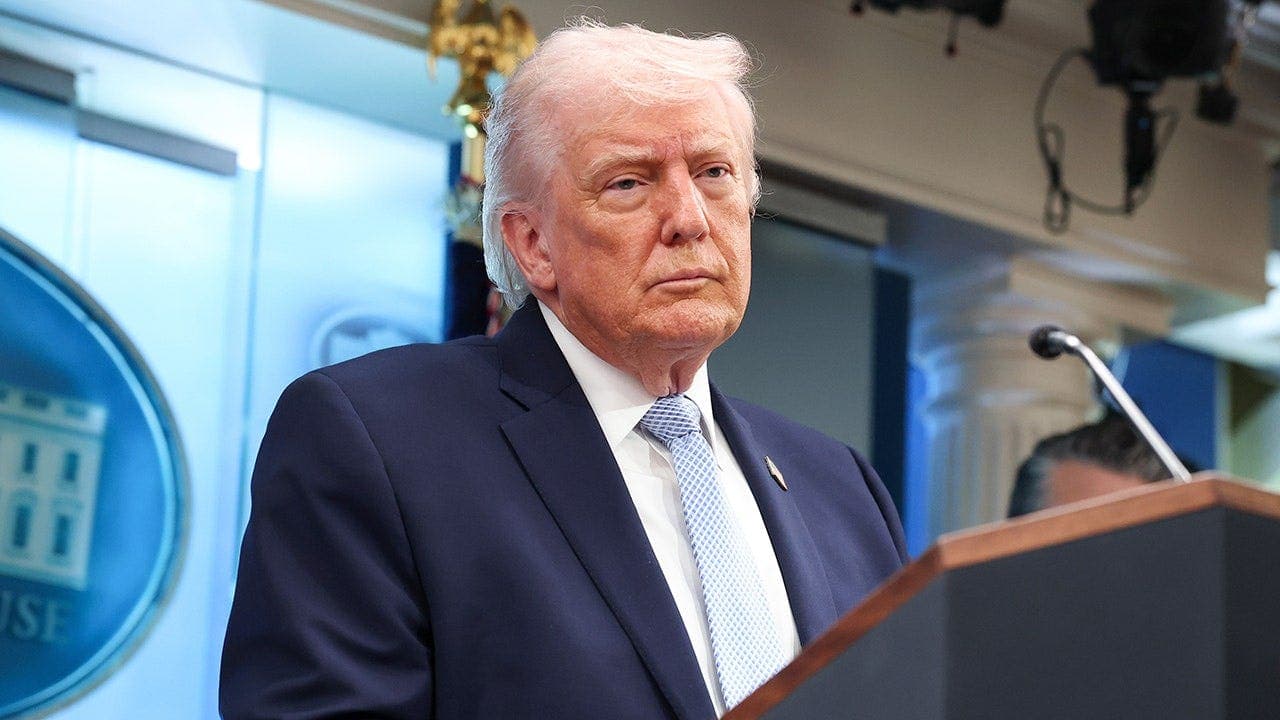
US President Donald Trump said Friday he would direct every federal agency to immediately stop using technology from AI developer Anthropic.
"We don't need it, we don't want it, and will not do business with them again!" Trump wrote in a Truth Social post nearly an hour before a deadline the Pentagon had given Anthropic to grant it unfettered access to the firm's AI tools.
Trump's decision came the day after Anthropic leader Dario Amodei said he would not bend to such demands over concern that Anthropic would be used in mass surveillance and fully autonomous weapons.
Anthropic's tools will be phased out of all government work over the next six months, Trump said.
Prior to Trump's pronouncement, Anthropic had said that if the US Department of Defense chose to stop using the company's tools in light of its maintaining of safety guardrails it would "work to enable a smooth transition to another provider."
Nevertheless, Trump threatened the company, saying it "better get their act together, and be helpful during this phase out period, or I will use the Full Power of the Presidency to make them comply, with major civil and criminal consequences to follow."
Anthropic did not immediately reply to an email seeking comment.
The company on Friday seemed to receive support in its stance against the government.
OpenAI boss Sam Altman supported his rival Amodei saying in a note to staff that he had the same "red lines" as Amodei.
In the note seen by the BBC, Altman said any OpenAI contracts for defence would also reject uses that were "unlawful or unsuited to cloud deployments, such as domestic surveillance and autonomous offensive weapons".
In a meeting with Amodei on Tuesday Hegseth had appeared to make two contradictory threats.
He said he would invoke the Defense Production Act, allowing the government to use Anthropic's products as it saw fit.
He also said he would deem Anthropic a "supply chain risk," meaning the company would be labelled not secure enough for government use.
Amodei said on Thursday he would rather stop working with the Pentagon than acquiesce to such threats.
Anthropic objects to the potential for its AI tools including Claude to be used by the government in two ways: "mass domestic surveillance" and "fully autonomous weapons."
The Department of Defense (DoD) has said it is not asking to use Anthropic for either of those purposes. But it wants the company to accept "any lawful use" of its tools.
There are few laws in the US that deal with AI tool and capabilities.
Emil Michael, Undersecretary of Defence, posted on X a number of times following Amodei's rejection of Hegseth's pressure, making personal attacks against the executive and saying his decision was an attempt to grab government power.
"Dario Amodei wants to override Congress and make his own rules to defy democratically decided laws," Michael wrote in one post.
However, within the tech community there is mounting support for Anthropic's leader.
Amodei is a long-time figure in tech, rising to prominence as an early employee of OpenAI. He and a handful of other OpenAI employees left the company to found Anthropic after disagreements with Altman.
The two startups now compete directly for users and corporate customers with an evolving offer of AI chatbots, agents and other tools.
"I do not fully understand how things got here; I do not know why Anthropic did their deal with the Pentagon and Palantir in the way they originally did it," Altman wrote in his company memo.
"But regardless of how we got here, this is no longer just an issue between Anthropic and the DoW; this is an issue for the whole industry and it is important to clarify our stance."
Anthropic in 2024 entered in to a partnership with Palantir, a major government contractor, allowing Claude to be used within Palantir's government products.
The Department of War (DoW) is a secondary name for the Defence Department under an executive order signed by US President Donald Trump in September.
Altman said OpenAI was also "going to see if there is a deal with the DoW that allows our models to be deployed in classified environments and that fits with our principles."
A former official with the DoD, who asked not to be named, told the BBC that Anthropic appeared to have the upper hand in the fight.
"This is great PR for them and they simply do not need the money," the former official said.
Anthropic's work with the Pentagon is part of a contract worth $200 million. The company's most recent valuation came earlier this month and put the company's worth at $380 billion, based on its current revenue and future expected earnings.
The former official added that the DoD's basis for threatening Anthropic with invoking either the Defense Production Act and being labeled a supply chain risk was "extremely flimsy".
Should Hegseth make good on either threat, Anthropic could in theory sue the Defence Department or individuals working within the agency.
On Friday morning, groups representing roughly 700,000 tech workers within Amazon, Google, and Microsoft, all companies that have their own contracts with the Defence Department, signed an open letter urging the companies they worked for to also "refuse to comply" with the Pentagon's demands.
"Tech workers are united in our stance that our employers should not be in the business of war," the elected Executive Board of the Alphabet Workers Union said in a separate statement.
The BBC has requested a response to those concerns from Google.